Fat tire bikes excel on loose, uneven surfaces by pairing wide, knobby tires with sturdy frames for stability and confidence. They handle sand, snow, gravel and rugged trails with ease, delivering traction where standard bikes struggle. This guide highlights five reliable fat tire bikes that balance price, performance and rider fit for American riders. Each model offers distinct strengths—from lightweight aluminum frames to rugged steel builds and varied braking systems—so you can match terrain with confidence. Use the quick-reference table below to compare wheel size, terrain suitability and notable tech at a glance.
| Product | Wheel Size | Notable Feature |
|---|---|---|
| Mongoose Argus Trail Fat Tire Mountain Bike | 26-Inch | 4″ knobby tires, lightweight Tectonic T2 aluminum hardtail frame |
| Mongoose Argus Sport Fat Tire Mountain Bike | 26-Inch | 4.8″ knobby tires, hydraulic disc brakes, tapered headtube |
| Mongoose Dolomite Fat Tire Mountain Bike | 26-Inch | Steel frame, 4″ wide tires, 7-Speed |
| Max4out 26 Inch Fat Tire Mountain Bike | 26-Inch | 21-Speed, front suspension, high-carbon steel frame |
| CYBIC Fat Tire Mountain Bike 24 Inch | 24-Inch | 7 Speeds, high-carbon steel frame |
Mongoose Argus Trail Fat Tire Mountain Bike
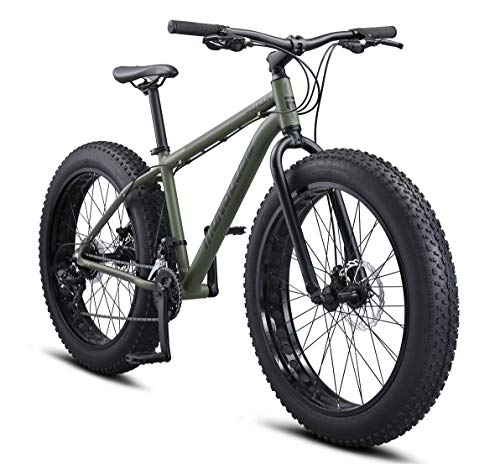
The Mongoose Argus Trail Fat Tire Mountain Bike is tailored for riders seeking a compact, capable fat-tire option. With 26-inch wheels and a frame sized for riders roughly 5’2″ to 5’7″, this model offers a balanced fit for a broad range of adults. The 4-inch-wide knobby tires deliver dependable traction across sand, snow, mud and loose gravel, helping you maintain control on diverse terrain. A lightweight Tectonic T2 aluminum hardtail frame keeps the bike agile, while the aluminum rigid fork contributes to precise steering and predictable handling on rugged trails.
Equipped with reliable mechanical disc brakes, the Argus Trail delivers steady stopping power in varying conditions. The 16-speed drivetrain provides a practical spread for climbing hills and carving through flat sections, making it adaptable for casual rides or more demanding routes. Drilled rims reduce unsprung weight, contributing to quicker acceleration and improved ride feel. The overall geometry emphasizes stability without compromising agility, making it a strong entry point for riders exploring fat-tire riding for the first time.
Mongoose Argus Sport Fat Tire Mountain Bike

The Mongoose Argus Sport builds on the Argus line with a focus on higher-level braking and a rugged silhouette. Its 26-inch wheels and 4.8-inch knobby tires deliver substantial grip, especially in loose sand, snow or muddy trails. The Tectonic T2 aluminum hardtail frame, paired with a tapered headtube, enhances steering stiffness for precise control while maintaining a nimble feel on winding paths. Hydraulic disc brakes provide strong, progressive stopping power in wet or dry conditions, reducing brake fade during long descents.
This model is designed for riders roughly 5’4″ to 6’1″ tall, widening the window for riders seeking a capable fat-tire bike that can handle diverse environments. The combination of light frame, wide tires and strong braking makes it a solid choice for weekend warriors who want dependable performance without stepping into a premium price tier. The Argus Sport emphasizes durability and braking precision for riders who push a bit harder on off-road adventures.
Mongoose Dolomite Fat Tire Mountain Bike
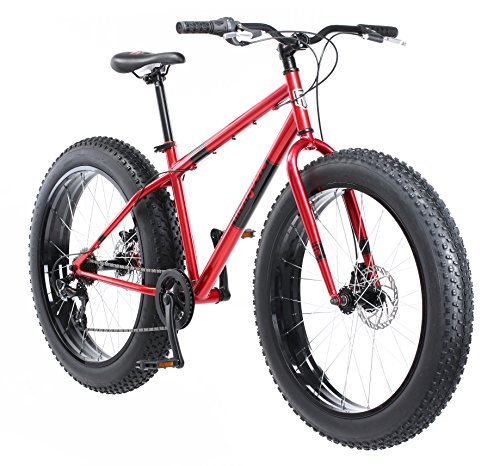
The Dolomite Fat Tire Mountain Bike from Mongoose emphasizes rugged durability with a steel frame that stands up to rough trails and long rides. Its 26-inch wheels with 4-inch-wide knobby tires deliver confident traction on sand, snow or uneven gravel. The 7-speed setup provides a practical gearing range for modest climbs and flats, allowing riders to optimize cadence and efficiency across diverse terrain. Front and rear brakes contribute to balanced stopping power, ensuring reliable performance in mixed conditions.
Riders between about 5’4″ and 6′ tall will find the Dolomite a comfortable fit, with a sturdy frame and predictable steering. The steel construction offers resilience against impact and wear, while kept-together components deliver straightforward maintenance. For those who value a proven, no-fruss bike that can handle frequent off-road use, the Dolomite provides a solid foundation for fat-tire exploration.
Max4out 26 Inch Fat Tire Mountain Bike

The Max4out fat-tire bike prioritizes a balance between durability and performance with a high-carbon steel frame and 4-inch knobby tires. Its 21-speed drivetrain offers a broad range of gears for efficient climbing and steady cruising on mixed terrain. The front suspension fork helps absorb bumps from rocks, roots and potholes, enhancing rider comfort on rough trails. The steel frame contributes to long-term durability, making this model well-suited for riders who want a robust option that can withstand frequent off-road use.
Designed for versatility, the Max4out model handles dirt, gravel, sand and light snow with confidence. The combination of stout construction and fat tires provides stability and traction, while the suspension helps maintain control on uneven surfaces. This bike suits riders who prioritize reliability and a straightforward maintenance routine without sacrificing fat-tire capability.
CYBIC Fat Tire Mountain Bike 24 Inch

The CYBIC Fat Tire Mountain Bike offers a compact 24-inch wheel platform for riders seeking a smaller-fat-tire option. With seven speeds and a high-carbon steel frame, this model emphasizes sturdiness and straightforward reliability. Fat tires provide improved grip and stability on rough terrain, making it suitable for riders who want a capable bike without the extra footprint of larger wheels. The ergonomic design of this bike focuses on comfort during longer rides and is well-suited for riders who prioritize practical, all-terrain performance.
As a more compact fat-tire choice, the CYBIC model can be easier to handle for riders who are shorter or newer to fat-tiring. The steel frame ensures durability under repeated off-road use, while the seven-speed setup enables efficient navigation across mixed terrain. This bike aligns with riders who value a blend of simplicity, robustness and off-road capability in a lighter, smaller form factor.
Buying Guide
Choosing the right fat tire bike involves aligning bike design with your riding goals, terrain, and physical fit. Below are key considerations and how they apply to the five bikes above.
Wheel Size And Rider Fit
Fat bikes commonly come with 24″ to 26″ wheels. Smaller riders may benefit from 24″ wheels or smaller frame sizes, while taller riders often prefer 26″ wheels for stability and efficient rolling. In our selections, the CYBIC model uses 24″ wheels, while the Mongoose Argus family and Dolomite use 26″ wheels. Check standover height and top-tube length to ensure comfortable reach and control when standing over the bike or sprinting on flat sections.
Frame Material And Durability
Aluminum frames are lighter and resist corrosion, offering easier handling and acceleration. Steel frames, like the Dolomite and many Max4out builds, are exceptionally durable and tuned for rugged use but add weight. If you ride on steep trails or carry your bike frequently, the steel options can be advantageous for their long-term resilience, while aluminum models better suit riders prioritizing nimble handling and easier acceleration.
Brakes And Handling
Hydraulic disc brakes provide strong, progressive stopping power in wet and dry conditions, with less lever effort—great for technical trails. Mechanical disc brakes are reliable, easier to maintain, and perform well in most conditions. The Argus Sport offers hydraulic discs for high-performance stopping, while the Argus Trail and Dolomite use mechanical discs. Consider your typical weather, descent difficulty and maintenance preferences when selecting braking systems.
Tire Width, Traction And Terrain Versatility
Tire width dictates traction and ride feel. Wider tires (around 4.8″) excel on soft surfaces, whereas 4″ tires offer strong all-terrain capability with less rolling resistance. All five bikes in this guide rely on fat tires to improve stability on sand and snow, but the wider tires will feel more planted on loose surfaces. If you ride in variable conditions, a bike with wider tires and robust braking provides the most versatility.
Gearing And Drivetrain
Gearing affects hill-climbing ability and cadence. The 21-speed Max4out and 7-speed CYBIC provide broad ranges suitable for mixed terrain, while the Mongoose models emphasize 16-speed configurations that balance weight and climb efficiency. Riders tackling steep hills or long trails should prioritize more gears or a broader torque range. If you ride primarily on flat, hard-packed trails, fewer gears can still deliver efficient performance with lighter weight.
Budget And Maintenance Considerations
Fat-tire bikes range widely in price due to frame material, component quality and braking systems. Aluminum-framed bikes with hydraulic discs tend to sit in mid-to-upper ranges, while steel-framed bikes can offer excellent durability at lower cost. Consider maintenance demands—hydraulic brakes require occasional bleed and servicing, while mechanical discs are typically easier to service at home. For riders who ride year-round, corrosion resistance and component longevity are important for long-term value.
Riding Style And Use Case
Decide whether you want a general-purpose fat-tire bike for casual weekend rides, or a more capable platform for aggressive off-road days. The Argus Trail and Dolomite emphasize rugged everyday use, while the Argus Sport targets riders seeking higher braking performance and more aggressive terrain access. The CYBIC and Max4out provide balanced options for riders who want a versatile bike suitable for a variety of surfaces, without sacrificing fat-tire capability.