Choosing a lightweight mountain bike for a child means balancing safety, durability, and ease of handling. The bikes listed here cover aluminum and steel frames, wheel sizes from 20″ to 24″, and a range of gears and braking setups. They are suitable for kids roughly ages 7 to 14, depending on height and riding ability. This guide highlights key features to compare when shopping, with a focus on lighter designs that help young riders gain confidence and control on trails, sidewalks, and parks alike.
| Product | Brand | Frame | Wheel Size | Gears | Brakes |
|---|---|---|---|---|---|
| RoyalBaby Kids Mountain Bike 24 Inch Wheels | RoyalBaby | Aluminum | 24″ | 8-speed | Dual Disc Brakes |
| Dynacraft Magna Echo Ridge 24″ | Dynacraft | Unknown | 24″ | Unknown | Front and Rear Linear Pull Brakes |
| Glerc Mars 24″ Fat Tire Mountain Bike | Glerc | Carbon Steel | 24″ | 6-speed | Disc Brakes |
| WEIZE Kids Mountain Bike 20″ | WEIZE | High-Carbon Steel | 20″ | 6-speed | Front and Rear V-Brakes |
| Glerc 20 Inch Kids Bike with Front Suspension | Glerc | High-Carbon Steel | 20″ | 21-speed | Front Disc Brakes |
RoyalBaby 24-Inch Aluminum Mountain Bike

The RoyalBaby 24-Inch model centers on a lightweight aluminum frame designed for young riders who need responsive handling and easier acceleration. The bike is built for ages roughly 7 to 17, with a wheel size that provides stable balance on trails and paved surfaces alike. An 8-speed drivetrain helps kids find an efficient cadence on gentle hills and longer rides, while dual disc brakes deliver strong and predictable stopping power in variable weather. The front suspension fork further cushions rough terrain, improving comfort during off-road sessions.
In addition to its performance-focused specs, the bike emphasizes safety and ease of use. The lighter frame reduces fatigue on longer rides and makes mounting and dismounting simpler for beginners. With 24″ wheels and a compact footprint, younger riders can maneuver around obstacles with confidence. The combination of aluminum construction, robust brakes, and a front suspension fork makes this model a strong option for families seeking a durable yet nimble bike for growing athletes.
Dynacraft Magna Echo Ridge 24-Inch Mountain Bike

The Dynacraft Magna Echo Ridge 24″ mountain bike is designed for rugged, entry-to-mid-level adventures. It features a front fork shock to help absorb bumps on trails and a durable frame built to withstand years of play. Braking stability comes from front and rear linear pull brakes, which provide straightforward control for younger riders learning to modulate speed on mixed terrain. The design prioritizes a sturdy, easy-to-assemble frame that supports confident handling while young riders build balance and coordination on more challenging paths.
Riders benefit from a practical setup that blends comfort with simplicity. The 24″ wheel size hits a middle ground between stability and agility, making it suitable for kids transitioning from beginner to more capable off-road riding. While the exact frame material is not specified, the bike emphasizes reliability and ease of maintenance, making it a practical choice for families seeking a straightforward, durable mountain bike for teens and pre-teens.
Glerc Mars 24-Inch Fat Tire Mountain Bike

Glerc Mars 24-Inch Fat Tire Mountain Bike is built with a carbon steel frame and wide 2.8-inch fat tires designed for traction on sand, snow, mud, and uneven surfaces. The bike uses a 6-speed drivetrain to provide versatile climbing and cruising options, and disc brakes deliver precise stopping power in challenging conditions. The broader tires increase stability and float over soft terrain, which can be beneficial for younger riders who want confidence on mixed trails. A comfortable saddle and a kickstand add everyday practicality for casual rides and neighborhood adventures.
Though heavier than some aluminum options, the fat-tire setup enhances grip and balance, especially on loose surfaces. The front suspension helps dampen bumps, while the drivetrain enables flexible pacing across varied trails. The Mars model prioritizes stability and traction, making it a compelling choice for riders who encounter soft terrain or uneven ground and still want a controllable ride.
WEIZE 20-Inch Dual-Suspension Kids Bike
WEIZE offers a compact 20-inch bike with a high-carbon steel frame designed for younger riders. The dual full suspension helps smooth out bumps on sidewalks and light trails, improving comfort and control during learning rides. The 6-speed drivetrain gives riders options for gentle hills and steady cruising, aiding early efficiency and confidence on varied terrain. The combination of lighter-than-average steel construction and modern drivetrain makes this model approachable for beginners while still capable on longer rides.
Braking is addressed with a safe and reliable handbrake system, featuring front and rear V-brakes for straightforward stopping power. The lower standover height and ergonomic geometry support easier mounts and dismounts, enabling kids to focus on balance and steering. This bike balances practicality with performance, aiming to help developing riders progress toward more advanced off-road riding while staying within a manageable weight range.
Glerc 20-Inch Kids Bike With Front Suspension
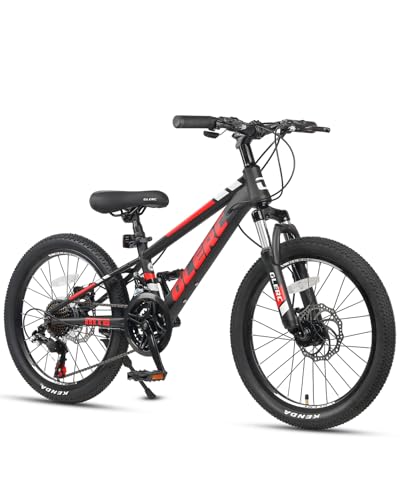
Glerc’s 20-Inch Kids Bike features a front suspension setup paired with a 21-speed drivetrain, offering more gearing than typical beginner bikes. The front suspension helps absorb bumps on rough sidewalks and light trails, providing a smoother ride for smaller riders who are building balance and confidence. Disc brakes support strong, responsive stopping power in varied conditions, which is essential for safety on steeper grades and slick surfaces. The high-carbon steel frame delivers durability to withstand regular use and growing riding abilities.
The bike is designed with practicality in mind, including easy gear adjustments and reliable componentry. The 21-speed range enables kids to explore different terrains while learning to shift, and the combination of suspension, disc brakes, and a sturdy frame supports steady progress toward more advanced mountain biking skills.
Buying Guide
Key purchase considerations
- Weight and frame material: Aluminum frames are typically lighter and easier for young riders to maneuver, but steel frames can offer greater durability at a lower cost. Consider the child’s strength and experience when weighing options.
- Wheel size and rider height: 20″ to 24″ wheels suit different ages and heights. A bike should allow the rider to stand over the frame with a slight bend in the knee when the pedal is at the lowest point, ensuring safe mounting and stable control.
- Gears and drivetrain: More gears help with climbing and varied terrain. An 7–21 speed range is common for kids; simpler setups (e.g., 6–8 speeds) are easier for beginners to learn shifts on.
- Brakes: Disc brakes (mechanical or hydraulic) provide strong, consistent stopping power in wet or muddy conditions. V-brakes are reliable and easier to service but may require more lever effort.
- Suspension: Front suspension helps absorb bumps, while full suspension adds comfort on rough trails. For younger riders, lighter bikes with decent suspension often balance control and weight well.
- Tires: Fat tires offer extra traction on sand, snow, or loose surfaces but add weight. Narrower knobby tires are efficient on hardpack and sidewalks.
- Maintenance and safety: Check for smooth shifting, brake responsiveness, and wheel alignment. Regular inspection of cables, brakes, and tires helps prevent issues on rides.
- Age, height, and skill alignment: Match the bike to the child’s current height and riding level. A bike that fits well promotes better balance and reduces fatigue during longer sessions.
- Assembly and warranty: Some bikes require assembly. Look for a straightforward manual and warranty coverage that supports wear parts like brakes and shifting components.
Comparative considerations
- Aluminum versus steel frames: Aluminum offers lighter weight and easier handling, ideal for new riders progressing quickly. Steel frames are typically tougher and less expensive but heavier, which can affect maneuverability on climbs or longer rides.
- 12–24 inch growth factor: If a child will outgrow the bike within a season or two, consider a model with adjustable seat height and handlebar reach to maximize use over time.
- Terrain suitability: For regular trail use, prioritize bikes with suspension and disc brakes for better control. For mostly pavement and beginner trails, a simpler setup with quality V-brakes might suffice while reducing maintenance needs.
Whether your child is tackling gentle paths or learning to ride on uneven surfaces, the bikes above offer a range of configurations that balance weight, durability, and safety. When selecting a model, prioritize a proper fit, manageable weight, and brakes that respond reliably in a variety of conditions. With mindful sizing and a gradual introduction to shifting and terrain, young riders can enjoy confident, enjoyable outdoor biking experiences.