Turning a standard bicycle into a capable motorized ride can expand your options for commuting, light touring, or exploring backroads. The following five 100cc bike motor kits are commonly chosen for 26″ and 28″ bikes, featuring air-cooled engines, belt drives, and solid build quality. This guide highlights core specs to help compare performance, range, and durability at a glance, with detailed product sections to follow.
| Product | Brand | Engine (cc) | Top Speed (km/h) | Max Load (lbs) |
|---|---|---|---|---|
| 100cc 4-Stroke Bicycle Kit | YSHUSTGY | 100 | 50 | 440 |
| 100cc 4-Stroke Bicycle Kit | Ojseimchrl | 100 | Not listed | 440 |
| 100cc Motorized Bike Kit | ZBXGJKSY | 100 | 45 | 440 |
| Fenjidrop 100cc Bicycle Kit | Fenjidrop | 100 | 50 | 440 |
| PERFERATE 100cc Bicycle Engine Kit | PERFERATE | 100 | 45 | 440 |
100Cc 4-Stroke Bicycle Kit

The YSHUSTGY 100Cc engine kit is built around a durable aluminum shell and an iron fuel tank with protective coating. It uses a 4-stroke design delivering about 3.5HP and 3600 RPM, which supports a practical top speed near 50 km/h with appropriate gearing. A large 0.52-gallon fuel tank extends ride time between refuels, while the double belt drive and air-cooling system help manage heat and power delivery. The kit is designed to support riders up to 440 lbs, making it suitable for a wide range of weights and cargo.
- Displacement: 100cc; Power: ~3.5HP; Max RPM: ~3600
- Top speed around 50 km/h with proper gearing
- Fuel tank capacity: 0.52 gallons
- Aluminum shell and rust-resistant components
- Load capacity: 440 lbs
100cc 4-Stroke Bicycle Kit

Ojseimchrl’s kit emphasizes durability with aircraft-grade aluminum alloy and reinforced iron components for heat dissipation and long life. It features a 4-stroke OHV engine rated up to 3HP and capable of 3600 RPM for smooth operation and better fuel efficiency than typical 2-stroke designs. A 1.6-liter fuel tank supports longer rides between refueling, and the kit delivers about 4.5 N·m of torque for reliable acceleration. It’s suited for 26–28 inch bicycles and belt-driven drivetrain reliability.
- 4-Stroke OHV engine: up to 3HP; 3600 RPM
- Fuel tank: 1.6 liters
- Torque: ~4.5 N·m; belt drive
- Designed for 26–28 inch bikes
100CC Motorized Bike Kit

This ZBXGJKSY kit uses a 2-stroke 100cc engine with air cooling and a CDI ignition system. It tops out around 45 km/h and features a relatively large 2-liter fuel tank to extend riding intervals between fills. The kit is built to support up to 440 lbs and comes with a 36-tooth drive setup for robust power transfer. Expect modest noise levels around 75 decibels during operation, and a practical balance of speed, range, and weight for most 26″ or 28″ bicycles.
- 2-stroke 100cc engine; CDI ignition; air-cooled
- Max speed: ~45 km/h
- Fuel tank: ~2.0 liters
- Load capacity: 440 lbs; 36 teeth gearing
- Noise: ~75 dB
Fenjidrop 100cc Bicycle Engine Kit
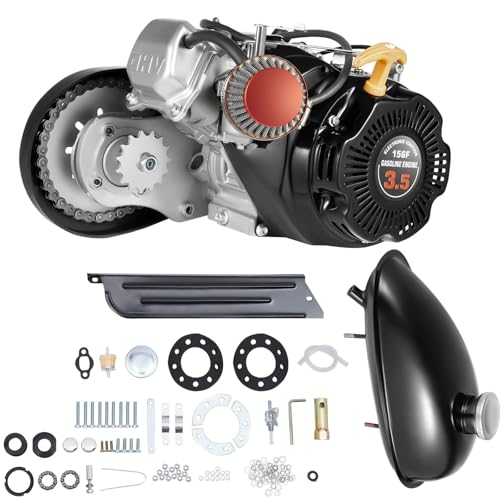
The Fenjidrop kit uses a 4-stroke OHV design with a 100cc displacement and a rated output of about 3.5HP, delivering up to 2 kW and 3600 RPM. It achieves a top speed near 50 km/h and includes a 0.52-gallon tank for longer rides. Built with an aluminum alloy engine case and reinforced components, it supports up to 440 lbs and emphasizes durability, heat management, and steady power delivery for extended use on a variety of bikes.
- 4-stroke OHV engine; about 3.5HP
- Top speed around 50 km/h; 3600 RPM
- Fuel tank: 0.52 gallons
- Max load: 440 lbs
- Durable construction with air cooling
PERFERATE 100cc Bicycle Engine Kit

The PERFERATE kit offers a 2-stroke 100cc engine with a focus on efficiency and reliability. It lists a maximum load capacity of 440 lbs and a top speed of around 45 km/h. The 0.53-gallon fuel tank supports longer rides, with a fuel consumption figure of about 0.66 gallons per 100 miles referenced in the listing. It’s designed to balance power output with durability and is suitable for common 26″ and 28″ bicycle configurations.
- 2-Stroke 100cc engine; 440 lbs load
- Top speed: ~45 km/h
- Fuel tank: ~0.53 gallons
- Fuel consumption: ~0.66 gal/100 miles
- Durable construction for everyday use
Buying Guide
Key purchase considerations help ensure you pick a kit that matches your bike and riding goals. Engine type affects performance, maintenance, and emissions, with 4-stroke units typically offering smoother operation and greater fuel efficiency, while 2-stroke designs can deliver quicker acceleration and lighter weight.
Bike compatibility is essential. Most 26″ and 28″ bicycles accommodate these kits, but frame geometry, mounting points, chain alignment, and belt drives vary. Verify fitment with your bike’s frame and wheel size, and plan for compatible gear ratios and mounting hardware.
Fuel capacity and range matter for longer rides. Tanks range from roughly 0.52 to 0.53 gallons in these kits, which influences how far you can travel between fills. Consider fuel type and potential revisions to carburetor jet size if you ride at higher elevations or in varying climates.
Performance and safety should drive installation and use. A robust heat management system (air cooling, proper airflow) helps maintain consistent power, while a strong load rating (typically 440 lbs in these kits) supports varied rider weights. Noise levels are a factor for neighborhood riding and legal use in some areas.
Installation, maintenance, and spares are practical concerns. Some kits come with essential hardware and belts, while others require additional components. Check for available spare parts, service support, and warranty terms to reduce downtime after purchase.
Legal and safety considerations vary by region. Some jurisdictions regulate street use of motorized bicycle kits, helmet requirements, and emission standards. Review local laws and ensure compliance before riding on public roads or paths.
- 2-stroke vs 4-stroke: trade-offs in power, efficiency, and maintenance
- Frame and wheel compatibility; mounting and chain alignment
- Fuel capacity and consumption; range considerations
- Heat management, noise, and ride comfort
- Installation effort, spare parts, warranty, and service access
- Local regulations and safety requirements