Riders on electric bikes deserve seating that distributes weight evenly, reduces pressure on sit bones, and stays securely in place across varied terrains. This guide highlights five top options designed for comfort, stability, and long-term durability. From noseless designs to oversized wings and backrests, these seats aim to minimize saddle pain and pedal friction while fitting a range of bikes, including Peloton, commuting e-bikes, and city cruisers. Below you’ll find concise product summaries, key features, and a practical buying guide to help you choose the right seat for your riding style.
| Product | Brand | Main Feature |
|---|---|---|
| Twomaples Noseless Seat Cushion | Twomaples | Noseless, extra wide, high load capacity |
| Twomaples Extra Wide Seat | Twomaples | Ultra-wide with quick install, high load capacity |
| BLUEWIND Oversized Bike Seat | BLUEWIND | Backrest design, 2X larger than typical seats |
| LCYMD Comfortable Seat Cushion | LCYMD | Memory foam, double shock absorption, waterproof cover |
| WUVOP Oversized Bike Seat | WUVOP | Wide cushion with reflective safety strip |
Twomaples Noseless Seat Cushion

The Twomaples Noseless Seat Cushion is designed for riders who want maximum thigh clearance and reduced friction on long rides. Its noseless concave shape provides extra space for movement, helping to relieve pressure on the sit bones without rubbing against the inner thighs. The seat is described as extra wide, which helps accommodate riders with broader hips or larger buttocks. A key feature is a widened base and a concave profile that stabilizes the cushion and minimizes shifting during pedaling. The seat is rated to support a substantial load, with a reported maximum capability of 580 pounds, and it carries a patent-backed design to ensure ergonomic stability.
- Extra Wide Seat: Optimized for riders with larger hips, reducing thigh friction and pressure points.
- Noseless Design: More thigh clearance helps prevent rubbing and chafing during pedaling.
- Non-Slip Surface: Front and mid-section are engineered to stay in place even on intense efforts.
- Wide Base and Patented Contour: Aims for stable support on Peloton, electric, and other bikes.
- Compatibility Note: Some rail-post configurations may require adaptor removal for a proper fit.
Twomaples Extra Wide Seat

This Twomaples model emphasizes fit and convenience for riders who need extra width without sacrificing stability. It markets as a 2025 update with a widened base and wing-concave shape, intended to stay put during long hours of cycling. The seat is built to withstand high loads, with a claimed capacity up to 650 pounds, making it suitable for a wide range of body types and bike types, including Peloton-style setups and standard exercise bikes. The design also highlights easy installation and an included universal adapter with a reflective armband for safer night riding.
- Ultra-Wide, Ergonomic Saddle: Designed to fit diverse hip shapes and reduce sit-bone pressure.
- High Load Capacity: Tested to handle up to 650 pounds.
- Easy Installation: Tools and universal adapter are included for quick setup.
- Safety Accessory: Reflective armband helps visibility in low light.
- Compatibility: Suitable for Peloton bikes, exercise bikes, e-bikes, and more with a simple adapter.
BLUEWIND Oversized Bike Seat
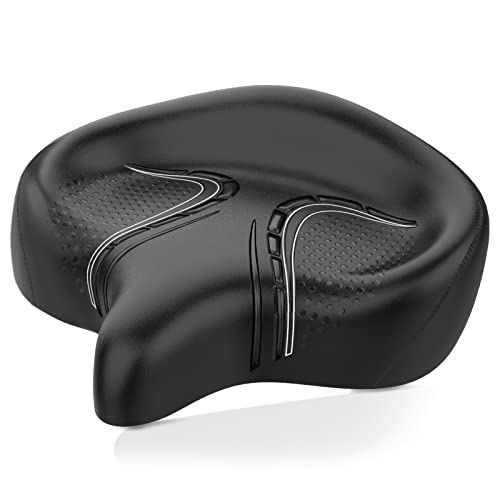
BLUEWIND’s oversized seat targets riders seeking substantial surface area and ergonomic relief. The seat is advertised as being twice as large as traditional options, with a generous 11.8 by 13.8 by 5-inch footprint and a 7-centimeter-thick foam layer to cushion hips and sit bones. A notable feature is the backrest design, which helps distribute weight and reduce tailbone stress during longer rides. The surface uses a durable microfiber leather with seamless edging for wear resistance and weather tolerance, offering a balance of comfort and durability for daily commutes or weekend adventures.
- Oversized Comfort: Significantly larger surface area for reduced pressure points.
- Backrest Design: Helps support the back and distribute rider weight.
- Thick Foam: 7 cm for soft support without collapsing.
- Durable Surface: Microfiber leather with non-slip, weather-resistant properties.
LCYMD Comfortable Seat Cushion
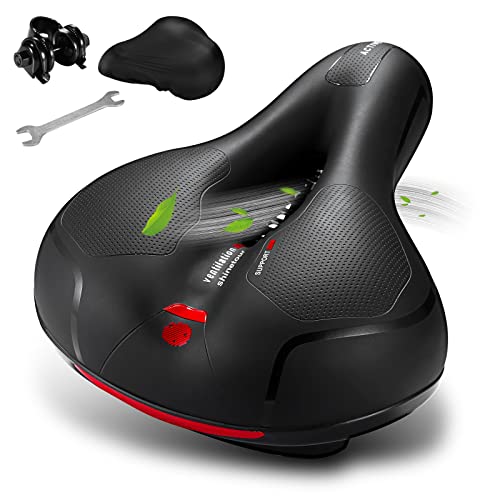
The LCYMD seat focuses on a balanced blend of cushioning and breathability. It features double shock-absorbing balls beneath the saddle to smooth out bumps and rough terrain, making long-distance rides more comfortable. The cushion measures 9.7 by 8 by 3.7 inches, providing universal fit with an included saddle adapter, mounting wrench, and waterproof cover. A thick, high-density memory foam padding supports comfortable seating, while a non-slip, wear-resistant leather surface helps keep the rider in place. An airflow vent in the middle enhances cooling and reduces moisture buildup during sweaty sessions.
- Double Shock Absorption: Reduces jarring from bumps and potholes.
- Memory Foam Padding: Provides soft, supportive comfort with durable structure.
- Universal Kit Included: Adapter, wrench, and waterproof cover simplify setup.
- Ventilation and Comfort: Airflow vent improves cooling on longer rides.
WUVOP Oversized Bike Seat

The WUVOP seat emphasizes a wide, stable platform with practical visibility features. Its dimensions are listed as 11 by 10.5 by 4.5 inches, providing ample surface area while remaining manageable on many bike frames. The double shock-absorbing balls help cushion riders over rough terrain, enhancing comfort during longer commutes or scenic rides. A safety-minded detail is a reflective strip on the back, increasing visibility in low-light conditions. The design aims to balance padding, stability, and safety for everyday riding on Peloton, exercise bikes, or city bikes.
- Wide, Stable Surface: Promotes even weight distribution and comfort.
- Double Shock Absorbing Balls: Cushion bumps and rough roads.
- Safety Reflective Strip: Improves visibility at night or in poor weather.
- Universal Fit: Suitable for a range of bikes with standard posts.
Buying Guide
Key purchase considerations
When choosing an e-bike seat, consider how you ride, your body proportions, and your bike’s post compatibility. A wider seat can reduce sit-bone pressure but may require a longer seat post or adapter. A noseless design can increase thigh clearance for riders with larger thighs or shorter stroker strokes, yet some riders may prefer a traditional nose for certain leg motions. Look for seats with memory foam or high-density foam in a thickness that suits your weight and riding style. Material matters too; microfiber surfaces resist moisture better than some fabrics, and waterproof covers extend durability in the elements.
Fit, size, and ergonomics
Seat width and depth determine how your hips align with the saddle’s pressure distribution. Oversized wings or backrests can dramatically reduce tailbone and lower-back strain on long rides, but they should not push you too far forward or interfere with pedal clearance. A noseless design often provides the clearest thigh movement, especially for riders with a larger thigh circumference. If you ride a Peloton or similar stationary-bike setup, ensure the post diameter and adaptor compatibility match your station post to avoid wobble or slippage.
Padding, materials, and durability
Padding should strike a balance between support and breathability. Memory foam offers soft, contouring support, while high-density foam provides longer-lasting structure. Double shock absorption can reduce micro-vibrations, improving comfort on rough roads or indoor trainers. The outer material should be durable and weather resistant; microfiber leather is common for longevity and easy cleaning, while waterproof covers help preserve padding during rain or sweat. Check stitching and edging for signs of wear resistance, especially if you ride daily or in challenging conditions.
Attachment, installation, and compatibility
Many comfortable seats ship with adapters and mounting tools, which simplifies installation on a variety of bike posts and rail posts. Before purchasing, verify your bike’s post diameter and whether any existing adapters must be removed. Some models provide quick-install features or universal adapters that fit multiple post types, reducing setup time. For riders who frequently switch bikes, select seats with flexible mounting options and included tools to minimize downtime between rides.
Safety features and visibility
Visibility matters for night riding or dawn commutes. Features like reflective strips or integrated taillights can greatly improve safety. Some seats even include built-in safety accessories, such as armbands or lights, to complement reflective elements. Consider whether your riding occurs in low-light environments and choose a seat that enhances visibility without sacrificing comfort or weight distribution.
Durability and maintenance
Durability depends on seat materials, seams, and closure design. Look for weather-resistant surfaces, reinforced stitching, and removable waterproof covers for easy maintenance. Seats with well-protected foam and a robust base are more likely to retain their supportive shape after regular use. If you ride in extreme conditions or store your bike outdoors, prioritize seats with protective coatings and simple cleaning routines to extend lifespan.
Quick comparison snapshot
| Seat Type | Best For | Safety / Extras |
|---|---|---|
| Noseless Wide Seats | Riders needing thigh clearance and sit-bone relief | Patented concave design; non-slip surface |
| Backrest-Equipped Seats | Long rides, back support | Backrest; reflective safety features |
| Memory Foam Cushions | Soft, contouring comfort | Ventilation, waterproof options |
| Oversized Wings | Maximal surface area and stability | Easy install, high load capacity |
| Integrated Safety Elements | Night riding | Reflective strips, taillights |
Choosing the right seat involves balancing size, support, installation ease, and safety features. The five seats reviewed here are among the most relevant options for American riders seeking enhanced comfort on electric bikes and stationary trainers. By evaluating seat width, padding type, and attachment compatibility, you can identify a model that reduces pain points, fits your bike, and helps you ride longer with less fatigue. Always consider test-fitting if possible, since personal comfort can vary with riding posture and bike geometry.