Finding a gas-powered dirt bike that suits a 13-year-old involves balancing power, weight, and safety. The models below are designed for young riders ready for Off-Road adventures, with engines that offer adequate speed without overwhelming new riders. Each option emphasizes reliability, straightforward starting, and features that appeal to parents seeking responsible performance. Whether your child is transitioning from beginners to more capable riders or you’re shopping for a first “real” dirt bike, these picks cover a range of power levels while prioritizing safety and ease of use.
Overview of chosen models at a glance offers a quick sense of how these bikes compare in core areas like engine size, top speed, and rider capacity. The table below highlights five strong candidates that align with the needs of a 13-year-old who is ready for enhanced off-road performance but still requires manageable control and robust safety features.
| Product | Engine | Top Speed | Rider Capacity | |
|---|---|---|---|---|
| FRP 99 CC GMB100 Black Mini Dirt Bike | 99cc 4-stroke | Up to 24 MPH | Up to 185 lbs | Rechargeable LED headlight; easy 3-pull start |
| FRP GMB100 99CC Green Mini Dirt Bike | 99cc 4-stroke | Up to 24 MPH | Up to 185 lbs | No oil mixing; easy start |
| Oryxearth 105CC Mini Bike | 105cc 4-stroke | Up to 24 MPH | Up to 185 lbs | Fully automatic transmission; long range |
| X-PRO Hawk 40CC Mini Dirt Bike | 40cc 4-stroke | Up to 22 MPH | Varies | Great beginner option; 10″ wheels |
| NAKTO 50cc Dirt Bike | 50cc 2-stroke | Up to 40 MPH | Varies | Triple safety protections; disc brakes |
FRP 99 CC GMB100 Black Mini Dirt Bike

The FRP GMB100 is a compact, 99cc four-stroke dirt bike designed for riders aged 13 and up, with a working height that suits teens transitioning from smaller models. It delivers up to 24 miles per hour and supports riders up to 185 pounds, making it a comfortable option for growing teens. A standout feature is the rechargeable LED headlight, which enhances visibility during dusk or dawn rides, along with an included neck gaiter for added protection. This model emphasizes simplicity: no oil mixing is required, and the bike runs on a 0.36-gallon fuel tank that can cover about 30 miles per fill under normal use.
Starting is straightforward: FRP promotes an easy ignition process that typically requires just three pulls on the pull start. The combination of a light, sturdy frame and intuitive operation helps new riders gain confidence quickly. Maintenance needs are reasonable for a youth-oriented dirt bike, though it does require a 15W-40 high-viscosity oil to handle heavy loads and high temperatures. For parents, the bike’s power band is polite enough for learning yet robust enough to be enjoyable for teens who want a little more throttle as they gain experience.
FRP GMB100 99CC Green Mini Dirt Bike
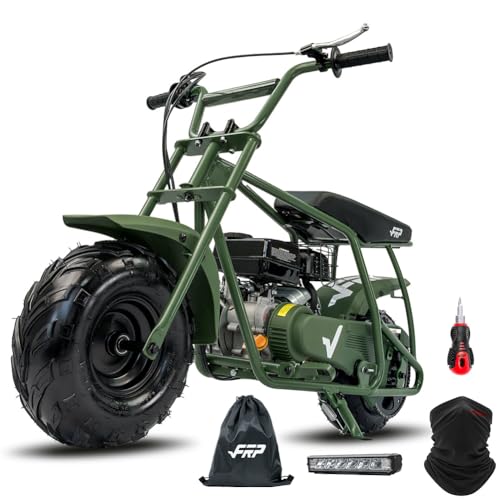
This FRP model mirrors the Black variant in core specs, offering a 99cc four-stroke engine with no oil mixing required. It shares the same top speed of around 24 MPH and a weight limit of about 185 pounds, providing a similar power envelope suitable for teens. The LED headlight and neck gaiter add practical safety features for rides in low light or dusty conditions. The bike’s design prioritizes user-friendly operation, including the easy-start pull system, making it a practical option for 13-year-olds who are still refining their throttle control.
Engine longevity is supported by the same oil recommendation: 15W-40 high-viscosity oil for heavy-duty use, and like its sibling, it uses a 0.36-gallon tank for reasonable range. While this bike is well-suited for learning, riders should monitor fuel management and routine maintenance, especially as speed and terrain vary. Parents should ensure proper protective gear and supervision during initial rides to establish safe riding habits early.
Oryxearth 105CC 4-Stroke Mini Bike

The Oryxearth 105CC mini bike is a step up in displacement, featuring a 105cc four-stroke engine and a top speed of roughly 24 mph. It is marketed as suitable for kids, teens, and even adults under 185 pounds, which makes it a flexible option for siblings or family use. The bike uses a fully automatic chain transmission that reduces shifting complexity, which can be appealing for younger riders who crave straightforward operation. A robust frame and durable construction emphasize safety and longevity for years of outdoor riding.
Range on a full tank is approximately 30 miles, aligning with typical weekend rides or longer practice sessions. It includes a rear disc brake for efficient braking performance, aiding in controlled deceleration on varied terrains. For young riders approaching or just surpassing the intermediate level, this model offers more torque and a stable ride while maintaining approachable handling. As with all gas bikes, routine maintenance and checks are essential to keep performance consistent and safe.
X-PRO Hawk Mini Dirt Bike 40CC Red

The X-PRO Hawk 40CC is a compact, 4-stroke dirt bike designed for younger riders or beginners who want a light, approachable ride. With a top speed around 22 mph, it offers a balanced blend of power and control suitable for a 13-year-old gaining confidence on off-road trails. The bike uses a pull-start system, which simplifies ignition compared to electric start options and helps teach proper starting technique. The 10″ wheels provide a stable footprint on uneven terrain, aiding traction and balance for new riders.
This model emphasizes reliability and ease of maintenance. The 40cc engine is dependable for short, spirited rides and is less intimidating for someone still learning throttle control. As with all smaller-displacement bikes, riders should focus on fundamentals like body position, braking modulations, and steering input. Protective gear remains essential, and supervision is advised during early rides to ensure safe progression to more challenging terrains.
X-PRO Hawk 40CC Pink Mini Dirt Bike

The Pink variant of the X-PRO Hawk offers the same 40cc four-stroke powertrain and 22 mph top speed, with identical beginner-friendly features and a pull-start system. The 10″ wheels continue to support stable handling, making it a good fit for younger riders who want a visually appealing bike without sacrificing safety or ease of use. It’s well-suited for first-time riders or siblings who share a similar age and skill level, encouraging practice with consistent control and confidence-building rides.
As with the Red version, the emphasis remains on straightforward maintenance and safe operation. Riders should practice steady throttle control, smooth braking, and proper protective gear. The smaller engine allows for extended practice sessions, enabling teens to gradually push their skills toward more capable off-road bikes as confidence grows.
Shulemin 50cc Kids Dirt Bike

The Shulemin 50cc bike is positioned as a versatile option for ages 8–15, with a 40×20 square tube frame upgrade to reduce sway and chain drops. It features dual front and rear disc brakes for strong stopping power and 10-inch off-road tires designed for stability on uneven surfaces. The model uses a 49cc two-stroke engine and a redesigned fuel system to improve reliability and reduce typical fuel-related issues, offering a nostalgic but practical ride for younger riders who want a feel close to full-size dirt bikes. It’s a sturdy platform for a pre-teen or early teen looking to gain off-road experience.
Safety is reinforced through a triple power-off protection mechanism and a robust steel frame, aiming to minimize mishaps on rough terrains. While it’s smaller in displacement, the bike can still deliver exciting rides for motivated riders while keeping the throttle manageable. Always pair with proper protective gear and supervision during initial rides to establish safe riding habits and progressive skill development.
Buying Guide
Engine Size And Power
Engine displacement directly influences speed, torque, and control. For a 13-year-old, starting with a bike in the 40–105cc range often offers a balance between fun and safety. Four-stroke engines provide smoother power delivery and easier throttle control, while two-stroke engines can feel livelier and may require more maintenance. Consider a model with a top speed around 20–24 MPH for beginners and a ceiling of about 30 MPH for more confident riders, ensuring that the bike remains controllable on familiar trails.
Rider Size And Weight Capacity
Check the bike’s weight rating and adjustability to suit a growing teen. A 185-pound rider limit is common for mid-sized mini bikes and provides a cushion for growth, while overall weight affects maneuverability. If your child is near the limit, prioritize bikes with lighter frames or adjustable suspension to maintain responsive handling. You want a bike that fits the rider’s height and leg length, so the rider can reach the ground comfortably and maintain stable control.
Brakes, Suspension, And Handling
Disc brakes on both ends improve braking control on varying terrains, a vital safety feature for younger riders learning to brake precisely. Suspension quality matters on rough trails; well-tuned suspensions reduce fatigue and help maintain traction. For beginners, a forgiving suspension and predictable handling reduce the chance of loss of control on rocks, roots, or rough dirt paths. Always verify that the bike’s geometry aligns with your rider’s height and leg reach to ensure confident cornering and braking.
Starting Mechanism And Maintenance
Pull-start systems are common on smaller bikes and can help teach proper start-up technique, but they require some manual effort. Some models advertise “easy start” or require only a single pull, which can be encouraging for new riders. Maintenance considerations include oil type (many four-stroke engines require 15W-40 oil) and routine checks like air filter cleanliness, chain tension, and tire wear. If you’re not mechanically inclined, choose bikes with simpler maintenance routines or seek local support from bike shops or local clubs.
Oil Mixing And Fuel Efficiency
Two-stroke engines often require oil mixing, while four-stroke engines typically do not. For younger riders, four-stroke bikes reduce complexity, but if you opt for a two-stroke, ensure you understand the oil-to-fuel ratio and how to mix correctly. Fuel efficiency matters for extended practice sessions; bikes with higher miles-per-gallon and small fuel tanks can be easier to manage and less expensive to operate for weekend outings or trail rides.
Safety Features And Protective Gear
Beyond the bike, safety gear is critical. A good helmet, goggles, gloves, and padded pants or knee guards should accompany any dirt-bike purchase. Headlights or reflective features can improve visibility, especially when riding near low-light conditions. Neck gaiters, as seen on some FRP models, can offer additional protection from dust and wind. Ensure your rider takes a safety course or receives instruction in basic riding techniques and trail etiquette to reduce the risk of accidents on unfamiliar terrain.
Availability Of Parts And After-Sales Support
Finally, consider the availability of replacement parts, service options, and warranty coverage. Brands with a broad parts network make maintenance easier and more affordable over time. Check whether your local shops can stock common filters, brake components, and tires for the model you choose. A bike that’s easy to service and has readily available parts can extend its usable life and reduce downtime between rides.
Choosing the right bike involves weighing the rider’s current abilities, future growth, and the types of trails they’ll ride. The five models featured here offer a representative spectrum of power, safety features, and ease of use suitable for a 13-year-old taking the next step in off-road riding. Always prioritize safety gear, supervise early sessions, and tailor the selection to your child’s confidence and maturity level as they develop riding proficiency.