The front fork is a rider’s first line of defense against rough terrain, impacting steering accuracy, traction, and overall control. When shopping for a mountain bike front fork, consider travel, compatibility, damping options, and weight. This guide highlights five front forks that align with common trail and XC needs, spanning adjustable air units and rigid carbon designs. Each model below targets different riding styles, from budget-friendly XC to carbon-fiber stiffness for aggressive terrain. Click through the product links to review full specs and current availability on Amazon.
| Product | Travel | Type / Material | Weight (approx) | Notes |
|---|---|---|---|---|
| BUCKLOS 100mm Front Fork (B08LPJ127J) | 100 mm | Air / Aluminum | ≈ 2.60 kg | Lockout, ABS adjustment |
| BUCKLOS 100mm Front Fork (B08LPJ5QR2) | 100 mm | Air / Aluminum | ≈ 2.60 kg | Lockout, ABS adjustment |
| BUCKLOS 120mm Travel Front Fork (B08NDMRCZS) | 120 mm | Air / Aluminum + Magnesium | ≈ 1.80 kg | Remote lockout, rebound |
| BUCKLOS 140mm Travel Front Fork (B0F388T1MZ) | 140 mm | Air / Aluminum-Magnesium | ≈ 1.98 kg | Crown lockout, 20‑click rebound |
| BestParts Carbon Front Fork (B09YD3TW6J) | Rigid | Full Carbon Fiber | Not listed | 3K T800 carbon blades |
BUCKLOS 100mm Travel Front Fork

The BUCKLOS 26/27.5/29 MTB Suspension Fork delivers 100 mm of travel for versatile XC and trail riding across 26, 27.5, and 29-inch wheels. It uses a 28.6 mm threadless straight steerer and a 30 mm crown race, with a manual lockout and a 9 mm QR axle. The 36 mm offset and 32 mm tube diameter balance steering stability with handling precision. Weighing about 2598 g, it carries a removable BUCKLOS sticker for customization. The fork supports disc brakes and offers manual ABS adjustment to tailor compression and rebound under different riding conditions.
Operational benefits include straightforward maintenance and broad wheel compatibility. The 100 mm travel helps absorb small hits on climbs and loamy singletrack, while the lockout reduces pedal bob on smooth sections. ABS adjustment lets riders fine-tune how soft or firm the fork feels as terrain changes, without needing external tools. This model targets riders seeking a budget-friendly, versatile front fork that can handle XC laps, light trails, and daily commutes.
BUCKLOS 100mm Travel Front Fork (Second Variant)
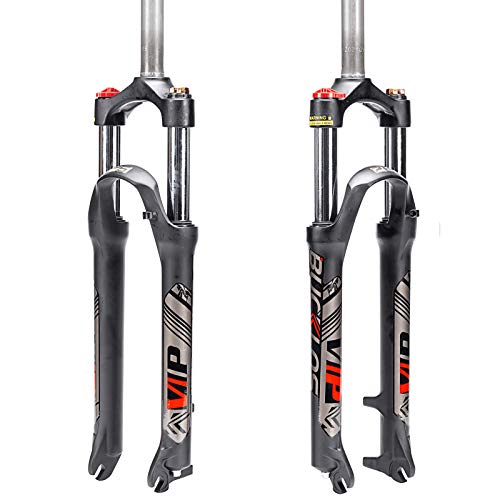
This second BUCKLOS 100 mm model mirrors the core specs of the first 100 mm fork, designed for 26/27.5/29 wheels. It features a 28.6 mm threadless straight steerer, 30 mm crown race, manual lockout, 9 mm QR, 36 mm offset, and 32 mm stanchion diameter. At roughly 2.6 kg, it supports disc brakes and includes the same ABS-style adjustment to tailor fork feel for varied terrain. The design emphasizes reliable performance and straightforward setup for riders who value consistency and simplicity during climbs and rough descents.
With these features, the fork aims at riders who want a dependable, user-friendly option that can handle daily rides, cross-country sessions, and weekend adventures. The combination of lockout control and adjustable damping helps riders optimize feel on mixed terrain without frequent tool use.
BUCKLOS 120mm Travel Front Fork

The BUCKLOS 26/27.5/29 Travel 120mm MTB Air Suspension Fork combines air spring suspension with a 28.6 mm threadless tapered steerer and a 30-39.8 mm crown race. It features remote lockout and rebound adjustment, travel of 120 mm, and a 9 mm QR with cross-section 100 mm. The offset is 38 mm, and the tube diameter is 32 mm. Weighing about 1800 g, this fork uses aluminum and magnesium alloys to balance stiffness and weight. The design emphasizes adaptable damping for varied trails and rider weights.
Remote lockout provides on-the-fly travel control on climbs and technical sections, while rebound adjustment lets riders dial in trail feedback. Compression damping can be tuned to rider weight and riding conditions to enhance comfort and traction, particularly on flowy singletrack or rougher segments. This model suits riders who want more travel without a heavy upgrade in chassis stiffness.
BUCKLOS 140mm Travel Front Fork

The BUCKLOS 26/27.5/29 Travel 140mm MTB Air Suspension Fork offers extended travel for aggressive trails and enduro-style riding. It employs 34 mm stanchions for rigidity and a 1-1/8″ threadless straight/tapered compatibility, with 9×100 mm QR and crown lockout. The fork maintains a 38 mm offset and a 32 mm tube diameter, with an approximate weight of 1976 g. The 34 mm upper tubes enhance steering precision, while external rebound and compression damping are designed to adapt to rider weight and terrain vibrations. Tire clearance reaches up to 3.0 inches for broader tire options.
With crown lockout and 20-click external rebound, this model provides adjustable trail feedback across varied terrain. The aluminum-magnesium alloy construction aims to deliver a sturdy yet lighter front-end feel compared with traditional steel forks. It is well-suited for riders who push into technical singletrack and need dependable travel without sacrificing control on fast descents.
BestParts Carbon Front Fork

The BestParts Toseek MTB Front Fork is a full carbon fiber option designed for rigidity and weight savings. It uses 3K T800 carbon blades and supports 26/27.5/29 wheels with a 1-1/8″ threadless straight tube. The axle size is 28.6 mm, and the fork is compatible with 29″ wheels. It is a rigid front fork designed for disc brakes, emphasizing stiffness and vibration absorption through carbon construction to achieve a responsive, road-feel ride on mountain bike frames.
Carbon forks such as this one provide a distinct feel compared with aluminum alloys, offering improved ride quality on rough terrain due to reduced unsprung weight. They are typically chosen by riders seeking a lighter front end and precise steering, especially on modern XC builds. Installation and compatibility should be checked with the bike frame’s clearance and brake type to ensure optimal performance.
Buying Guide
Travel range and trail goals
Front forks come in a range of travel from rigid (no travel) to 140 mm plus. For XC and light trails, 100 mm travel is adequate and keeps weight down. For aggressive trails, 120–140 mm travel improves abuse resistance and rear-wheel alignment on rough terrain. Rigid carbon forks offer precise steering and weight savings for flat-out acceleration, but lack bump absorption. Match travel to your typical routes, bike geometry, and rider weight to optimize handling and control.
Suspension type and damping options
Air-sprung forks are common for their tunable sag and lighter weight, with adjustable rebound and sometimes remote lockout. Mechanical or rigid forks provide predictable response with fewer maintenance requirements but no active damping. Damping options—manual lockouts, remote lockouts, and rebound or compression adjustments—allow on-trail adaptation. If you frequently ride on fast, rough terrain, a fork with remote lockout and adjustable rebound offers the most versatility. For riders prioritizing simplicity and stiffness, rigid carbon can be appealing.
Steerer tube and axle compatibility
Most modern forks use a 1-1/8″ steerer, with straight or tapered configurations. Matching your headset and head tube is essential. Axle standards like QR 9×100 mm are common, especially on XC bikes. If your build uses a through-axle or a different QR size, you’ll need a compatible fork or a frame that supports that standard. Always verify steerer diameter, crown race sizing, and axle type before purchasing.
Weight, stiffness, and materials
Weight impacts climbing efficiency and handling. Carbon forks typically reduce weight and can provide better vibration damping, but can be more expensive and fragile in certain impacts. Aluminum/magnesium forks are sturdy and more affordable, often offering easier serviceability. When evaluating weight, consider front-end stiffness as well; stiffer forks improve steering precision but may transfer more trail feedback to the rider. Balance weight and stiffness with your riding style and frame geometry.
Brakes, tire clearance, and fit
Disc brakes are the standard for modern mountain bikes, providing strong stopping power in varied conditions. Check rotor compatibility and the brake mount type supported by the fork. Tire clearance is critical: some forks advertise up to 3.0″ tires, which expands options but may require wider rims or upgraded wheelsets. Confirm clearances with your frame’s geometry and wheel width to avoid rubbing on full compression or lockout.
Maintenance, warranties, and long-term costs
Air forks require periodic damper service and seal checks; rigid carbon forks demand careful cleaning and cosmetic care to prevent surface damage. Consider the availability of service centers and replacement parts in your region. Warranty terms vary between brands and materials, especially for carbon components. A solid maintenance plan and accessible parts can lower total ownership costs and extend fork life across seasons.
Across these five picks, riders can cover a broad spectrum of needs—from budget-friendly XC setups to high-performance carbon options. Consider your typical terrain, desired travel, and maintenance comfort when selecting a fork. Each model in this guide offers distinct advantages designed to improve control, traction, and confidence on the trails you ride most often.