Selecting the right commercial bike storage rack helps maximize space, protect bikes, and support heavy traffic in garages, retail spaces, campuses, and community centers. This guide highlights five top-rated, all-steel grid rack systems designed for durability, weather resistance, and versatile configurations. You’ll find options for single- and double-sided layouts, with capacities ranging from 9 to 20 bikes. Each model emphasizes stability, ease of setup, and compatibility with a wide range of wheel sizes. The table below provides a quick snapshot to compare key specs at a glance.
| Product | Sides | Capacity | Wheel Range | Material |
|---|---|---|---|---|
| Retrospec Silver 10-Bike Single-Sided Grid | Single | 10 | 12″–29″ | All steel, rust-resistant powder coat |
| Retrospec Black 10-Bike Double-Sided Grid | Double | 10 | 12″–29″ | All steel, rust-resistant powder coat |
| Global Industrial 59-3/4″ Double-Sided Grid Rack | Double | 10 | 12″–29″ | Powder-coated steel |
| BestEquip 111-Inch Floor Rack, 9 Holders | Single | 9 | 12″–29″ | All-steel, powder-coated |
| BestEquip 10-Bike Dual-Side Floor Rack, 59″ | Dual | 10 | 12″–29″ | All-steel, powder-coated |
Retrospec Silver 10-Bike Single-Sided Grid

The Retrospec commercial bike rack is built from 100% steel, delivering robust stability for high-traffic settings. Its bottom cross bars enhance balance, while vertical bars keep bikes spaced to prevent overcrowding. The finish is rust-resistant powder coating in silver, ensuring good performance in rain or shine. Anchors are sold separately, allowing flexible installation on floors or concrete. The rack is designed to accommodate a broad range of bikes, with universal sizing that supports 5, 10, or 20 bicycles and wheel sizes from 12″ to 29″ and tire widths up to 3.0″.
Practical for garages, schools, and retail environments, this single-sided configuration prioritizes easy access from one side. Its sturdy construction supports frequent use and simplifies bike management in busy facilities. This model is part of a scalable family, so facilities can expand from 5 to 20 bikes as space and demand grow, while maintaining consistent spacing and organization.
Retrospec Black 10-Bike Double-Sided Grid

The black variant shares the same heavy-duty, all-steel construction and rust-resistant powder coating as the silver model, but in a double-sided configuration. This design doubles capacity without increasing footprint, making it ideal for busy commercial spaces where bikes must be parked efficiently from both directions. Like the single-sided version, it supports 12″–29″ wheels and tires up to 3.0″ wide, with anchors sold separately for secure mounting. The result is a durable, year-round bike storage solution suitable for campuses, stores, and large garages.
Visibility and organization improve with a double-sided rack, enabling convenient access and line flow in narrow aisles. The universal sizing ensures compatibility with most standard bikes, including mountain, road, hybrid, and kids’ bikes. Its powder-coated finish resists weathering, helping maintain a neat appearance across seasons in outdoor or semi-covered spaces.
Global Industrial 59-3/4″ Double-Sided Grid Rack
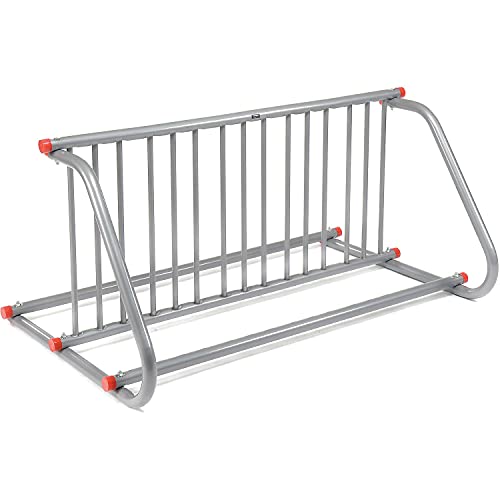
This Global Industrial rack is designed for high-traffic commercial environments, offering a double-sided layout with a 10-bike capacity. It uses cross bars to keep wheels secured and aligned, helping prevent tipping or crowding. Anchors are sold separately, allowing installation on multiple surface types. The 59-3/4-inch length provides substantial capacity without consuming excessive floor space, making it suitable for stores, parks, schools, and other community facilities requiring straightforward, durable bike storage.
Stability is achieved through a robust framework and powder-coated steel construction. The double-sided design enhances accessibility from both sides of the rack, which improves throughput in busy areas while maintaining organized bike parking. The durable finish supports outdoor or covered indoor use, with minimal maintenance required to sustain a neat appearance over time.
BestEquip 111-Inch Floor Rack, 9 Holders

BestEquip’s 111-inch floor rack provides a long, all-steel grid with nine bike holders. Built to withstand wear, its powder-coated frame resists scratches, corrosion, and rust. The design supports bikes across a broad spectrum of sizes with wheels from 12″ to 29″ and tires up to 3.0″ wide. Stability is reinforced by a substantial base, reducing the risk of tipping even when fully loaded. The single-sided layout is well-suited for narrow aisles or edge-of-wall installations in garages and storefronts.
The rack’s freestanding construction eliminates the need for wall mounting, and its robust base helps it stay balanced on uneven floors. This model is appropriate for bike events, school storage, retail backrooms, and other commercial settings that require reliable, long-term bike parking without complex installation.
BestEquip 10-Holders Floor Bike Rack, 59″ Length

This dual-sided BestEquip model offers space for up to 10 bikes across a 59-inch footprint. It uses a grid pattern of all-steel construction with a powder-coated finish, providing durability against scratches and weather exposure. The dual-side arrangement increases storage density while maintaining clear access from both sides. It’s suitable for garages, streets, yards, bike events, and storefront applications where efficient, organized parking is essential. The stable base design reduces tipping risk, even in high-traffic areas.
As with other freestanding units, anchors are sold separately for concrete or other surfaces. The combination of high capacity, steel construction, and a compact footprint makes this rack a practical option for campuses, community centers, and commercial facilities that require reliable, scalable bike storage without complex mounting.
Buying Guide
When choosing a commercial bike storage rack, consider how the space will be used, the expected bike turnover, and whether you need single- or double-sided access. Steel grid racks offer durability and straightforward maintenance, but the layout can affect aisle width and bike flow. Below are key factors to compare across models and configurations.
Capacity and Layout
- Single-sided racks provide easy access from one direction, ideal for narrow aisles or walls.
- Double-sided racks maximize bike capacity per footprint, improving throughput in busy areas.
- Consider future growth: choose a model that can expand from 10 to 20 bikes if demand rises.
Material and Finish
- All-steel construction delivers strength and long service life in high-traffic environments.
- Powder-coated, rust-resistant finishes protect against moisture, dust, and UV exposure.
- For outdoor use, verify that the coating resists corrosion and fading to maintain appearance.
Mounting and Installation
- Freestanding floor racks require minimal installation but occupy more floor space.
- Anchoring options add stability on uneven surfaces and in high-traffic venues.
- Anchors are typically sold separately; plan for the correct concrete or mounting substrate.
Bike Compatibility
- Most grids support wheels from 12″ to 29″ and tires up to about 3.0″ wide.
- Check for universal sizing claims to ensure compatibility with common bike types (mountain, road, hybrid, kids’ bikes).
Footprint and Accessibility
- Measure available floor space to ensure adequate clearance for riders to maneuver bikes in and out.
- Double-sided racks may require wider aisles; balance storage density with ease of access.
Maintenance and Longevity
- Choose racks with corrosion-resistant finishes for low maintenance and longer service life.
- Inspect cross bars and welds periodically in high-traffic locations to prevent loosening or misalignment.
Audit and Compliance Considerations
- In schools and commercial facilities, ensure layouts comply with safety and accessibility standards.
- Document installation, maintenance schedules, and capacity metrics for facility management records.
In summary, the best choice depends on your space, traffic, and bike mix. For tight spots, a single-sided model with 9–10 bikes may be ideal; for larger facilities and events, a double-sided or longer-floor rack can dramatically increase capacity without expanding the footprint. Durability, ease of installation, and rust resistance should guide the final decision, ensuring reliable performance across seasons and use cases.