Three-wheel electric bikes offer stability, cargo capacity, and easy handling for riders who prioritize comfort and practicality. This guide spotlights five leading adult trikes that blend pedal assist with full-electric modes, solid braking, and reliable battery options. Each model is chosen for everyday reliability, city commuting, and relaxed weekend trips. Across power ranges, battery configurations, and frame designs, these trikes provide safer, more confident rides for a wide range of riders and terrains alike.
| Model | Key Specs |
|---|---|
| NARRAK Tricycle | 750W motor (1350W peak); UL 48V 13Ah; up to 50 miles (PAS); rear differential; LCD M5 display; max 20 MPH |
| QRONGE Lava Trike | 750W brushless (960W peak); 50 miles range; 20″ fat tires; large rear basket; deluxe riding kit |
| Soumye Tricycle | 350W brushless (540W peak); 374Wh removable battery; up to 40 miles PAS; 3 riding modes; large LCD display |
| MOONCOOL Tricycle | 350W motor; 36V 10.4Ah; 22–40 miles range; 3 riding modes; large basket; removable battery |
| Viribus Tricycle | 250W (500W peak); 468Wh removable battery; up to 31 miles; LCD display; weight capacity supports typical adult riders |
NARRAK 750W Tricycle: 50 Mile Range

The Narrak electric tricycle delivers strong all-around performance with a 750W motor capable of peaks up to 1350W. A rear central hub motor paired with a differential system allows the rear wheels to run at different speeds, improving maneuverability in turns and over uneven surfaces. The machine supports up to 50 miles on a single charge in PAS mode, thanks to a UL-certified 48V 13Ah battery. Riders can switch between pedal-assist, walk mode, and full-electric power. The onboard LCD M5 display provides speed, distance, and battery information for precise control. A fat-tire setup and hydraulic brakes add confidence on varied terrain.
- Peak power: 1350W; top speed up to 20 MPH
- Battery: UL-certified 48V, 13Ah
- Range: up to 50 miles (PAS)
- Rear differential improves stability in turns
- Display: LCD M5 with essential ride data
Qlife Triker 750W Folding Trike

The Qlife Triker combines a robust 750W brushless motor with a 468Wh removable battery, enabling efficient power delivery and extended riding sessions. It offers up to 50 miles of range, making it suitable for daily commuting or longer weekend rides. The bike features 20″ wheels and a stable rear differential, contributing to steady handling on city streets and light trails. It uses disc brakes for reliable stopping power in varied conditions. The folding capability enhances portability and storage, especially in urban environments or when traveling.
- Motor: 750W brushless (up to 960W peak)
- Battery: 468Wh removable
- Range: up to 50 miles
- Brakes: Disc brakes for strong stopping force
- Folding frame for easy storage
Soumye 350W Folding Trike With Battery

The Soumye tricycle emphasizes a balanced blend of performance and practicality. It uses a 350W brushless motor (peak 540W) and a 374Wh removable battery, supporting up to 30+ miles on a single charge and up to 40 miles in pedal-assist mode. The design includes a large LCD display for quick access to speed, battery, and distance, while three riding modes let users choose throttle power, pedal assist, or conventional pedaling. The folding frame and accessible step-through configuration make it easy to mount and ride for a broad range of adults and activities.
- Motor: 350W (540W peak); smooth acceleration
- Battery: 374Wh removable
- Range: up to 40 miles with PAS; 30+ miles standard
- Riding modes: Throttle, pedal assist, pedal
- LCD display and folding frame for convenience
MOONCOOL 350W Tricycle With Battery
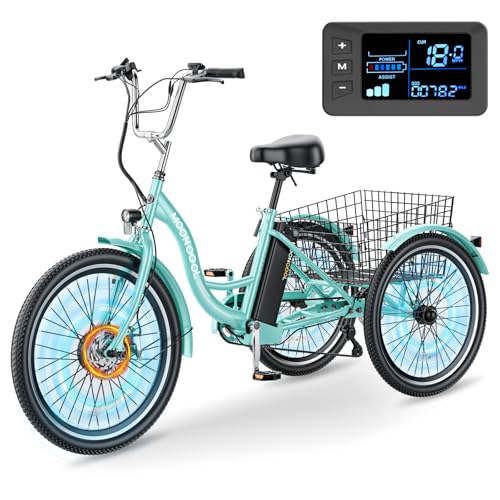
The MOONCOOL tricycle emphasizes a reliable low-power setup that suits daily routes and light terrain. A 350W motor powers the ride, with a 36V 10.4Ah lithium battery delivering a practical range of 22–40 miles depending on usage. Riders can choose from three riding modes, offering a balanced mix of power and efficiency. The design includes double-wall rims for added durability and braking reliability, along with a removable battery for convenient charging at home or the office, making it a practical choice for everyday use.
- Motor: 350W; suitable for urban riding
- Battery: 36V, 10.4Ah removable
- Range: 22–40 miles
- Riding modes: 3 (electric, pedal-assist, classic pedal)
- Durable rims and removable battery
Viribus Electric Tricycle With Removable Battery

The Viribus tricycle emphasizes a compact, beginner-friendly setup with a 250W motor (500W peak) and a 468Wh removable battery. This configuration supports up to 31 miles of range, making it a solid option for daily errands and relaxed rides. An LCD display keeps the rider informed about speed, distance, and battery life, helping plan stops and charging. The frame is designed to be approachable for riders seeking stability, straightforward operation, and a modest power profile, while still offering useful payload capacity and comfortable cruising performance.
- Motor: 250W (500W peak)
- Battery: 468Wh removable
- Range: up to 31 miles
- LCD display for ride data
- Solid entry-level option with stability and ease of use
Buying Guide: Key Considerations When Choosing a 3-Wheel Electric Tricycle
Selecting the right adult three-wheel electric bike involves balancing power, range, and ride comfort against daily needs. Consider where you’ll ride most often, who will operate the trike, and how much cargo you typically carry. Battery capacity directly affects range, while motor power influences uphill capability and acceleration. Braking performance, chassis stiffness, and wheel size shape handling and safety on diverse surfaces. A removable battery can simplify charging, but consider locking mechanisms and potential add-ons. Finally, assess after-sales support, warranty terms, and the availability of spare parts in your region.
Battery capacity, range, and charging
Battery capacity (in watt-hours) drives distance you can cover between charges. Removable packs offer convenience for charging at home or work, but verify weight, locking security, and charging time. If you ride in hilly areas or city routes with frequent stops, a larger capacity can provide more consistent performance and reduce the need for mid-ride charges. Look for batteries with reputable cell chemistry, built-in protection against over-discharge, and a reasonable charge cycle life to minimize long-term maintenance costs.
Motor power, speed, and efficiency
Power ranges from around 250W to 750W (with higher peaks). Higher power helps with steep inclines and rapid acceleration, but it can reduce range if used aggressively. If you mostly ride flat roads or bike paths, a 250–350W setup may suffice. For mixed terrain, a 500–750W configuration offers more flexibility. Consider top speed in your region’s regulations and the ride mode options (throttle, pedal assist, or both) to tailor performance to your comfort level and daily routine.
Brakes, stability, and handling
Hydraulic brakes provide strong, consistent stopping power, especially in wet or variable conditions. Disc brakes are a common standard on mid-range trikes, while some models emphasize full hydraulic systems for premium stopping reliability. A rear differential can improve stability during turning by allowing the rear wheels to spin at different rates, reducing skidding on uneven pavement or gravel. For safety, ensure adequate tire tread and check frame tolerances and overall build quality before purchase.
Frame, weight capacity, and rider comfort
Weight capacity varies across models; most adult trikes support 250–330 pounds, with some higher-end frames accommodating more. A comfortable seat, good weight distribution, and a stable low center of gravity enhance all-day riding ease. Fat tires or wider rims improve traction on slick surfaces, while a low-step-through frame simplifies mounting and dismounting. If you carry groceries or a pet, basket and cargo capabilities can be decisive.
Riding modes, controls, and display
Riding modes typically include full-electric, pedal assist, and manual pedaling. A clear LCD or LED display helps monitor speed, distance, battery status, and assist level. Ease of use matters, so choose models with intuitive controls and reliable, readable displays, especially for riders who prefer a simple, stress-free riding experience.
Maintenance, warranty, and service
Consider the availability of local service centers, warranty length, and parts availability in your area. Recurring maintenance items include brakes, tires, and battery health. A model with UL certification or similar safety standards indicates a commitment to safety and long-term reliability. For riders who travel or commute, check whether replacement batteries and parts are readily available from the brand or authorized dealers.
Practical considerations
Assess the overall weight and foldability if storage space is limited. A larger rear basket or integrated cargo options can reduce trips to the store or maximize weekend excursions. Price is a factor, but balance upfront cost with long-term durability, battery life, and after-sales support. Finally, confirm that the bike fits your inseam, riding posture, and comfort needs to ensure a confident and enjoyable experience on every ride.