Choosing the right roof rail bike rack can simplify road trips, protect your bicycles, and keep gear securely in place. This guide highlights five highly rated roof-mounted options that fit a range of vehicles and bike types, from road bikes to fat tires. Each option is linked for quick comparison and purchase, helping you weigh installation ease, compatibility, and security features before you buy.
| Product | Brand | Key Benefit |
|---|---|---|
| Swagman Upright Roof Mount Bike Rack | Swagman | Easy setup; wheel-on transport; fits up to 54″ wheelbase and 3″ tires. |
| Yakima FrontLoader Rooftop Bike Carrier | Yakima | Versatile carrier for sedans and SUVs; secure mounting for various bike styles. |
| GATHERSKY Roof Bike Rack Upright Carrier | GATHERSKY | Two-arm stability with one-hand release; fits most 18-29″ wheels. |
| Yakima HighRoad Upright Roof Rack | Yakima | Low-profile tray; minimizes hatch interference; easy, tool-free setup. |
| Swagman Standard Fork Mount Rooftop Carrier | Swagman | Simple fork-mount design; quick assembly; secure with 9mm skewers. |
The above selections represent a range of mounting styles—upright and fork-mount—designed to help motorists choose based on vehicle type, bike compatibility, and ease of use. The listed products also cover different capacity needs and security features, giving you several practical options for most common roof rack configurations.
Swagman Upright Roof Mount Bike Rack
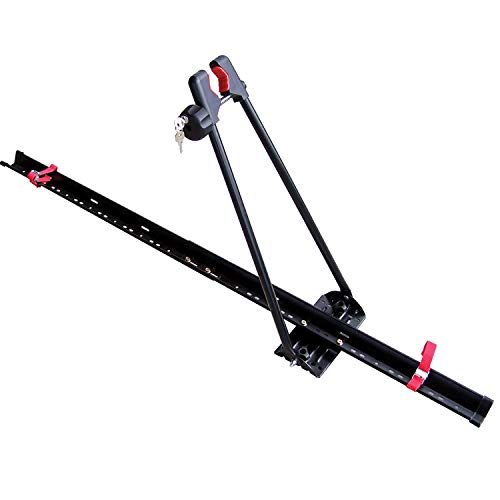
The Swagman Upright Roof Mount Bike Rack is designed for quick installation with no wheel removal. It supports bikes with wheelbases up to 54 inches and tires up to 3 inches wide, making it compatible with many road, mountain, and hybrid models. The rack mounts on square, round, and oval roof bars up to 3 inches wide, enabling multiple units on a single vehicle. Weighing roughly 5 pounds, this option emphasizes portability and minimal visual impact. Maximum weight per bike is listed at 35 pounds, which suits most standard bikes but may exclude some heavier electric or downhill rigs. The design emphasizes a clean, low-profile aesthetic that won’t obstruct rear visibility or tailgate operation. Security depends on the mounting method and vehicle roof hardware, so ensure compatibility with your current rails or crossbars before purchase.
Yakima FrontLoader Rooftop Bike Carrier
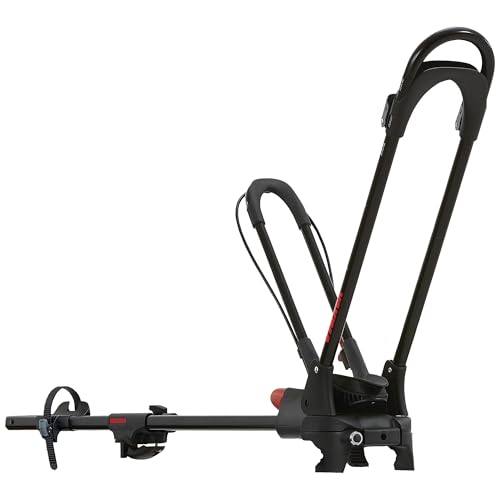
The Yakima FrontLoader is marketed as a versatile transport solution for cars without hitches. It is built to handle a range of bicycles, including mountain bikes and fat tire setups, with a focus on durability and stability during travel. The FrontLoader uses a secure mounting system to hold bikes snugly in place and minimize movement on the roof, which helps reduce noise and sway at speed. Its sturdy construction and reliability make it a strong option for frequent travelers with multiple bike types. As with any roof-mounted carrier, proper installation and crossbar compatibility are essential for safe operation on longer trips.
GATHERSKY Roof Bike Rack Upright Carrier

The GATHERSKY upright rooftop carrier emphasizes security and ease of use. Two pivoting upright arms hold the bike firmly by the wheels, with no front wheel removal required and no contact with the bike frame for maximum protection. An integrated tightening knob enables faster adjustments and fixation, and the ratchet lock mode can release the bike with one hand for quick loading and unloading. The rack is designed for one bike, supporting wheels in the 18–29 inch range and tires up to about 3.1 inches wide. Wheelbase compatibility reaches up to roughly 48 inches, making it suitable for most standard road and mountain bikes. Weight capacity per bike is listed around 44 pounds, providing a solid margin for typical bikes without high-end downhill setups.
Yakima HighRoad Upright Roof Rack
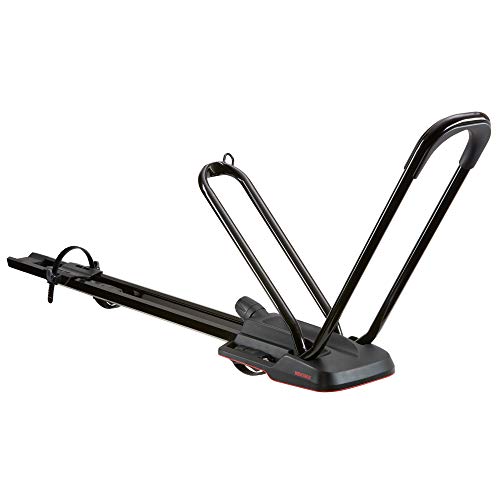
The Yakima HighRoad offers a low-profile tray that minimizes hatch interference for cars without hitches. It accommodates wheels from 26″ to 29″ with tires ranging from 23mm to 4.0″ without requiring wheel removal, and it supports wheelbases up to 48″. The design is described as secure and stable, using an integrated TorqueRight knob to secure the bike with precision. The mounting hardware is described as universal and tool-free, compatible with most roof racks and Yakima StreamLine crossbars, as well as factory or aerodynamic crossbars. This option is favored for its combination of aerodynamic efficiency and ease of use.
Swagman Standard Fork Mount Rooftop Carrier
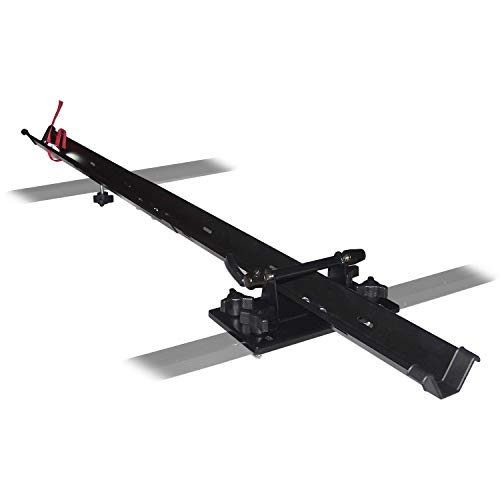
The Swagman Standard Fork Mount Rooftop Carrier emphasizes simple, tool-free assembly and single-bike transport. It uses a fork-mount design to secure the front fork and relies on 9mm quick-release skewers to anchor the bike to the rack, delivering straightforward security. The unit is compatible with square, round, and oval bars up to 3 inches wide, and it is positioned as an easy option for travelers who prefer minimal setup and direct bike mounting. While straightforward, users should confirm compatibility with their specific roof rack system and bike frame geometry to ensure a safe fit on long trips.
Buying Guide
Choosing the right roof rail bike rack involves balancing vehicle compatibility, bike compatibility, security features, and installation practicality. This guide outlines key considerations and practical comparisons to help you decide which option best fits your needs.
- Vehicle compatibility: Upright racks are generally easier to mount on most crossbars and work well with a variety of vehicles, including sedans, SUVs, and trucks. Fork-mount racks can require precise alignment with your roof rails and crossbars but offer a compact footprint. If your vehicle has bare roofs, some crossbar systems like the VEVOR cross bars can expand compatibility, though weight and wind noise should be considered.
- Bicycle compatibility: Check wheelbase, wheel size, and tire width. Many racks accommodate wheelbases up to about 48–54 inches and tires up to roughly 3–4 inches wide. Some carriers specify maximum bike weight per unit (commonly 30–44 pounds). If you own a heavy e-bike or downhill bike, verify weight capacity and secure mounting options before purchasing.
- Security features: Look for integrated locking systems or lockable knobs and anti-theft features. Some models use torque or ratchet mechanisms to secure bikes without frame contact, while others rely on fork-mount skewers. Consider whether the rack itself locks to the vehicle or is easily removable when not in use.
- Ease of installation: Tool-free setups and straightforward alignment reduce setup time, especially for frequent travelers. Fork-mount systems can be quicker for a single bike, while upright trays can store multiple bikes with careful spacing, depending on crossbar width.
- Air dynamics and noise: Aerodynamic cross bars and lower-profile racks generally produce less wind noise at highway speeds. If you regularly drive long distances, investing in a design with a low aerodynamic footprint can improve overall vehicle efficiency and comfort.
- Durability and materials: Aluminum racks are typically lighter and resistant to corrosion, while steel and reinforced plastics offer strength and cost savings. Consider climate exposure and maintenance needs when selecting a material set for long-term use.
- Vehicle-specific considerations: Some SUVs and crossovers with factory rails or flush side rails require compatible mounting hardware. For bare roofs, compatible cross bars or rails are usually necessary, and some models are designed specifically for certain vehicle brands or model years.
- Maintenance and care: Regularly inspect mounting hardware, clamps, and bolts for wear or looseness. Clean any debris and check alignment before trips to prevent shifting or damage during transit.
Across these options, your choice should reflect how you typically travel (daily commuting versus long road trips), the number and type of bikes you carry, and the vehicle you drive. Upright racks tend to offer robust multi-bike support and a broader range of vehicle compatibility, while fork-mount models emphasize simple installation and lightweight setup for a single bike. If you frequently switch between different bikes or vehicles, prioritize universal mounting hardware, secure locking features, and a design that minimizes wind noise and hatch clearance issues. For bare-roof setups, plan on selecting cross bars that maximize compatibility with your preferred rack.