For individuals with limited mobility, a well-chosen exercise bike can support gentle rehabilitation, improve circulation, and maintain joint flexibility without requiring standing or intense exertion. The following selections are tailored to seated use, bed-friendly setups, and caregiver-assisted setups, prioritizing low impact, stability, and ease of use. Each option focuses on safe, controlled movement that fits in a living room, bedside area, or small apartment while supporting gradual progress in endurance and mobility.
| Product | Brand | Primary Use | Notable Feature | Max Weight Capacity |
|---|---|---|---|---|
| NISDOKR Pedal Exerciser For Total Body Rehab | NISDOKR | Seated total-body rehab | Adjustable tension & height for arms & legs | N/A |
| Mini Exercise Bike, Himaly Under Desk Bike | himaly | Under-desk seated workouts | 8-level adjustable resistance; LCD display | N/A |
| HOMGIM Motorized Mini Exercise Bike | HOMGIM | Motor-assisted arm/leg cycling | Motorized and manual modes; forward/backward motion | N/A |
| Birdfeel Foldable Exercise Bike With Arm Resistance Bands | Birdfeel | Full-body seated cardio | 8-level magnetic resistance; foldable with arm bands | 300 lbs |
| Niceday Recumbent Exercise Bike | Niceday | Recumbent therapy and cardio | 16-level resistance; spacious seat; heart-rate capable | 400 lbs |
NISDOKR Pedal Exerciser For Total Body Rehab

The NISDOKR pedal exerciser is designed for seated use, enabling both upper and lower body engagement from a chair or sofa. Its adjustable tension and height let caregivers tailor workouts to a user’s current mobility, promoting low-impact activity that supports circulation and joint mobility. The device prioritizes safety with a compact, stable build suitable for bedside setups or living areas where space is limited.
Construction emphasizes a sturdy carbon steel frame, rubber pedals, and slip-resistant suction cups to secure the unit on smooth surfaces. The adjustable foot straps accommodate different foot sizes, helping maintain proper form during arm or leg pedaling. Quick assembly and included tools mean that caregivers can set up sessions with minimal delay, a practical feature for daily routines and short rehabilitation windows.
For bedridden or mobility-limited individuals, the NISDOKR exerciser provides controlled movement without standing. The device supports gentle leg cycling and arm pedals that can help with blood flow, muscle engagement, and range-of-motion maintenance. Its compact footprint makes it feasible to place beside a bed, a chair, or a small table, encouraging regular, manageable activity as part of a broader rehab plan.
Mini Exercise Bike, Himaly Under Desk Bike
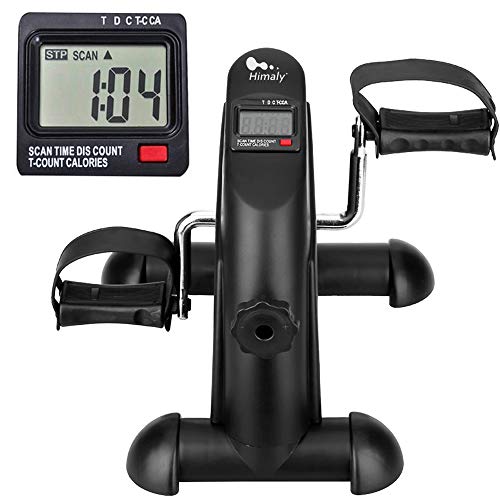
The Himaly under-desk mini exercise bike offers a practical seated workout option for arms and legs with adjustable resistance. Its design supports leg cycling while seated, which can be beneficial for bedridden or limited-mobility users seeking gentle movement to promote circulation and joint mobility. The device’s compact footprint makes it suitable for bedside tables, desks, or small living spaces.
Resistance is adjustable across multiple levels, allowing caregivers to tailor sessions to a user’s tolerance and progress. A multi-level resistance mechanism enables quick changes in effort, while the digital LCD displays time, count, calories, and distance, helping track exercise consistency. A scan feature provides a quick overview of all metrics, useful for monitoring daily activity in rehab settings.
For bedridden patients or those who spend most of the day seated, the Himaly bike provides a safe, low-impact option to engage both arms and legs without leaving the chair. Its portability supports use in different rooms or in hospital settings, while the compact design reduces clutter around the patient’s sitting area and bed.
HOMGIM Motorized Mini Exercise Bike

The HOMGIM motorized mini exercise bike is designed for users with very limited mobility, offering assisted pedal motion in a compact, desk-friendly form. Its quiet operation makes it suitable for use alongside phone calls, television viewing, or computer work. The motorized option supports light to moderate pedal assistance, helping maintain circulation and joint mobility without imposing fatigue.
Speed control is provided across manual levels, with clear guidance on which ranges suit seniors or sedentary workers. The pedal motion can move forward or backward, adding variety to muscle engagement and range-of-motion work. The bike supports both motorized and manual modes, offering flexibility for caregivers who want to adjust the level of support or encourage independent effort over time.
Ergonomic pedals and adjustable operation contribute to a comfortable session, and the device’s compact size makes it feasible to place near a bed, chair, or workspace. This model is especially useful for home rehab plans where frequent short sessions are preferred and where a caregiver can supervise and adjust settings as needed.
Birdfeel Foldable Exercise Bike With Arm Resistance Bands

The Birdfeel foldable exercise bike is engineered for full-body training in a compact, home-friendly form. It combines eight levels of magnetic resistance with detachable arm resistance bands, enabling users to cycle with legs and engage the upper body during the same session. This setup is particularly appealing for bedridden or repositioning-friendly routines where multiple muscle groups are targeted without needing to transfer to different equipment.
The bike is designed for portability and storage. It switches easily between upright cardio, a more relaxed recumbent mode, and a fully folded position for tight spaces. Transport wheels simplify moving the unit between rooms or storage areas. An adjustable, comfortable seat and removable foam handlebar covers enhance user comfort and grip, while a generous 300-pound weight capacity supports a broad range of users.
For those focusing on safe, low-impact rehab, Birdfeel’s system provides a versatile approach to light endurance training, upper- and lower-body engagement, and simple muscle toning. The combination of resistance bands and eight-mlevel magnetic resistance makes it a flexible choice for daily routines, caregiver-assisted sessions, and incremental progress in mobility goals.
Niceday Recumbent Exercise Bike

The Niceday recumbent bike emphasizes comfort with a plush padded seat and ergonomic backrest, making it suitable for longer rehab sessions. An adjustable lever-based seat system accommodates users of different heights, while its quiet magnetic resistance supports peaceful use in living rooms, bedrooms, or shared spaces. This design aims to reduce strain on the back and joints, which is especially relevant for knee and back rehab scenarios.
With 16 levels of progressive resistance and a mechanical knob for precise control, users can transition smoothly from gentle cardio to more challenging sessions. The bike also features heart-rate capable supports, an LCD monitor, and front transport wheels to aid mobility within the home. Its 400-pound weight capacity makes it accessible to a wide range of users while maintaining a stable, durable frame for daily use.
Setup is user-friendly, with about 85% pre-assembly to simplify installation. The combination of a stable frame, ergonomic seat, and mobility aids makes this recumbent bike a practical option for home rehab programs, particularly for patients and caregivers seeking predictable, repeatable workouts with minimal strain.
Buying Guide: Key Purchase Considerations For Bedridden Patients
When selecting an exercise bike for bedridden patients, prioritize safety, stability, and ease of use. Consider how moveable the unit is for caregivers and whether the user will interact with it from a bed, chair, or desk. Below are essential factors to weigh before purchasing:
- Stability and footing: Look for a solid frame, non-slip feet, and suction features if placing the unit on smooth surfaces. A wide base and low center of gravity reduce tipping risk during use.
- Seated-friendly design: Prioritize models designed for seated activation, with ergonomic seats, accessible pedal heights, and adjustable resistance that accommodates gradual progression.
- Resistance type and control: Manual resistance is straightforward and reliable, while motorized options can assist patients with limited strength. Ensure easy control adjustments within reach and safety locks to prevent sudden movements.
- Adjustability: Height, angle, and seat positioning should accommodate different body sizes and caregiver assistance needs. A user-friendly adjustment mechanism reduces setup time and errors.
- Safety features: Look for straps, padded pedals, anti-slip surfaces, and easily accessible emergency stops or quick-release features for immediate disengagement if discomfort occurs.
- Portability and storage: Folding designs and handle/transport wheels help move equipment between rooms or store it when not in use, which is valuable in smaller living spaces.
- Usage versatility: Some units support arm and leg training, forward/backward motion, or recumbent configurations. Choose based on the patient’s rehab goals and the caregiver’s ability to supervise sessions.
- Durability and capacity: A sturdy frame and adequate weight capacity extend the device’s usable life and accommodate different users and caregivers who assist with exercise sessions.
- Ease of maintenance: Simple assembly, easy-to-clean surfaces, and readily available replacement parts contribute to long-term reliability in home care settings.
For caregivers and clinicians, matching the device to a patient’s mobility level, rehab goals, and room layout is essential. Start with shorter, slower sessions to establish tolerance, then gradually increase duration and resistance as comfort allows. Safety should guide every session, with regular checks for wear, slipping, or discomfort.