Dual-battery setups let e-bike riders extend range and power delivery, especially for off-road adventures and daily commutes. This guide reviews five Amazon products that support dual batteries—from smart balancers and parallel connectors to a high-performance e-bike with a removable pack. Each item helps you increase capacity, balance voltage, or connect two batteries safely and efficiently.
Use the summary table below to compare core specs at a glance, then read deeper into each product section for practical considerations, installation notes, and how they fit into different riding styles.
| Product | Brand | Key Benefit | Voltage Range |
|---|---|---|---|
| JOJOCY Dual Battery Connector | JOJOCY | Parallel battery feeding with multiple current options | 20V–72V |
| Flylin Dual Battery Connector | Flylin | Real-time voltage balance with automatic switching | 20V–72V |
| CYOIDAI Double Battery Discharge Converter | CYOIDAI | Smart balancer for dual packs on 24–72V bikes | 24V–72V |
| SZWEDI Double Battery Discharge Converter | SZWEDI | Parallel discharge for longer range on 36–48V bikes | 24V–72V |
| Qlife Electric Bike | Qlife | High-power e-bike with removable 624Wh battery | 48V |
JOJOCY Dual Battery Connector (20V-72V)
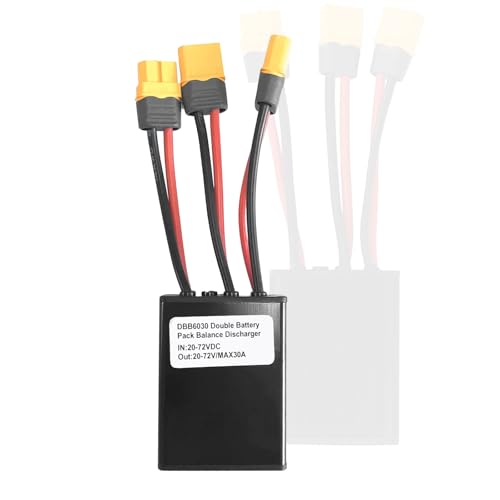
The JOJOCY dual battery connector is designed to extend riding range by feeding two packs in parallel while maintaining balance and safe operation. It supports a broad28 voltage window from 20V up to 72V, enabling compatibility with a wide range of battery chemistries and controller setups. The device offers three current specification options—20A, 30A, and 40A—so riders can tailor current flow to their motor capacity and riding style. Built around an alloy aluminum chassis, the unit is lightweight yet sturdy, with an IP65 waterproof rating for external use in varying weather. The parallel connection uses a through XT60-style interface, simplifying installation for riders who already use dual-pack configurations.
Pros include flexible current options, robust build, and real-time voltage observation; cons include the need for matched voltage and similar capacity packs to ensure balanced performance.
Flylin Dual Battery Connector (20V-72V)

The Flylin dual battery connector provides smart management of two battery packs and supports their simultaneous power delivery to the controller. It continuously monitors the voltages of both packs and can automatically switch from a depleted pack to the other, helping riders avoid unexpected power loss mid-ride. By enabling true parallel operation, it effectively increases total capacity and range. The device uses a simple input/output port design to connect two batteries in parallel while feeding the controller, and it is crucial to ensure both batteries share the same voltage for seamless operation. This module is well-suited for riders upgrading from single-pack setups to extended-capacity configurations.
CYOIDAI Dual Battery Discharge Converter

The CYOIDAI unit is a dual battery discharge converter that functions as a compact balance and distribution module for dual-pack e-bike systems. Its alloy aluminum body offers durability in rugged riding environments, and the IP65 waterproof sealing provides protection against moisture and dust ingress. The device is designed for hub-motor bikes up to around 500W and supports a wide input range, enabling users to run two packs in a controlled, balanced manner. The product is most beneficial when pairing smaller packs to reach a larger total capacity, or when implementing load balancing across two secure power sources. It is suitable for riders who want to optimize pack longevity and performance through a dedicated balance interface.
SZWEDI Dual Battery Discharge Converter

The SZWEDI dual discharge converter is designed for 36V/48V electric bikes and aims to double ride range by discharging two batteries simultaneously. Constructed from alloy aluminum with an IP65 waterproof seal, it prioritizes durability in wet or dusty riding conditions. The device enables parallel discharge to boost overall current and capacity while maintaining voltage balance between packs. Riders seeking to expand range on mid-power e-bikes or to run two compatible packs in tandem will find this model straightforward to integrate, with clear wiring guidance and a robust build. The balance feature helps reduce uneven discharge and improves reliability on longer trips.
Qlife Electric Bike for Adults

The Qlife electric bike presents a high-power, motorcycle-style riding experience with a peak motor output of 1500W and a top speed around 28–35 MPH depending on mode and throttle conditions. It features a detachable 624Wh battery, a 7-speed transmission, and a dual-suspension chassis for improved stability on varied terrains. While not a dual-battery system, this model demonstrates how high-capacity, removable packs can extend rides and simplify charging logistics. It suits riders who want substantial on-demand power, strong all-terrain performance, and a straightforward battery removal process for charging away from the bike. Consider this option when battery swapping and fast charging are priorities, even if a second pack is not currently deployed.
Buying Guide
When planning a dual-battery setup or evaluating dual-battery capable products, several factors determine performance, safety, and value. Below are key considerations and practical comparisons to help riders choose the best configuration for their needs.
- Voltage compatibility and range: Ensure that batteries and controllers operate within compatible voltage windows. Many dual-battery adapters list a range such as 20V–72V, which covers common e-bike systems. Incompatibility can lead to damage or unsafe charging conditions.
- Current handling and balance: Look at current options (for example, 20A, 30A, 40A) and whether the device offers real-time voltage monitoring and automatic switching. Higher current may improve performance on powerful motors, but requires matched packs and robust wiring.
- Parallel vs. series connection: Parallel connections increase capacity (mAh) and available current without changing voltage, while series connections increase voltage and can affect motor torque. Understand which approach your controller and motor support before wiring.
- Connector quality and compatibility: XT60 and similar connectors should be rated for the expected current, with secure locking and weather sealing. Poor connectors can cause arcing, heat buildup, or disconnections during rides.
- Durability and weather resistance: An IP65 (or higher) rating is beneficial for instruments exposed to rain or dust. Aluminum housings provide stiffness and heat dissipation, which matters for longer trips or frequent charging cycles.
- Installation complexity: Some dual-battery devices are plug-and-play, while others require custom wiring, fuse integration, and BMS alignment. Consider your skill level or plan for professional installation if needed.
- Battery matching: For optimal balance and longevity, batteries should have similar voltages, chemistries, and SOC. Mismatched packs can cause uneven discharge and reduced reliability.
- Removability and charging logistics: Removable packs simplify charging away from the bike and enable quick swaps on long trips. Confirm compatibility with your bike’s rack or frame and charging port.
- Weight and handling: Dual-pack setups add weight and alter center of gravity. Ensure your frame, rack mounting, and tires can handle the added load and maintain ride quality.
- Safety and warranty: Check for protective features such as overcurrent protection, fuses, and compliant safety certifications. Review warranty terms for both adapters and batteries in dual configurations.
In practice, riders opting for dual-battery configurations should start by validating voltage compatibility and ensuring a matched pair of packs. Parallel modules can then be added to extend range, while smart balance devices help keep voltages aligned during discharge. For those who primarily ride in urban settings with occasional long commutes, a single high-capacity removable battery may suffice, with dual-pack options reserved for weekend trips or off-road adventures. Always prioritize quality connectors and weatherproofing to maximize reliability and safety over time.