For serious riders seeking lightness, stiffness, and reliable performance on rugged trails, carbon fiber full suspension frames are a top choice. The following selections emphasize carbon fiber construction with modern full-suspension designs, optimized for downhill lines, enduro routes, and aggressive trail riding. Each option blends weight savings with controlled flex and precision handling, while supporting contemporary standards like Boost rear spacing and wider shock compatibility. This guide highlights five current models that illustrate what the market offers in carbon fiber frame technology for full-suspension mountain bikes.
| Product | Frame Material | Suspension | Rear Spacing | Key Feature |
|---|---|---|---|---|
| ICAN P9 29er Dual Suspension Enduro Carbon | Carbon Fiber | Full Suspension | 148x12mm Boost | 150mm travel, RockShox 210x55mm shock option |
| ICAN P1 27.5er Carbon Full Suspension | Carbon Fiber | Full Suspension | 148x12mm Boost | 200x51mm shock, 12x148mm rear spacing |
| SAVADECK Carbon Fiber Mountain Bike With Deore M6100 | Carbon Fiber | Full Suspension | Thru-axle system | Dual-link suspension with internal routing, 12-speed Deore |
| SAVADECK Deck 6.1 Carbon Frame Hardtail | Carbon Fiber | Hardtail (front suspension fork) | 27.5″/29″ wheels (varies) | Hydraulic air fork, 12-speed with Deore M6100 |
| Gravity FSX 1.0 Dual Full Suspension | Aluminum | Full Suspension | Not carbon | Disc brakes, easy shim shifters, adjustable suspension |
ICAN P9 29er Carbon Full Suspension Frame
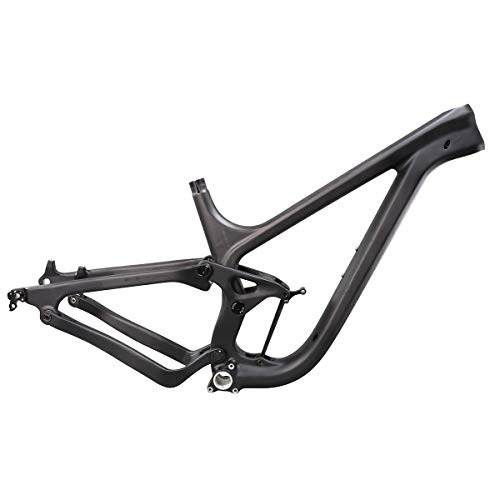
The ICAN P9 is designed for aggressive 29er trail and enduro riding, built around a full carbon fiber frame that prioritizes stiffness for efficient power transfer while absorbing trail irregularities. The frame supports a 150mm travel setup with a 210x55mm shock, aligning with RockShox options for flexible tuning. Rear spacing is a Boost 148x12mm standard, which broadens wheel compatibility and improves brake and chainline alignment. End-users can pair the frame with modern components for both downhill lines and long alpine climbs, taking advantage of the frame’s lightness and control on steep descents.
- Full carbon fiber frame with full suspension
- Shock size: 210x55mm (RockShox models available)
- Rear spacing: 148x12mm thru-axle
On technical climbs, riders benefit from a responsive feel that preserves traction, while the frame’s geometry is suitable for a wide range of wheel sizes and tire widths. This makes the P9 a strong choice for riders who want a capable carbon frame that can handle demanding terrain with confidence. The presence of Boost rear spacing further improves stiffness and wheel stability on rough trails, contributing to precise steering and predictable handling when the trail gets steep.
ICAN P1 27.5 Carbon Full Suspension Frame
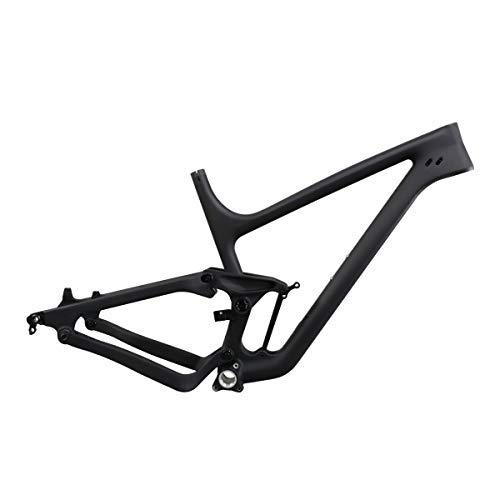
The ICAN P1 pairs a carbon frame with a full-suspension layout optimized for trail and enduro riding on 27.5 wheels. It uses a 200x51mm shock and 148x12mm rear thru-axle spacing to deliver a stiff, controllable ride. The frame’s carbon construction contributes to reduced unsprung weight, which improves bump absorption and wheel contact on rough terrain. With a Boost-compatible rear end and precise wheel alignment, the P1 is designed for riders who demand quick, confident handling on technical descents while maintaining efficient climbing performance.
- Full carbon fiber frame
- Shock size: 200x51mm (RockShox models available)
- Rear spacing: 148x12mm thru-axle
Riders can tailor suspension setup to their preferred terrain, blending plushness with midstroke support to keep tires planted through rock gardens and roots. The P1’s mid- to high-travel characteristics suit versatile trail networks and aggressive laps, making it a compelling option for riders who want a lighter carbon frame without compromising on suspension performance or stability on steep sections.
SAVADECK Carbon Fiber MTB With Deore M6100

This SAVADECK bike emphasizes a lightweight carbon fiber frame paired with a dual-link suspension system and internal cable routing, which reduces wind resistance and simplifies cable management. The thru-axle shoulder-controlled hydraulic system provides rigidity and precise wheel alignment, complemented by a lockout air shock with adjustable rebound and damping. The build is completed with a Shimano Deore M6100 12-speed groupset, offering smooth, reliable shifting and a broad gear range for variable terrain. The combination aims to deliver a confident ride on rough singletrack and flowy dirt roads alike.
- Lightweight carbon fiber frame with reinforced rear triangle
- Dual-link suspension, internal cable routing
- Thru-axle shoulder-controlled hydraulic system
- Lockout air shock, adjustable rebound and damping
- Shimano Deore M6100 12-speed groupset
Riders seeking a carbon frame with sophisticated suspension geometry will appreciate the dual-link arrangement, which helps keep the rear wheel in contact with the ground through varying terrain. The internal routing keeps cables tidy and protected, while the hydraulic-assisted axles and damping deliver predictable feedback essential for technical descents and cornering stability on rough trails.
SAVADECK Deck 6.1 Carbon Frame Hardtail

The Deck 6.1 showcases a high-strength carbon fiber frame designed for cross-country to all-mountain riding, with a 27.5″ / 29″ wheel compatibility and a 12-speed setup featuring Shimano Deore M6100. While it is described as a hardtail, the frame is built from carbon fiber and includes a hydraulic air suspension fork to broaden its capability on rough terrain. This combination emphasizes lightness and efficiency on climbs while maintaining controlled performance on techy descents. It’s a strong option for riders who want carbon fiber efficiency in a hardtail package.
- T800 carbon fiber frame
- Hydraulic air suspension fork (100mm travel)
- 12-speed with Deore M6100
- 27.5″ / 29″ wheel compatibility
For riders prioritizing a carbon frame with a capable front suspension, the Deck 6.1 offers a compelling balance of weight savings and rider-friendly performance. The front suspension fork helps absorb chatter on rough trails, while the carbon frame contributes to efficient pedaling and a responsive ride across varied terrain. This model demonstrates how carbon fiber can be leveraged in hardtail configurations to deliver strong all-around performance.
Gravity FSX 1.0 Dual Full Suspension

The Gravity FSX 1.0 is a full-suspension mountain bike built with an aluminum frame, designed to deliver solid all-round performance at a more accessible price point. It features front and rear suspension for better shock absorption, disc brakes for reliable stopping power, and Shim Shifters for straightforward gear changes. While not carbon fiber, this model provides a practical contrast to carbon options, illustrating how full-suspension platforms can be implemented across frame materials. It’s a viable baseline for riders weighing carbon vs aluminum trade-offs in their build planning.
- Aluminum frame with adjustable front and rear suspension
- Disc brakes for strong stopping power
- Shim Shifters for simple shifting
- Versatile design for a broad range of trails
Compared with carbon options, the Gravity FSX 1.0 prioritizes affordability and durability while still delivering a capable off-road experience. It serves as a useful reference point when evaluating ride quality, weight, and long-term maintenance considerations across material classes and suspension configurations.
Buying Guide: Key Considerations When Choosing a Carbon Fiber Full Suspension Frame
- Frame material and weight: Carbon fiber frames offer notable weight savings and excellent stiffness-to-weight ratios. They typically deliver sharper acceleration and nimble handling, especially on technical trails. However, price and care requirements differ from aluminum frames, so assess your budget and maintenance expectations before choosing carbon.
- Suspension design and travel: Full suspension systems vary in travel and geometry. For enduro and aggressive riding, aim for 140–160mm travel with a progressive feel and a reliable rear linkage. For lighter trail use, a 120–140mm range may be sufficient. Consider how the frame’s geometry complements your preferred riding style and terrain.
- Shock compatibility and sizing: Shocks come in various sizes (for example, 210x55mm or 200x51mm). Ensure the frame you choose accommodates your preferred shock size and has the mounting provisions to match your chosen brand. Compatibility with existing suspension components can reduce build time and complexity.
- Rear axle standard and wheel compatibility: Boost 148x12mm is common in modern frames, enabling stiffer wheels and better alignment. Confirm rear spacing and the wheel options (27.5 vs 29 inches) supported by the frame, as this affects tire clearance, ride feel, and overall geometry.
- Front suspension and fork compatibility: Some carbon frames are paired with high-quality suspensions from RockShox, Fox, or other brands. Check fork travel and mounting standards to ensure smooth integration and reliable performance on rough terrain.
- Geometry and fit: Frame reach, stack, top-tube length, and seat-tube angle influence long-ride comfort and control. A correctly sized carbon frame improves climbing efficiency and cornering stability, while a poorly sized frame can diminish handling on descents.
- Durability and warranty: Carbon frames demand careful inspection for manufacturing defects and damage. Review the manufacturer’s warranty details and maintenance recommendations, and consider the availability of service centers for re-sprays, repairs, or frame replacements.
- Cost and value: Carbon fiber frames are generally more expensive than aluminum, but they offer long-term benefits in performance and weight. Balance upfront cost against expected usage, maintenance costs, and resale value when selecting a frame.
- Component compatibility: Ensure the frame design supports your drivetrain, brakes, and wheel setup. Compatibility with 12-speed drivetrains, hydraulic brakes, Boost standards, and compatible rear shocks will simplify assembly and performance tuning.
In sum, carbon fiber full suspension frames excel where weight, stiffness, and precise handling matter most. The frames showcased here illustrate how different geometry and suspension configurations can influence ride feel on a range of trails, from fast alpine descents to technical rock gardens. When choosing, consider your terrain, preferred wheel size, shock sizing, and budget to find the carbon frame that best aligns with your riding goals.