Choosing the right mobility aid helps adults maintain independence during daily activities, indoors and out. This guide highlights five highly-rated walkers and knee scooters available on Amazon, selected for safety, durability, and user comfort. From lightweight folding walkers to all-terrain knee scooters, the options below cover common needs—home use, errands, or longer outings—so you can pick the best fit for your routine.
Below is a quick summary table to help you compare at a glance. Consider weight capacity, wheel size, and whether you need a seat or a brake for added security when choosing the right model.
| Product | Brand | Key Benefit |
|---|---|---|
| Drive Medical Folding Walker With Wheels | Drive Medical | Lightweight aluminum with 5″ wheels; 350 lb capacity |
| BlessReach Knee Walker Deluxe | BlessReach | 8″ wheels; smooth maneuverability; 300 lb capacity |
| KneeRover Walk Assist | KneeRover | Seated walker; reduces weight on injured leg |
| VOCIC 2-In-1 Rollator Walker | VOCIC | Foldable rollator-chair with brakes |
| VitaSophy All Terrain Knee Scooter | VitaSophy | All-terrain wheels; disc brakes |
Drive Medical Folding Walker With Wheels
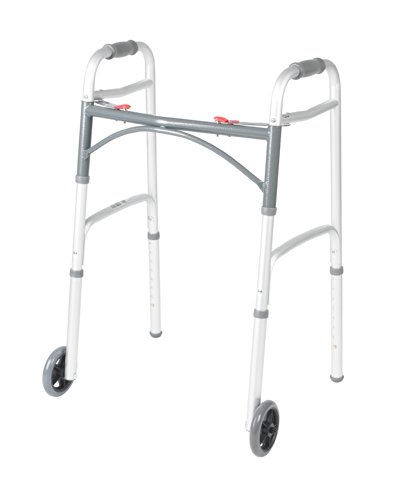
The Drive Medical 10210-1 Folding Walker uses a sturdy aluminum frame for strength and light weight. It features push-button folding that can be operated by fingers, palms, or the side of the hand. Five-inch wheels roll smoothly on most surfaces, and rear glide caps help it slide over thresholds without snagging. The height is adjustable to fit a wide range of users, and the unit supports up to 350 pounds. This combination of safety features and portability makes it suitable for daily use.
Ideal for seniors and adults who need steady mobility at home or during short outings, the contoured vinyl hand grip reduces fatigue and provides a secure hold. The lightweight design makes transport easy, and the fold-down frame stores compactly in a closet or car trunk. Regular checks of brakes, wheels, and grip ensure continued safety and reliability for everyday activities.
BlessReach Knee Walker Deluxe
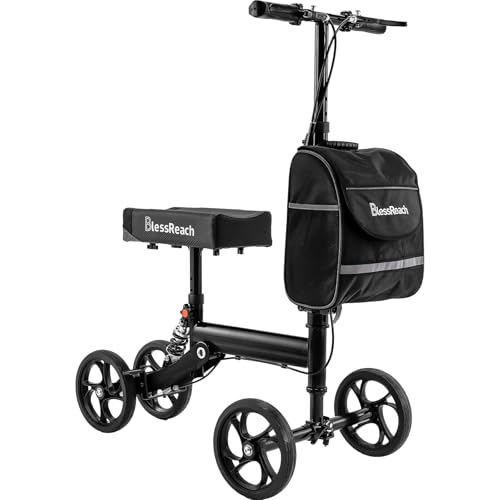
The BlessReach knee scooter is designed for foot injuries and post-surgery recovery. It serves as a comfortable alternative to crutches, allowing hands-free mobility while keeping weight off the injured leg. The scooter features 8-inch front and rear wheels for stability and smooth gliding, plus a shock-absorbing frame that improves comfort on uneven floors. An ergonomic locking handbrake enhances safety, and the padded knee rest supports hours of use for daily tasks.
With a weight capacity around 300 pounds, the BlessReach is built to support a wide range of users. It offers easy maneuverability, though proper balance is required to operate it safely. Regular maintenance includes keeping the wheels clean, inspecting brakes, and ensuring the knee pad remains cushioned. This device is best for people who want to stay mobile during recovery without bearing full body weight.
KneeRover Walk Assist

The KneeRover Walk Assist is a seated walker designed to help users walk longer distances with reduced load on an injured leg. It enables mobility for those recovering from leg, ankle, foot injuries, or arthritis, allowing more natural movement than upright walkers or crutches. The device aims to reduce pain by distributing weight more evenly and by offering a stable, supported platform.
Compared with standard walkers, the Walk Assist can provide significant relief by reducing up to four times more weight on the injured limb for many users. It is designed for use at a normal walking pace, but requires good balance and user comfort with seated mobility. Safety instructions should be followed, and balance should be practiced gradually for best results.
VOCIC 2-In-1 Rollator Walker

The VOCIC 2-in-1 Rollator-Walker combines a standard rolling walker with a transport chair. It offers a one-hand folding mechanism for easy storage and a backrest extended by 4 inches to improve seating safety. The unit supports a maximum width of 24 inches, folds to about 19.7 by 25.2 by 33.5-39.4 inches, and weighs around 26.7 pounds, which aids portability. Built-in handbrakes and a secure strap add control and security across indoor and outdoor settings.
This model suits users who want both mobility assistance and a place to rest during outings. Its tires are non-inflatable for reliable traction on different surfaces, and the backrest helps posture when seated. When doorways are narrow or storage space is limited, the compact folded dimensions help with car trips and travel.
VitaSophy All Terrain Knee Scooter
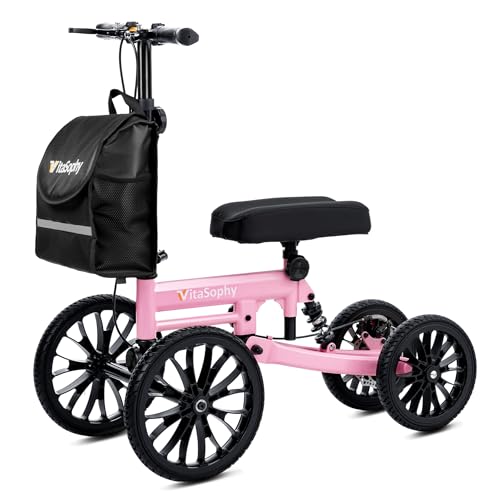
VitaSophy All Terrain Knee Scooter with Disc Brakes is designed for adults recovering from foot, ankle, or lower-leg injuries. It features two large front wheels (12 inches) and two rear wheels (10 inches) for stability on grass, gravel, or sidewalks. The disc brakes and locking hand brakes provide precise control on uneven surfaces, while the no-inflation tires reduce maintenance. The scooter is foldable for easy transport and storage, making it suitable for outdoor errands and longer indoor walks without overloading the injured limb.
As with any mobility aid, proper setup, balance, and guidance from a clinician are advised. The VitaSophy model offers strong all-terrain capability and responsive braking, making it a solid option for users who need dependable outdoor mobility and a comfortable knee-rest experience during recovery.
Buying Guide
Choosing the right mobility aid depends on injury type, daily routine, and living environment. Below are key considerations to help you compare options and make an informed decision.
- Intended use and terrain: Indoor use often benefits from lighter frames and smaller wheels (5″ wheels in many walkers), while outdoor use may require larger wheels and all-terrain capability (as found in all-terrain knee scooters).
- Weight capacity and frame material: Heavier users may need bariatric-grade walkers (like Drive Medical) with durable aluminum frames. Aluminum provides a balance of strength and lightness for easier handling.
- Wheels, brakes, and maneuverability: Larger wheels offer smoother rides on uneven surfaces; locking handbrakes add safety on slopes or ramps. Non-inflatable tires reduce maintenance and puncture risk for everyday use.
- Seating and back support: A built-in seat and extended backrest can be valuable for rest breaks during longer outings, especially for seniors or users with limited stamina.
- Foldability and portability: Consider folded dimensions and total weight if you transport the device in a car or store it in a small space. Some models fold with one hand, which is convenient for caregivers as well.
- Adjustability and fit: Height-adjustable handles or leg rests ensure a proper ergonomic fit, reducing strain on the back and shoulders. A correct fit improves safety and comfort during use.
- Maintenance and aftercare: Look for rust-resistant finishes, simple cleanability, and readily available replacement parts (wheels, brakes, padding). Check warranty terms for peace of mind.
- Seating vs standing preference: If a user prefers to stand and walk, a traditional rolling walker may be best. If relief from weight-bearing is a priority, a knee scooter or seated walker could be more suitable.
- Space constraints and doorway width: Some walkers require wider doorways. Measure doorways and the living space to ensure the device fits through entrances and around furniture.
When evaluating models, match the device’s strengths to the user’s daily activities. For long indoor or outdoor trips, consider knee scooters with stable wheels and dependable brakes. For quick trips around the house, a lightweight rolling walker with ample adjustability can provide reliable support. For those who need occasional rest breaks, a rollator with a built-in seat offers both mobility and resting options. Always consult a healthcare professional if you are unsure which mobility aid best meets your recovery or daily living needs.