Finding the right knee scooter can improve mobility during recovery. This guide highlights five top all-terrain and foldable knee scooters that serve as effective alternatives to crutches, helping you move safely indoors and outdoors. Each option is designed to reduce upper body strain and provide stability, comfort, and easy maneuverability for adults recovering from foot, ankle, or lower-leg injuries.
| Product | Brand | Key Features | Notes |
|---|---|---|---|
| BlessReach All Terrain Knee Scooter | BlessReach | All-terrain steerable design, double handbrake, 300 lb capacity | Includes durable wheels for varied surfaces |
| Vive Mobility All Terrain Knee Walker | Vive Mobility | 12″ pneumatic wheels, dual rear friction brakes, contoured knee pad | Storage bag included |
| BlessReach All Terrain Foldable Knee Scooter | BlessReach | Foldable, adjustable knee pad, 11″ front / 9″ rear wheels | Six-level height adjustability |
| BlessReach Knee Scooter Steerable Deluxe | BlessReach | 8″ front and 8″ rear wheels, shock absorption, locking handbrake | Supports up to 300 lb |
| KneeRover Steerable Knee Scooter | KneeRover | Fully adjustable knee pad and handlebars, folds for transport, 300 lb capacity | Lightweight at about 22 lb |
BlessReach All Terrain Knee Scooter

The BlessReach All Terrain Knee Scooter is designed as a robust alternative to crutches. It emphasizes stability and confidence for adults recovering from foot, ankle, or calf injuries, including below-knee amputees. The scooter balances mobility and safety with an all-terrain steering setup, featuring two 12-inch front wheels and two 10-inch rear wheels. This configuration supports movement across grass, gravel, dirt, and uneven sidewalks. A padded knee brace reduces pressure points and distributes weight evenly, while the double handbrake system provides reliable stopping power. With a weight capacity of up to 300 pounds, the design aims to accommodate a wide range of users and promote gradual, controlled rehabilitation without overstraining the upper body.
Users benefit from improved maneuverability compared with crutches, reducing armpit friction and enabling hands to assist with daily tasks. The durable frame and contoured knee rest promote comfort during longer sessions, and the overall build emphasizes stability on varied surfaces. This model is well-suited for home or outdoor use, helping patients regain independence while navigating changes in terrain with reduced fatigue.
Vive Mobility All Terrain Knee Walker

The Vive Mobility All Terrain Knee Walker offers an independent, hands-free option for leg injuries. Its 12-inch pneumatic wheels deliver high stability and smoother riding across a variety of surfaces, including carpet, gravel, grass, dirt, and pavement. The dual rear friction brake system provides enhanced control on uneven terrain and gentle inclines, promoting safer navigation for users who require steady footing during recovery. The contoured knee cushion cradles the leg, reducing pressure points and preventing fatigue in the hip, knee, and leg. A included storage bag adds practical value for daily essentials during mobility.
Designed for reliability, this knee walker emphasizes ease of use and transportability. Its steering mechanism allows precise direction without overexerting the user, while the overall construction aims to minimize energy expenditure during longer outings. The Vive mobility solution is suitable for post-surgery recovery or injuries to the foot, ankle, or lower leg, offering a stable alternative to traditional crutches with a focus on comfort and safety.
BlessReach All Terrain Foldable Knee Scooter

The BlessReach All Terrain Foldable Knee Scooter emphasizes portability without sacrificing all-terrain performance. With two 11-inch front wheels and two 9-inch rear wheels, the design provides stable handling on diverse surfaces such as grass, gravel, dirt, and sidewalks with crevices. The model eliminates the need for inflation, and its foldable frame supports easy storage and transport. A six-level adjustable knee pad and handlebars optimize fit for users ranging from about 5’6″ to 6’6″ tall, promoting ergonomic posture during recovery. This economical option balances value with practical versatility for everyday use.
Constructed for durability, the foldable design reduces the bulk when traveling or storing in tight spaces. The wheels are chosen for stability and smoother rolling compared with some PU wheels, delivering a comfortable experience on varied terrains. The knee scooter supports a broad range of injuries and surgeries, including foot and ankle recovery, while providing reliable braking and control to help users regain confidence behind the wheels.
BlessReach Knee Scooter Steerable Deluxe
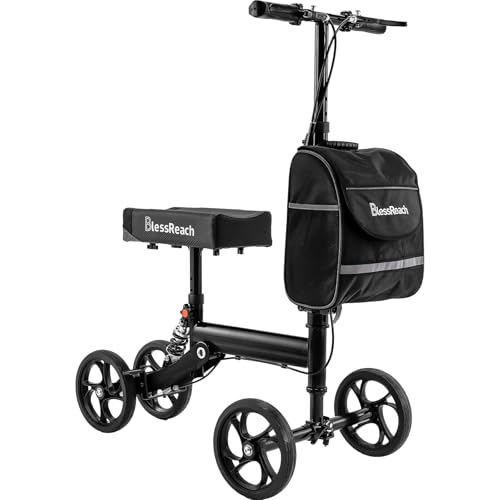
The BlessReach Steerable Deluxe knee scooter emphasizes safety and comfort for foot injuries, including post-surgery recovery. The design incorporates a curved bottom frame to provide better support and stability, along with a shock-absorbing feature that enhances comfort during movement. An 8-inch front wheel and an 8-inch rear wheel offer a balanced ride, while an ergonomic, adjustable locking handbrake improves safety by enabling controlled stopping and easy speed management. With a weight capacity up to 300 pounds, this model aims to support a wide range of users during rehabilitation and daily activities.
The scooter’s modular assembly and detachable components facilitate easier setup, usage, and storage. It is designed for both indoor and light outdoor use, making it a versatile option for patients who need reliable mobility across different environments while avoiding the fatigue associated with crutches. The combination of stability, comfort, and straightforward operation positions it as a practical choice for many recovery scenarios.
KneeRover Steerable Knee Scooter

The KneeRover Steerable Knee Scooter is a USA-brand option designed for durability and ease of use. It features a fully adjustable knee pad and handlebar, enabling a personalized fit for riders from about 5’3″ to 6’5″. The scooter folds quickly, making transport straightforward, and it weighs roughly 21.9 pounds while supporting up to 300 pounds. The lightweight design reduces fatigue during use and makes it easier to store when not in use. The product emphasizes portability without compromising stability, which is particularly beneficial for daily activities during recovery.
With its proven track record and family-owned approach, KneeRover focuses on practical mobility solutions. The adjustable components accommodate various body sizes and healing stages, allowing users to progress safely from immobilization to more active movement. While the model prioritizes user comfort, it also offers a sturdy frame and reliable braking and steering for controlled navigation across indoor and outdoor surfaces.
Buying Guide: Key Purchase Considerations and Comparisons
Choosing the best knee scooter requires weighing how the device will be used in daily life and across different terrains. Here are the main considerations and how the highlighted models stack up against common needs.
- Terrain and surface compatibility: All-terrain models with larger front and rear wheels deliver better stability on grass, gravel, and uneven sidewalks. If most use is indoors, a compact design with robust braking and padding may suffice. The BlessReach all-terrain and Vive Mobility options excel on multiple surfaces, while foldable models prioritize portability for travel or tight storage spaces.
- Weight capacity and rider height: Most top options support up to 300 pounds, but height adjustability matters for comfort and proper knee alignment. Models with six-level knee pad adjustments and adjustable handlebars better accommodate a wider range of heights, reducing strain and improving posture during recovery.
- Braking system and safety features: A dual braking system or mechanical handbrake adds control, especially on inclines or uneven ground. Dual rear friction brakes, or a lockable handbrake, help prevent unintended movement, which is essential for stability in slippery or uneven environments.
- Comfort and knee support: Contoured knee pads and padded rests reduce pressure points and fatigue. Shock absorption and ergonomic frames also contribute to a smoother ride, particularly for longer sessions or when traversing rough terrain.
- Portability and storage: Foldable designs save space and simplify transport. Check folding mechanisms and quick-release components to ensure easy setup and breakdown, especially for trips to physical therapy or outdoor activities.
- Maintenance and durability: Look for durable frames, quality wheels, and straightforward assembly. AUA (American) brands with service networks often provide better warranty support and replacement parts, which is advantageous during recovery.
- Accessories and convenience: Storage bags, baskets, or included accessories can enhance practicality for everyday use, such as carrying personal items during outings or appointments.
- Cost-to-value balance: While all-terrain and deluxe models tend to be pricier, they offer broader mobility and longer-term utility. For occasional indoor use, a foldable option can provide excellent value without sacrificing support.
- Warranty and support: Prioritize products from reputable brands that offer warranty coverage and responsive customer service. This can be crucial if parts require adjustment or replacement during the recovery period.
Across the five highlighted options, considerations such as terrain compatibility, weight capacity, and braking systems will guide which model best suits a user’s specific recovery plan. All five provide a viable alternative to crutches, focusing on comfort, stability, and independence. When selecting a knee scooter, assess your typical environment, daily activities, and the likelihood of transitioning from crutches to more mobile mobility over time. The right choice can support safer movement, faster rehabilitation, and an improved quality of life during recovery.