Electric racing dirt bikes blend kid-friendly excitement with serious off-road capability. This guide spotlights five racing-grade models designed for safe, high-energy rides on grass, dirt, and trail surfaces. Each bike features a brushless motor option, adjustable speed settings, and rugged tires built to handle rough terrain. Whether you’re shopping for a budding young racer or a parent seeking a higher-power option, these bikes balance performance with durability and safety for demanding outdoor use.
Summary table of chosen products
| Product | Brand | Top Speed | Power (W) | Battery | Tire Size |
|---|---|---|---|---|---|
| Blissskip 500W Kids Racing Dirt Bike | Blissskip | 18.6 MPH | 500 | 36V 5.2Ah | 14-inch |
| OLALA 340W Racing Dirt Bike | OLALA | 12 MPH | 340 | 24V 5.2Ah | 16-inch |
| ECOLEAP 36V Kids Dirt Bike | ECOLEAP | 16 MPH | N/A | 36V 5.2Ah | Not specified |
| AIII Racing Grade Electric Dirt Bike | AIII | 15.5 MPH | 500 | 24V 5Ah | 16-inch |
| OLALA 36V 350W Racing Dirt Bike | OLALA | 18.6 MPH | 350 | 36V 5Ah | 14-inch |
Blissskip 500W Kids Racing Dirt Bike
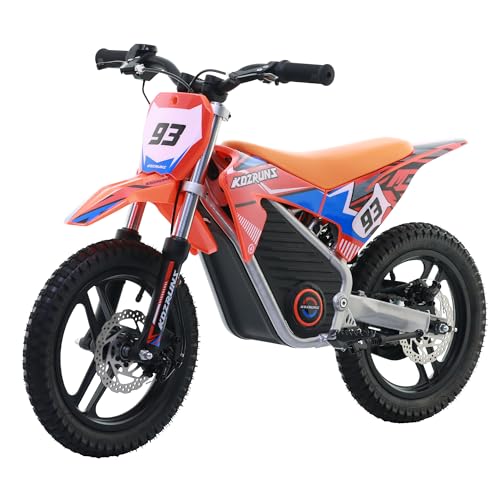
Blissskip’s 500W peak motor delivers ready-for-action acceleration with a rear-wheel-drive setup. The bike reaches up to 18.6 mph, and riders can choose among three speeds (9.3, 13.7, and 18.6 mph) to match skill level. An aluminum frame keeps the overall weight manageable while a 36V 5.2Ah lithium battery provides solid runtime. Large 14-inch off-road tires, a rear spring shock, and waterproof components help it tackle grass, mud, and light trails. Safe disc brakes and robust construction support confident handling for riders aged roughly 5 to 10 years.
The bike is designed for competition-ready performance in a kid-friendly package, pairing a high-torque brushless motor with a lightweight chassis. Its responsive grip and stable ride quality make it a strong option for young racers who want more than a toy bike while maintaining safety and durability for regular outdoor use.
OLALA 340W Racing Electric Dirt Bike

OLALA’s 340W racing-grade dirt bike is engineered for ages 5-10 with a robust 24V brushless motor and a sturdy aluminum frame. It offers three speed settings and a top speed around 12 mph, making it a practical step up for beginner racers advancing from entry-level bikes. The 36V 5.2Ah battery supports reliable runtime, while 16-inch knobby tires provide solid grip on loose terrain. This model emphasizes balance and control, allowing young riders to practice throttle control, braking, and cornering in varied off-road conditions.
Durability is a focus, with a compact yet rigid build that resists typical riding jolts. The combination of a capable motor, responsive braking, and larger tires helps new racers transition to more challenging courses while preserving rider confidence on dirt paths and grassy fields.
ECOLEAP 36V Kids Electric Dirt Bike

ECOLEAP focuses on safety and practicality for young riders with a 36V system and a 5.2Ah battery. It provides three speed modes—low, medium, and high (6 mph, 9 mph, and 16 mph, respectively)—to support gradual skill development. The bike features an inverted spring hydraulic front fork and a rear parking brake, plus IP54-rated waterproofing to withstand light rain and splashes. A seven-color ambient lighting design adds a cool factor without compromising safety, making it appealing for casual weekend rides as well as more energetic practice sessions.
With a strong emphasis on longevity, ECOLEAP balances power with reliability. The bike’s durable construction and protective components help young riders gain confidence across a variety of surfaces, from smooth driveways to grassy fields and gentle hills.
AIII Racing Grade Electric Dirt Bike

AIII targets older kids within a 6–12 age range with a 500W brushless motor for a strong, quiet ride. Three speed settings—from beginner-friendly low speeds to more advanced mid-range and top-end speed—allow riders to progress safely. The bike uses a 24V 5Ah lithium-ion battery, and a five-second battery swap simplifies quick field charging between sessions, extending playtime. With 16-inch off-road tires and a robust aluminum frame, the AIII balances power, durability, and easy handling for more demanding trails and uneven terrain.
Riders can expect up to about 15.5 miles of range in typical use, with 40–60 minutes of continuous riding per charge, depending on terrain and speed. The combination of performance and practical battery design makes it a compelling option for pre-teen riders moving toward more challenging courses.
OLALA 36V 350W Racing Dirt Bike

This OLALA model combines a 350W mid-drive brushless motor with a top speed of up to 18.6 mph, making it a strong choice for riders ready to push their limits. The bike offers three speed settings and features dual disc brakes for solid stopping power in varied conditions. A 36V 5Ah battery supports comfortable ride times on typical off-road courses, and the 14-inch off-road knobby tires deliver stable grip and predictable handling on dirt and gravel. The bright red finish adds visibility and appeal for young racers seeking a more mature ride.
Designed with a focus on racing-grade performance in a kid-friendly package, this model emphasizes throttle response, braking confidence, and reliable battery life. It’s well-suited for riders seeking higher-speed practice while maintaining solid safety features and maneuverability on uneven terrain.
Buying Guide
Rider Age And Skill Level
Choose a bike whose top speed and power align with the rider’s experience. For younger beginners, models with lower top speeds (around 9–12 mph) and three-speed options help build confidence. As skills advance, moving up to bikes with 15–19 mph tops and more sophisticated braking and suspension improves control and safety on varied surfaces.
Motor Power And Top Speed
Higher wattage typically means quicker acceleration and better hill-climbing ability, but it also demands careful supervision and age-appropriate limits. Look for bikes that clearly list peak power and adjustable speeds. Brushless motors generally offer smoother, quieter operation and longer life than brushed motors, which is beneficial for enthusiastic riders practicing on weekends.
Battery Life And Charging
Battery capacity (Ah) and voltage determine range and performance. Removable batteries offer convenient charging options, while non-removable packs can reduce maintenance steps but require careful charging schedules. Consider charging times and how quickly the bike can be ready for another session. A battery with a reversible or swappable design can minimize downtime during long practice days.
Tire Type And Suspension
Rugged, knobby tires provide better grip on dirt and grass, while smaller or smoother tires suit pavement and gravel. Suspension quality matters for comfort and stability over bumps; front forks and rear shocks help maintain control at higher speeds on rough terrain. The right tire size, profile, and tread pattern can dramatically influence handling and ride smoothness.
Brakes And Safety Features
Disc brakes and hydraulic systems deliver reliable stopping power, which is crucial on hills and wet surfaces. Check brake placement (front, rear) and ease of adjustment. Visibility features, such as bright colors and reflectors, plus age-appropriate guard rails and padding, contribute to safer riding experiences for younger riders.
Durability And Weather Resistance
Durable frames, splash-proof or IP-rated components, and quality seals help bikes withstand off-road conditions. If you expect rain or muddy trails, prioritize models with water-resistant electronics and corrosion-resistant hardware. A solid, lightweight frame reduces fatigue during long sessions.
Maintenance And Parts Availability
Consider how easy it is to source replacement parts, tires, and batteries. Brands with readily available spare parts and straightforward maintenance routines reduce downtime and keep bikes on the trail. User reviews often reveal common wear points and the practicality of routine upkeep.
Price And Value Considerations
Balance upfront cost with expected lifespan and performance. Higher-powered, feature-rich models may deliver longer play value but come with steeper prices. Evaluate whether the bike’s power, safety features, and durability justify the investment for the intended rider and usage frequency.