Choosing a no-pedal bike helps young children learn balance and coordination before they graduate to a traditional bicycle. The five models highlighted here represent well-regarded options for toddlers and early learners, emphasizing safety, light weight, and grow-with-child adjustability. This guide outlines their design features, age ranges, and what to consider when selecting the best match for a child.
These five options emphasize safety, light weight, and growth with the child, guiding balance-based learning before pedaling.
| Product | Brand | Age Range | Key Benefit |
|---|---|---|---|
| Gamfeiny Colorful No-Pedal Balance Bike | Gamfeiny | 10-36 months | Colorful lighting wheel; no batteries needed |
| SEREED Toddler No-Pedal Balance Bike | SEREED | 2-5 Years | Tool-free adjustment; sturdy steel frame |
| Strider 12″ Sport No-Pedal Balance Bike | Strider | 1-4 Years | Adjustable height; foam tires that never go flat |
| Birtech 12 Inch Balance Bike No Pedal | Birtech | 2-5 Years | Lightweight; EVA tires; adjustable seat height |
| Youthkkee 12 Inch No-Pedal Balance Bike | Youthkkee | 2-5 Years | Tool-free adjustments; customizable plate |
Gamfeiny Colorful No-Pedal Balance Bike

Designed for ages 10-36 months, the Gamfeiny balance bike eliminates pedals to help little riders learn balance, steering, and coordination. The rear wheel glows with a colorful light when spun, without batteries. It features a widened closed wheel to protect tiny feet and a 135-degree steering limit to reduce falls. These safety-focused features support a confident, fun first riding experience.
Parents value this model for safety and early confidence. By letting children push off and glide, balance and steering come naturally before pedaling. The no-pedal design reduces complexity during early practice, while rounded edges and the absence of sharp parts enhance safety. It provides an approachable introduction to riding that can grow with a child as balance and mobility improve.
SEREED Toddler No-Pedal Balance Bike

The SEREED toddler balance bike features a wide carbon steel frame and supports up to 110 pounds. It starts with a 12.6-inch seat height and handlebars adjustable from 19.6 to 22.5 inches, enabling a comfortable fit as your child grows. The pedal-free design emphasizes balance and steering from the first ride, while tool-free adjustments allow quick, effortless height changes without tools.
Extras include a customizable plate and stickers to personalize the bike, plus a safe footrest pad, soft saddle, and rubber grips. These touches help engage kids as they practice balance and steering. The design supports a smoother transition to a pedal bike by building confidence and motor control through repeated practice.
Strider 12” Sport No-Pedal Balance Bike
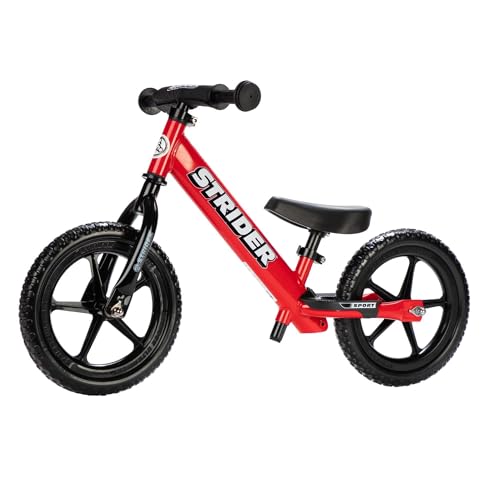
The Strider 12” Sport is a no-pedal balance bike designed for ages 1-4. It comes with a padded seat, safety pad, mini grips, and a starting seat height of 11 inches, making it easy for toddlers to straddle. The 12-inch foam tires provide stability and never go flat. This model emphasizes a simple, durable design that can withstand lively play and routine practice.
As children grow, the seat adjusts from 11 to 17 inches and the handlebar height adapts to fit inseams from roughly 12 to 18 inches. Assembly is tool-free, so you can get riding quickly. Strider’s balance-first approach helps kids build confidence, balance, and steering skills without pedals, supporting a natural transition to pedal cycling later.
Birtech 12 Inch Balance Bike No Pedal

Birtech’s 12-inch balance bike targets ages 2-5 and weighs about 6.6 pounds, making it easy for kids to handle. The lightweight frame uses anti-rust carbon steel and a no-pedal design that keeps the focus on balance and steering. It supports up to 30 kilograms, and it rides on puncture-proof EVA foam tires for smooth performance on sidewalks and lawns.
It offers adjustable seat height to accommodate growth and a straightforward, durable build. The lack of pedals reduces risk during early practice, while solid construction provides lasting use. Parents can expect simple maintenance and reliable handling as children gain balance and confidence.
Youthkkee 12 Inch No-Pedal Balance Bike

Youthkkee’s 12-inch toddler balance bike emphasizes balance and coordination without pedals. It features tool-free adjustable seat and handlebar heights, making it easy to tailor the fit as your child grows. The bike is aimed at ages 2-5 and offers a lightweight, easy-to-handle frame that young riders can control.
A customizable plate with three stickers lets kids personalize their bike, increasing ownership and excitement during practice. The low center of gravity and simple design support steady balance training on indoor floors or outdoor surfaces, helping children build confidence before transitioning to a pedal bike.
Buying Guide
When choosing a no-pedal balance bike, consider how the design supports early balance, safe handling, and growth with your child. The right model should be easy to adjust, lightweight to lift, and sturdy enough to withstand everyday use. Here are key purchase considerations and how they apply to the options above.
- Age and size compatibility: Look for a bike with a seat height and handlebar range that matches your child’s current height and expected growth. Models like SEREED, Strider, and Birtech offer substantial adjustability to accommodate kids from toddler to early preschool years.
- Adjustability and tool requirements: Tool-free or quick-release adjustments save time and keep maintenance simple. This is especially helpful for families with rapidly growing children, as seen in several featured models.
- Weight and ease of use: Lighter bikes are easier for small children to maneuver. Birtech and Youthkkee emphasize a light frame, which reduces fatigue and boosts confidence during practice.
- Wheels, tires, and footprint: Foam tires provide maintenance-free reliability and no flats, while wider wheels improve stability on uneven surfaces. The no-pedal design is complemented by a safe, spacious foot area on many models.
- Safety features and materials: Look for rounded edges, non-toxic finishes, and a robust frame. A 135-degree steering limit (as seen on Gamfeiny) helps prevent side falls, while sturdy carbon steel or steel frames offer long-term durability.
- Grow-with-you value: Some bikes offer features like adjustable seats and handlebars, customizable plates, or upgrade paths toward pedal bikes. These factors add long-term value as a child matures.
- Terrain and usage: Decide whether the bike will be used indoors, on sidewalks, or in light outdoor settings. Foam tires and durable frames handle multiple environments, but avoid rough trails if the model isn’t designed for them.
- Personalization options: Personal touches such as customizable plates or stickers can boost a child’s enthusiasm and engagement during practice, as seen with Youthkkee and SEREED.
- Budget and warranties: While prices vary, a balance of weight, adjustability, and durability often yields the best long-term value. Check if the brand offers parts support or warranties for peace of mind.
Choosing a no-pedal balance bike involves balancing safety, grow-with-child features, and the child’s enthusiasm for learning. The five models above provide solid options across different ages and sizes, helping families pick the best match for a first riding experience that builds confidence and joy in learning to ride a bicycle.