Finding a bike seat that comfortably supports heavier riders requires attention to width, padding, and support. This guide gathers top oversized, noseless, and memory-foam styles designed for riders around 300 pounds, including options that fit Peloton, road, stationary, and electric bikes. Each choice prioritizes pressure distribution, stability, and long-ride comfort. Below you’ll find five well-suited seats with notes on fit, materials, and durability to help you ride farther with less discomfort.
| Product | Weight Capacity | Key Benefit |
|---|---|---|
| Twomaples Noseless Bike Seat Cushion | 580 lbs | Oversized, noseless design with widened base for stability and pressure relief. |
| TXPEP Extra Wide Noseless Seat | 330 lbs | Ergonomic nose-less design with high-density memory foam for long rides. |
| CDYWD Noseless Oversized Seat | N/A | Wing-shaped padding reduces thigh friction; wide and comfortable. |
| Bluewind Noseless Oversized Seat | N/A | Large width with nose-less design and durable surface for daily use. |
| Wittkop Wide Bike Seat | N/A | Memory foam with a 5-zone concept and enhanced airflow for cooling. |
Note: Capacity details are provided where available. All selections emphasize comfort for heavier riders and compatibility with common bike types, including Peloton and other stationary or road bikes.
Twomaples Noseless Bike Seat Cushion

The Twomaples Noseless Bike Seat Cushion emphasizes an extra-wide, noseless silhouette that centers around a widened base. The design features a wing-shaped high-elastic foam layer that distributes pressure away from sensitive sit bones, reducing discomfort on long rides. It’s built with a contoured concave shape intended to fit the pelvis and hips while minimizing rubbing on the inner thighs. The product notes a max load of up to 580 pounds, making it a strong option for heavier riders who want stability on varied terrain.
With its noseless construction, the seat aims to minimize friction between the thighs and cushion, which helps during extended sessions on Peloton or other stationary systems, as well as on city bikes and light off-road use. The materials are chosen to support shock absorption and smoother riding over bumps, potholes, and rough pavement. While the seat is versatile, proper adjustment and saddle height will optimize comfort for different leg lengths and riding styles.
TXPEP Extra Wide Noseless Seat

TXPEP’s Upgrade Oversize Bike Seat showcases an ergonomic, nose-less design with an extra-arc width. The cushion uses high-elastic, high-density memory foam, claimed to be about 7 cm thick, to provide soft but durable support for long rides. The design focuses on distributing weight over a larger contact area to reduce numbness and pressure in sensitive regions. The seat is wrapped in premium waterproof PU leather with a non-slip surface and a seamless edging finish, contributing to durability and weather resistance on various bikes, including indoor cycling setups and e-bikes.
Weight capacity is listed at 330 pounds, making it a practical choice for riders seeking substantial support without compromising pedal clearance. Its nose-less shape aims to minimize thigh friction, improving comfort during extended sessions on Peloton bikes or any exercise bike. Installation is straightforward for most standard seat rails, and the waterproof leather helps with exposure to sweat and rain. As with all oversized saddles, correct mounting and saddle position will maximize comfort and efficiency on different riding styles.
CDYWD Noseless Oversized Seat

CDYWD’s Noseless Oversized Seat centers on a wing-shaped padding system designed to fit the natural shape of the buttocks. The nose-less design aims to minimize friction between the bicycle seat and the inner thighs, reducing pressure and discomfort during longer rides. The seat measures approximately 9 by 13.5 by 5.5 inches, with a 2.96-inch wing depth to provide additional lateral support and stability for wider hips.
The ergonomic wing design disperses pressure away from the tailbone and sit bones, helping to prevent soreness after longer workouts or rides on Peloton, stationary bikes, and city bikes. This model emphasizes comfort across a range of activities, from indoor cycling to daily commutes, and should pair well with most standard seat rails. The construction focuses on durability and a stable riding experience for riders seeking extra width without sacrificing pedal clearance.
Bluewind Noseless Oversized Seat

Bluewind’s Noseless Oversized Seat offers a wide, noseless saddle designed to ease friction and support riders with broader hips. The cushion emphasizes a larger contact area and a comfortable, weight-distributing surface. The foam thickness and width are configured to help reduce saddle soreness on long sessions, while the nose-less design alleviates pressure on the inner thighs during extended cycling periods. The product notes a robust, modern silhouette that remains adaptable for both indoor training and outdoor riding.
The exterior uses a durable microfiber artificial leather that’s wear-resistant and non-slip, with seamless edging to deter fraying and extend lifetime. Rain resistance is mentioned as part of its everyday durability, making it suitable for weather exposure on commutes or outdoor training. This seat is often chosen by riders seeking an easier transition from standard saddles to extra-wide, supportive options on Peloton, road, or city bikes.
Wittkop Wide Bike Seat
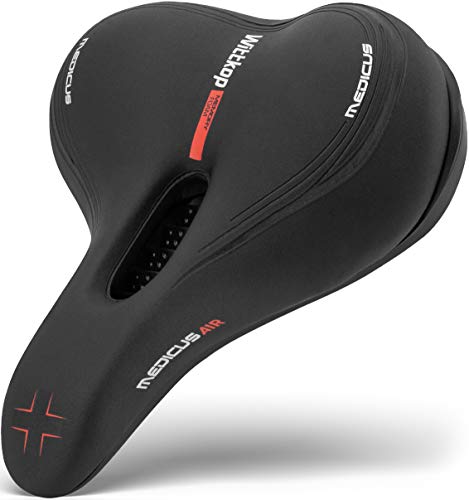
Wittkop blends comfort and design with a memory-foam core and a unisex, wide profile, making it suitable for both men and women who need extra space. The seat follows a 5-zone concept intended to offer ergonomic support and reduce pressure points during long rides, whether on mountain or road bikes. The memory foam adapts to your shape, helping to minimize fatigue after extended sessions, while the overall width helps stabilize the pelvis for more comfortable pedaling and a more balanced ride.
Ventilation is a focal point of the Wittkop design, with enhanced airflow to keep sensitive areas cooler during intense workouts or hot-weather rides. This helps maintain comfort on stationary bikes and while cycling outdoors. While capacity specifics aren’t always published, the seat is positioned as a robust, adaptable option for heavier riders seeking a long-lasting and breathable solution that supports daily training and longer-distance cycling.
Buying Guide
When choosing a bike seat for heavier riders, prioritize weight-bearing capacity, seat width, padding type, and the overall geometry. The right combination can prevent numbness, reduce tailbone stress, and improve pedaling efficiency over longer distances. Below are key purchase considerations and how to compare common options.
- Weight capacity and rider size: Look for seats explicitly listing a high load rating or designed for oversized users. For example, Twomaples advertises up to 580 pounds, which is well-suited for heavier riders. If a seat does not specify capacity, rely on its width, padding density, and construction to gauge suitability.
- Nose vs noseless design: A noseless or nose-less seat reduces friction between the inner thighs and the cushion, which can be a major comfort factor on long rides. Wing-shaped or concave designs help distribute pressure away from sit bones and the tailbone.
- Width, depth, and padding: Wider seats with thicker memory foam or padding can improve comfort for larger hips. Memory foam or gel-infused padding tends to adapt to your shape, reducing pressure hotspots during sustained efforts.
- Materials and weather resistance: Durable surfaces such as waterproof PU leather or wear-resistant microfibers resist sweat and rain. Non-slip textures on the surface help keep you in place during vigorous pedaling.
- Ventilation and heat management: Breathable designs and airflow channels help dissipate heat, which is especially helpful on long or hot rides to maintain comfort.
- Compatibility and installation: Ensure rail compatibility with your bike’s saddle clamp and check whether the seat requires adapters for certain frames or bikes (Peloton, city bikes, or e-bikes).
- Durability and warranty: Oversized and noseless models are often built for frequent use. Check return policies and warranties to ensure coverage if the fit isn’t perfect.
- Back support options: Some riders prefer a backrest or added contouring for spinal support on longer sessions; this is more common in specific Bluewind models with backrest designs.
In practice, heavier riders benefit from seats with a combination of wide width, high-density padding, and a design that disperses weight broadly. The five products highlighted here point to a common goal: reduce pressure on the sit bones, minimize friction where it matters, and provide reliable stability during both indoor training and outdoor cycling. Always test fit when possible and adjust saddle height, tilt, and fore-aft position to optimize comfort and pedal efficiency.