A reliable foot pump makes bike maintenance faster and safer whether you’re commuting or riding off-road. The right pump offers high pressure, sturdy construction, and easy valve compatibility to reach proper tire pressures quickly.
This guide highlights five top bike foot pumps that balance performance and portability, from double-cylinder floor models to compact travel pumps, helping you choose based on pressure needs, stability, and value.
| Product | Brand | Key Feature | Max PSI |
|---|---|---|---|
| MEETLOCKS Double Cylinder Barrel Bike Foot Pump | MEETLOCKS | Double-cylinder, high-precision gauge | 160 PSI |
| CRAFTERS Foot Pump | CRAFTERS | Compact, long hose, up to 160 PSI | 160 PSI |
| Schwinn Air Base Plus Foot Pump | Schwinn | Dual valve head, easy gauge | 120 PSI |
| BV Bike Pump | BV | Durable steel build, gauge, reversible head | 160 PSI |
| VERENO Double Barrel Bike Pump | VERENO | Double barrel, PSI/BAR gauge, Smart Head | 160 PSI |
MEETLOCKS Double Cylinder Barrel Bike Foot Pump

MEETLOCKS employs a double-cylinder design to speed inflation, delivering up to 160 PSI. The aluminum piston with an iron base enhances durability for regular cycling use. A high-precision gauge displays readings in PSI and BAR, aiding accurate inflation across road tires, mountain bikes, and inflatables. The Smart Valve Head quickly switches between Presta, Schrader, and Deutschland valves, simplifying setups on diverse bikes and gear. Sturdy construction, stable operation, and a compact footprint make this model suitable for garage use and on-road maintenance.
CRAFTERS Foot Pump

CRAFTERS focuses on portability without sacrificing performance. This compact, lightweight foot pump reaches up to 160 PSI for road tires and other inflatables. Its extra-long hose reduces bending and awkward positioning, making inflation easier in tight spaces. The pump’s simple mechanism suits riders who want dependable performance on the go, whether in a backpack, saddlebag, or car trunk. Durable construction and straightforward operation provide reliable tire care for commuters and weekend riders alike.
Schwinn Air Base Plus Foot Pump
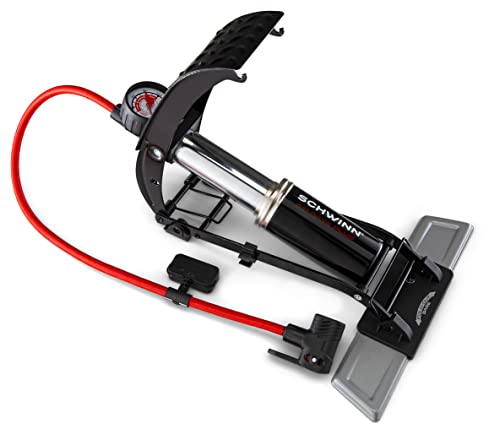
Schwinn Air Base Plus emphasizes ease of use and reliability with a dual-head nozzle compatible with Schrader and Presta valves. The clear Air Zone gauge helps riders monitor inflation up to 120 PSI, balancing speed and control. Its steel feet fold out for stability during pumping, while the compact design saves space in a workshop or bike bag. This model is ideal for riders who want a universally compatible pump with readable indicators for consistent trail and road performance.
BV Bike Pump

BV builds a durable steel-bodied pump with a compact 16.25-inch form factor for comfortable, controlled inflation. It reaches up to 160 PSI and includes a reversible Presta/Schrader valve head plus a built-in gauge for quick readings. The ergonomic handle enhances pumping comfort, while the portable design makes it easy to carry on rides or store in a car trunk. BV’s pump suits cyclists who want a reliable, all-purpose tool that handles tires, balls, and other inflatables with equal ease.
VERENO Double Barrel Bike Pump
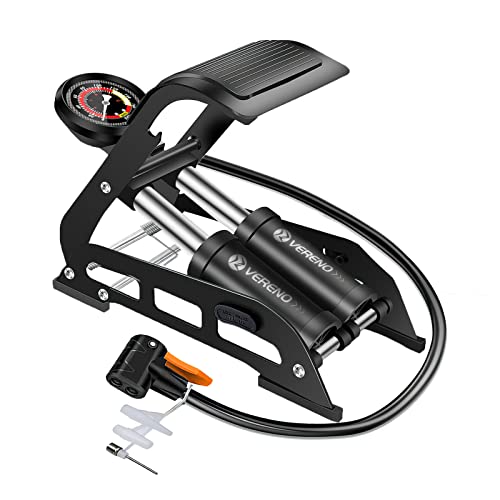
VERENO’s double-barrel design speeds inflation and delivers up to 160 PSI. The precision gauge reads PSI and BAR for accurate pressure targets, while the Smart Head quickly switches between Presta, Schrader, and Deutschland valves. Constructed from metal, the pump blends durability with portability, making it suitable for travel and everyday use. Riders who value fast, accurate inflation and robust build will appreciate VERENO’s balance of speed and reliability.
Buying Guide
Choosing a bike foot pump involves weighing portability against performance. The following considerations help buyers select a model that matches riding style and maintenance needs.
- Valve compatibility: Look for pumps that support Presta and Schrader valves, and note models that also accommodate Deutschland valves. A universal head reduces the need for valve adapters during on-the-road inflation.
- Pressure range and gauge readability: Most bike tires require 60–120 PSI on average, with road tires sometimes needing up to 120–160 PSI. A clear, easy-to-read gauge (PSI and sometimes BAR) helps achieve accurate pressures quickly, especially in low-light conditions or on the trail.
- Pump design and speed: Double-cylinder floor pumps inflate faster than single-cylinder options, which is helpful for quickly topping off tires before rides. Single-cylinder, compact pumps excel in portability for commuters and travelers.
- Base stability and footprint: A stable base prevents wobble during pumping. Models with fold-out steel feet or wide footprints offer better control on uneven surfaces and in busy garages or trailsides.
- Hose length and reach: A longer hose improves accessibility to valve positions that are hard to reach, reducing the need to reposition the bike. This matters for all bicycle styles, including gravel and MTB setups.
- Portability and durability: Metal bodies (aluminum, steel) and compact dimensions aid transport, especially for cyclists who travel or commute. Consider weight and storage space in your planning.
- Included features and maintenance: Ergonomic handles, built-in gauges, and valve-head versatility enhance usability. Regular maintenance—keeping seals clean, lightly lubricating components, and inspecting hoses—extends pump life.
Choosing by riding style
If you primarily ride city bikes or commute, prioritize portability, valve compatibility, and a readable gauge. For road or mountain biking, a pump with a higher PSI range and faster inflation is advantageous. For travelers or multi-use setups, choose a model with a versatile valve head, durable materials, and a long hose to reach valves in awkward positions. Regular maintenance and storage in a dry place will help maintain accuracy and longevity over time.
Practical tips for use
- Check tire pressures when tires are cold to avoid overestimating pressure.
- Keep the gauge upright and view it straight on to read accurate numbers.
- Inspect the hose and valve head for wear; replace if signs of cracking or leaks appear.