Converting a standard 26-inch bicycle into an electric assist rides a new wave of flexible commuting, mountain trail exploration, and weekend cruising. The right kit adds power, throttle control, and pedal assist while letting you tailor your setup to your bike’s geometry and riding style. This guide spotlights five 26-inch conversion kits that are compatible with a battery system, offering a balance of power, reliability, and installability. Each option is designed for the common 26″ wheel size and supports a range of braking systems, dropout spacings, and rider needs. Below you’ll find a quick product summary, followed by in-depth sections for each kit and a practical buying guide.
| Product | Brand | Wheel Size | Battery Included | Motor Power |
|---|---|---|---|---|
| Yose Power Ebike Kit With Battery | YS YOSE POWER | 26 Inch (Rear) | Yes | 500W |
| BAFANG Front Hub Kit | BAFANG | 26 Inch Front | Optional | 500W |
| BAFANG Rear Hub Kit | BAFANG | 26 Inch Rear | Optional | 500W |
| AW 1000W Front Wheel Kit | AW | 26 Inch Front | No | 1000W |
| AW 1000W Rear Wheel Kit | AW | 26 Inch Rear | No | 1000W |
Yose Power Ebike Kit With Battery

The Yose Power 26-inch rear-wheel kit is designed to deliver a balanced blend of power and practicality for everyday riding. With a 48V system delivering up to 500W, the kit is capable of reaching speeds around 40 km/h, making it suitable for commuting and spirited weekend rides. A 13Ah battery is included, enabling a substantial range and reducing the need for frequent recharging on typical urban routes. The kit features a user-friendly LED display to monitor speed, distance, and battery life, helping riders manage energy on the go.
Installability and reliability are emphasized by the kit’s hardware and assembly. The included installation tools streamline addition to a wide range of 26″ bikes. The motor is brushless and gearless, providing smooth operation with minimal noise. A throttle mode combines with a pedal-assist system (PAS) to let riders choose the level of assistance. Weight handling is addressed with a robust frame interface and a max rider weight-and-gear capacity aligned with common city and light-trail configurations.
Compatibility considerations center on dropout spacing and brakes. This Yose Power kit fits typical 26″ frames and uses a rear dropout design that works with standard disc and V-brakes, supporting reliable braking control even at higher speeds. The integrated battery and display system enable practical monitoring during rides. Overall, this kit is well-suited for riders who want a ready-to-ride setup with a built-in battery, straightforward installation, and straightforward performance data in real time.
BAFANG 500W Front Hub Kit With Battery & Display Options

BAFANG’s 500W front hub motor kit builds a compact, high-torque electric drive for 26″ bikes. The front-hub design delivers a clean install and allows for quick conversion with a focus on urban and light off-road use. This kit is noted for its brushless, geared motor delivering robust performance with speeds approaching 40 km/h. It offers IPX5 water resistance and a practical 100mm front dropout compatibility, making it a versatile choice for riders who want a clean, modern drive without a mid-drive engine. The package is designed to be compatible with either throttles or pedal-assist modes, providing four riding modes to suit varying terrain and fatigue levels.
- Powerful 48V, 500W brushless geared motor
- Ability to pair with battery and display options
- Four riding modes via PAS and throttle integration
- Discreet installation on a wide range of 26″ bikes
The kit emphasizes universal compatibility, supporting 100mm front dropouts and both V-brake and disc brake configurations. It is designed to deliver a balance of performance and practicality for riders who want a front-wheel solution with flexible battery options. As with any front-hub setup, riders should be mindful of front-wheel weight distribution and steering feel, especially on rough terrain or when fully loaded with gear.
BAFANG 500W Rear Hub Kit With Battery & Display Options

This BAFANG rear hub motor kit delivers a compelling mix of torque, reliability, and compatibility. With a 48V 500W motor boasting up to 65 N.m of torque, it can propel bikes up to about 40 km/h, making it suitable for city commutes and hillier routes. The rear setup is ideal for more efficient weight transfer during acceleration and climbing. The kit supports a wide dropout range (135–142 mm) and is compatible with 10-speed cassettes or fewer, accommodating a broad spectrum of 26″ bikes. The availability of optional battery and display components adds flexibility for riders who want to tailor their energy storage and information display to their needs.
Installation focuses on a clean rear-wheel swap, with comprehensive cables and controllers included. The rear hub arrangement naturally enhances traction and stability on climbs, while still offering smooth, quiet operation. Braking system compatibility includes both V-brake and disc setups, emphasizing versatility for a broad audience of urban riders and recreational cyclists. Battery options allow riders to balance range and weight in line with their typical riding profile.
In practice, the rear-hub approach tends to provide deeper traction benefits on longer rides and steeper grades; however, it can require more careful alignment during installation compared to some front-hub configurations. This kit is a solid choice for riders prioritizing rear-wheel drive dynamics, simple installation, and the potential to upgrade battery and display components as needed.
AW 1000W Front Wheel Kit For 26-Inch Bikes
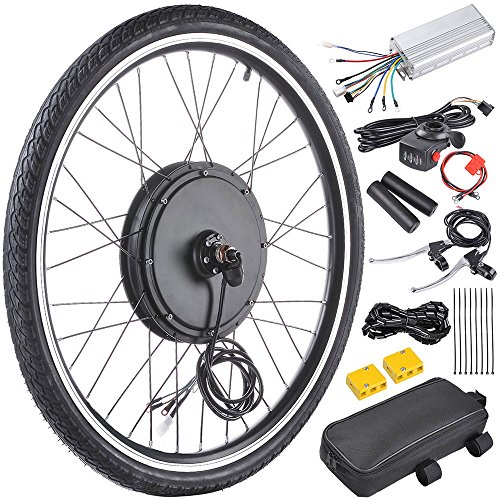
The AW 1000W front wheel kit is built for riders who want robust power and a straightforward installation on a 26″ bike. The 1000W hub motor pushes performance into the brisk side of city commuting and light off-road journeys, with a top speed near 45 km/h. This kit emphasizes a durable frame, a lightweight yet strong front wheel, and compatibility with standard 26″ frames that accept disc or V braking systems. The dual-mode controller enables seamless switching between throttle and pedal-assist, empowering riders to adapt to terrain and fatigue across longer rides. Battery and display options are available to tailor the system to your needs.
- 26″ wheel compatibility with 3 15/16″ front dropout spacing
- Dual-mode controller for throttle and PAS
- Strong, quiet front-hub motor with up to 45 km/h potential
As a front-wheel kit, this configuration delivers immediate power to the front wheel, which can simplify routing of wiring and sensor placement. It’s a practical choice for riders who want a strong, easily installed motor with room to choose a compatible battery and display setup. Potential considerations include steering feel and weight distribution, which are typical with front-hub installations, especially on bicycles with already light front ends or heavy cargo loads.
AW 1000W Rear Wheel Kit For 26-Inch Bikes

The AW 1000W rear wheel kit brings substantial power to the bike’s rear hub, offering a maximum riding speed around 45 km/h and a 26″ wheel platform built to handle urban routes and short-distance treks. The kit uses a dual-mode controller that can operate in hall or non-hall mode, extending overall reliability and adaptability to different component configurations. It includes a pedal-assist system (PAS) to ease long rides and reduce fatigue, while a twist-throttle option lets riders command the motor for rapid acceleration when needed. A compatible battery and LCD display complete the system’s information and control features.
- Powerful 1000W rear hub motor
- Intelligent PAS with throttle option and LCD-friendly display
- 3 15/16″ dropout compatibility for reliable mounting
Rear-hub kits tend to excel in traction and stability during acceleration, particularly on hills or packed routes. They also preserve the chainline and drivetrain, which can be advantageous for bikes with existing gears. When considering a rear-wheel AW kit, plan for a stable mounting surface, adequate braking performance, and a battery setup that aligns with expected ride ranges and daily use.
Buying Guide: Key Factors for Choosing a 26-Inch Electric Bike Conversion Kit With Battery
Motor location and wheel compatibility
Front-hub motors are typically easier to install and often require fewer drivetrain alterations, making them a good option for casual riders and scooters-style builds. Rear-hub motors generally offer better traction, weight distribution, and efficiency on climbs, but can be more complex to install. When selecting a kit, verify dropout spacing and compatibility with your bike’s brakes (disc or rim) as well as whether the kit supports your current wheel (26″ size) and tire clearance.
Power, speed, and legal considerations
Power ratings like 500W and 1000W influence acceleration, hill-climbing ability, and top speed. Higher power often means shorter battery life per charge and greater strain on the frame. Some jurisdictions restrict legal speeds for electric bikes; choose a kit that aligns with local regulations while still meeting your typical riding needs. Consider how you’ll use the system—commuting, off-road, or mixed-use—to decide whether 500W or 1000W is the right balance of performance and efficiency.
Battery options, range, and safety
A battery’s voltage (commonly 48V in these kits) and capacity (Ah) determine range and performance. Kits with included batteries simplify setup, but optional battery configurations can give you flexibility for longer rides or lighter setups. Evaluate charging options, weight distribution, and mounting location (rear rack vs. down-tube or integrated frame mount). Battery safety features, such as proper IP ratings, thermal management, and manufacturers’ warranties, are important for longer life and reliability.
Controller features and pedal assist
Controllers influence how smoothly the motor responds to throttle input and pedal-assist engagement. Dual-mode controllers that work with both hall effect and non-hall effect sensors can extend component life and improve reliability if you upgrade sensors over time. A sine-wave controller, for example, usually delivers smoother torque with less noise. A robust PAS, multiple assist levels, and a readable LCD display all contribute to a comfortable riding experience and better energy management.
Installation complexity and compatibility
Consider your mechanical skill and tool availability. Some kits require frame modifications or careful alignment of the rear dropout and derailleur compatibility. Check whether the kit includes essential cables, a speed sensor, a display, and mounting hardware. For newer riders, a kit that advertises “complete components” and installation tools can save time and reduce frustration. If you’re unsure, consult a professional installer or a local e-bike shop to assess fit and integration with your specific bike model.
Durability, weather resistance, and maintenance
Durable housings, sealed electronics, and waterproof ratings (IP ratings) help protect the kit in varied weather conditions. Front-hub and rear-hub motors can differ in exposure to road spray and debris; ensure the chosen kit has appropriate seals and heat management. Regular maintenance—checking bolts, wheels, and brake alignment—will help preserve performance and extend the life of the kit. Consider the availability of spare parts and service support from the manufacturer or third-party technicians.
Value and future-proofing
Evaluate the long-term value of a kit, including the potential to upgrade the battery or controller later. A modular system with battery and display options provides flexibility as your needs evolve. Compare the total package—motor power, battery capacity, controller features, and braking compatibility—to determine which kit delivers the best balance of performance, upgrade options, and maintainable cost for your riding style and budget.
Why choose between front vs rear kits?
Front-hub kits offer straightforward installation and are ideal for riders who want a clean, quick upgrade without impacting the bike’s drivetrain. They can alter steering dynamics and add front-wheel weight, which some riders may notice on technical trails. Rear-hub kits deliver better traction, especially on hills, cramps-free drivetrain alignment, and often feel more natural for daily commuting. The choice depends on riding style, terrain, and how you value handling versus installation simplicity. The five kits highlighted here provide solid options across both configurations.