Maintaining a bike at home is safer and faster when you use a reliable repair stand. A sturdy stand holds the bike securely, frees both hands for cleaning, adjustments, and wheel truing, and reduces strain on your back. This guide highlights five dependable options designed for mountain, road, and hybrid bikes, focusing on durability, adjustability, and tool organization. Read on to compare load capacity, clamp design, and mounting styles, and find the best fit for your workshop and budget.
| Product | Brand | Max Load | Mount Type | Notable Feature |
|---|---|---|---|---|
| CXWXC rs100 Bike Repair Stand | CXWXC | 60 lb | Freestanding | 360° clamp; magnetized tool tray |
| BikeHand Repair Stand | BIKE HAND | 55 lb | Freestanding | Lightweight aluminum; 360° head |
| CXWXC Champagne Blue Bike Repair Stand | CXWXC | 60 lb | Freestanding | Front wheel no shake; adjustable tighten rod |
| VEVOR Bike Repair Stand | VEVOR | 66 lb | Freestanding | Magnetic tool tray; 360° clamp |
| ROCKBROS Wall Mount Repair Stand | ROCKBROS | N/A | Wall mount | Stable wall-mounted design; 360° clamp |
CXWXC rs100 Bike Repair Stand
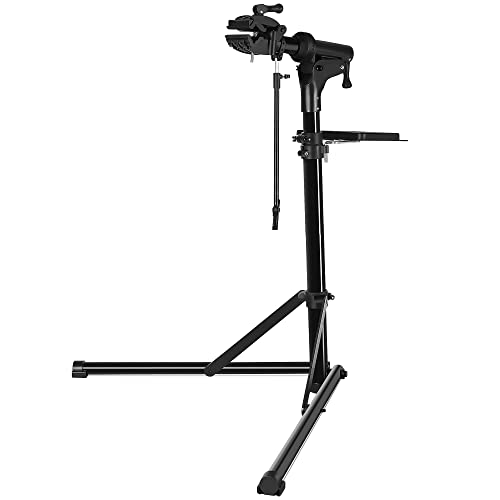
The CXWXC rs100 centers on a 360-degree rotatable clamp that holds a bike securely while you work. The clamp lever makes mounting simple, and the adjustable height helps reduce back strain during tasks like derailleur adjustments or brakes bleeding. Its alloy barrel is lighter and resistant to corrosion, making it easy to transport and store. The stand supports up to 60 pounds, which covers most mountain, road, and hybrid bikes. A magnetized tool tray provides a dedicated space for wrenches, hex keys, and small parts, improving workflow and organization.
The design prioritizes stability and ease of use. With the 360-degree rotation, you can position the bike exactly where you need access to brakes, cables, or drivetrain components. The no-slip clamp ensures the frame is protected while you torque bolts or adjust components. This stand is well-suited for home workshops, small garages, or apartment spaces where portability and compact storage matter.
BikeHand Repair Stand

The BikeHand repair stand is designed for home use with a lightweight aluminum alloy frame and a durable plastic head and clamps. It folds compactly for storage and is built for frequent setup and takedown. Height is adjustable from about 39 inches to 59 inches via quick-release mechanisms, enabling comfortable work for riders of different heights. The head rotates a full 360 degrees, allowing you to orient the bike for precise maintenance from any angle. The stand clamps securely and includes quick-release skewers to fine-tune height, tilt, and angle, supporting bikes up to about 55 pounds.
In practice, this stand offers a strong balance of portability and capability. It’s a solid choice for riders who frequently travel to events or need to relocate tools around a garage. The combination of a sturdy aluminum build and a flexible head makes it easy to perform routine tune-ups, brake adjustments, and wheel truing without wrestling with a heavy stand.
CXWXC Champagne Blue Bike Repair Stand

The Champagne Blue CXWXC model shares the core strengths of the rs100, including the 360-degree rotatable clamp and a height-adjustable body. A notable enhancement is the front wheel no-shake feature, which uses a tightening rod to prevent the front wheel from swiveling while you work, keeping the bike stable during maintenance. The tighten rod is length-adjustable, enabling precise control over wheel alignment and component access. This stand remains a versatile option for both road and mountain bikes and folds down for easier storage when not in use.
With similar durability to the rs100, the Champagne Blue edition emphasizes stability and frame protection. The clamp design and adjustability allow you to tackle tasks from brake bleeding to derailleur alignment with confidence. It’s a practical choice for an at-home workshop where space is a consideration and versatility matters for multiple bike types.
VEVOR Bike Repair Stand

The VEVOR repair stand emphasizes heavier-duty performance with a 66 lb load capacity and a robust four-leg frame, delivering solid stability for demanding maintenance tasks. The clamp can rotate 360 degrees and accommodates a wide range of bikes thanks to a 1-2 inch (25-50 mm) opening range. Rubber lining protects the bike frame during clamping, and a magnetic tool tray helps keep small parts organized while you work. This stand is well-suited for regular workshop use or for riders who perform maintenance on multiple bikes and require extra capacity and durability.
For users focused on versatility and long-term reliability, the VEVOR stand offers dependable performance across road, mountain, and hybrid bikes. Its magnet-equipped tray and stable base reduce the risk of lost tools and dropped components, helping maintenance tasks proceed smoothly even during extended sessions.
ROCKBROS Wall Mount Repair Stand

The ROCKBROS wall-mounted repair stand is designed to secure a bike in a fixed position with a stable grip. Four long screws fasten the unit to a wall, providing a solid anchor for maintenance tasks without occupying floor space. The 360-degree rotatable clamp allows you to access any angle, while the telescoping height range and soft clamp material help protect frames during adjustments. This setup is particularly well-suited for DIY enthusiasts with a dedicated garage corner or workshop wall, where heavy stands would be impractical.
Although it lacks a portable footprint, the wall-mount design excels in stability and repeatable positioning for routine servicing such as truing wheels, brake adjustments, and cable routing. It’s a strong option for users who want a permanent, organized workspace that keeps tools within easy reach.
Buying Guide
Key purchase considerations help match a bike repair stand to your workspace and riding style. Start with stand type: freestanding floor stands offer portability and flexibility for small spaces; wall-mounted units save floor space in larger workshops; floor stands with folding designs maximize storage efficiency. Consider load capacity to ensure the stand supports your bike’s weight, including any accessories you plan to mount.
Clamp design and rotation are critical. A 360-degree clamp provides full maneuverability and easier access to components. Rubberized or soft clamps protect frames from scratches, while a front-wheel stabilization feature minimizes front wheel movement during maintenance. Adjustable height helps you maintain proper posture and comfort during longer sessions, reducing the risk of back or shoulder strain.
Bike compatibility matters. Road bikes, mountain bikes, and hybrids vary in frame profiles and wheel sizes. Look for stands with adjustable clamps and compatible quick-release mechanisms to accommodate different bikes. If you frequently service multiple bikes, consider stands with a magnetized tool tray or integrated tray space to keep fasteners and small parts organized and reachable.
Materials and durability influence long-term value. Aluminum stands are lightweight and resistant to corrosion, while steel frames tend to offer extra strength for heavy use. Rubberized contact points protect frame finishes, and solid bases improve stability on uneven floors. If you work outdoors or in basements with temperature changes, corrosion resistance becomes more important.
Portability and storage are practical factors for many riders. Look for foldable designs, compact footprints, or wall-mounted options to maximize space. Quick assembly and disassembly speed up setup for spontaneous maintenance sessions or when sharing a workspace with others. Additionally, a magnetic tool tray reduces tool loss during busy repair tasks.
Budget and value come into play. Compare the price against load capacity, versatility, and included features such as 360-degree rotation, height range, and tool organization. While premium stands offer more features, many riders will find that solid mid-range models satisfy most maintenance needs without excess cost.
- Choose a stand type that fits your space and workflow: portable vs. permanent.
- Prioritize clamp rotation, frame protection, and easy access to components.
- Confirm weight rating covers your bike and any accessories.
- Assess mounting options, especially if you have limited floor space.
- Factor in storage, organization features, and overall value.