Choosing a bar end mirror is about safety, visibility, and easy installation. The five models below cover a range of handlebars and riding styles—from rugged mountain days to daily city commutes and open-road adventures. Each option emphasizes clarity, durability, and a secure mount. Compare their standout features in the quick snapshot, then read the detailed sections to understand fit, material, and adjustability for your bike.
| Product | Brand | Key Feature |
|---|---|---|
| RBRL Extra Large Left Bar End Mirror | RBRL | 124×67 mm glass, 360° adjustability |
| MEACHOW Crystal UHD Bar End Mirror | MEACHOW | Crystal UHD glass, 17–21 mm fit |
| BriskMore Bar End Mirror | BriskMore | Open-ended fit, 14–24 mm range |
| Mirrycle MTB Bar End Mirror | Mirrycle | Three-inch convex mirror, bar end mount |
| Hafny Bar End Mirror 2-Pack | Hafny | 62 mm lens, universal fit 14.8–23 mm |
RBRL Extra Large Left Bar End Mirror

The RBRL Extra Large Left Bar End Mirror uses a 124×67 mm glass surface to deliver a broad, high-definition rear view. This size helps reduce blind spots on busy roads and trails, giving riders a clear sense of what’s behind them. The mirror is built for stability, mounted on a three-point nylon connector that minimizes vibration and supports quick tightening if needed. Its 360° range of rotation lets you orient the glass to match your riding stance, shoulders, and traffic flow for optimal visibility.
Constructed for durability, the RBRL mirror aims to resist daily wear and weather. The glass is paired with a sturdy mounting rod, designed to stay in place even over rough pavement. Users report reliable performance on both city streets and longer rides, with the ability to tighten the joint to prevent looseness or wobble over time. This model is well suited for riders who want a wide, stable rear view without sacrificing handling.
MEACHOW Crystal UHD Bar End Mirror (Left)
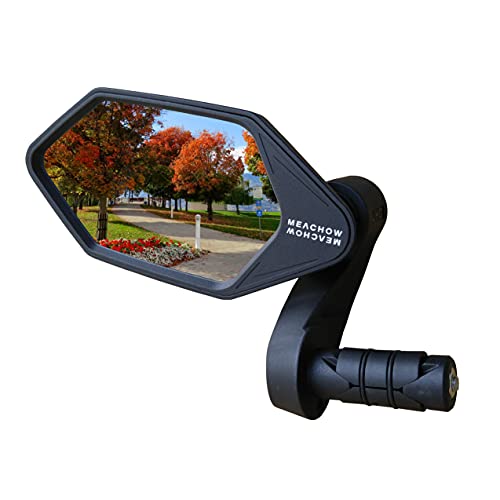
MEACHOW’s bar end mirror features Crystal UHD automotive-grade glass, delivering crisp, distortion-free visibility. The design is tailored for flat handlebars with inner diameters of 17–21 mm, making it a strong fit for many touring and commuter bikes. It’s noted for compatibility with open-ended grips or grips that are slightly modified to accommodate a cut hole, and it explicitly does not suit drop bars. The result is a lightweight, clear mirror built to withstand daily cycling conditions while preserving an unobstructed rear view.
Beyond optics, MEACHOW emphasizes fit and practicality. The mirror’s mounting aligns with flat-bar setups and emphasizes secure retention to avoid rattling at speed. The glass’ high clarity helps riders scan traffic and road conditions efficiently, supporting safer lane changes and cornering. This model is particularly appealing for riders who want a straightforward installation on flat bars without dealing with complex adapters.
BriskMore Bar End Mirror For Open Bars

BriskMore offers a versatile bar end mirror designed to fit a broad range of handlebars with an inner diameter between 14 and 24 mm. The 76 mm HD automotive-grade convex glass provides a wide rear view, with a secure mounting system that uses durable PA6+30% GF material and a robust stainless steel screw. The mirror can rotate 360 degrees and swivel to a full 180 degrees, allowing precise angle adjustment for both left- and right-side mounting. It supports both flat and open-ended grips, and even suggests the option to cut a hole for a cleaner fit on some bars.
Durability is a focus with this BriskMore model, tying practical installation to stable viewing. The combination of a strong mount, high-impact-resistant mirror surface, and a careful mounting interface helps it stay in position through long commutes and vigorous riding. It’s a solid choice for riders seeking a reliable, easy-to-adjust mirror with broad compatibility across many bar types.
Mirrycle MTB Bar End Mirror

Mirrycle’s MTB Bar End Mirror is a compact, three-inch round mirror that mounts directly to the bar end. The convex surface provides a wide field of view and can pivot to any viewing angle, making it a versatile choice for mountain bikes and hybrids. Its simple installation keeps weight and complexity down, which appeals to riders who prefer quick, tool-free adjustments and reliable performance on rugged terrain or city streets alike.
The Mirrycle design emphasizes flexibility. The convex mirror shape helps with peripheral awareness, while the bar-end mounting keeps the device out of the rider’s primary line of sight. As a well-established option, it’s known for dependable performance and straightforward orientation, especially for cyclists who prioritize an unobtrusive, easily adjustable rear-view mirror.
Hafny Bar End Mirror 2-Pack

Hafny’s bar end mirrors come in a two-pack, offering a universal design that fits a wide range of handlebars with an inner diameter of 14.8–23 mm. The lenses are described as unbreakable stainless steel, providing durability against impact on busy roads. The mirrors can be installed on both left and right sides and work on open-ended grips or where a hole is cut into the grip. While the product notes compatibility with most flat bars, it excludes specific setups like Trek Isozone grips. The result is a practical, value-driven option for riders needing reliable rear visibility on multiple bikes.
Buying Guide
Key purchase considerations help riders choose a bar end mirror that best fits their bike, riding style, and maintenance preferences. Below are the main factors to weigh, along with quick comparisons among the five models highlighted above.
- Fit and compatibility: Check handlebar diameter and end-cap design. Many mirrors specify an inner diameter range (for example, 14–24 mm or 17–21 mm) and note whether they fit open-ended grips, closed grips, or require a cut hole. Flat bars and drop bars may demand different adapters or mounting styles.
- Field of view and lens quality: Larger mirrors or those with wide-angle, convex surfaces provide better rear visibility. Glass surfaces typically offer crisper clarity than plastic, and some models advertise automotive-grade or UHD glass for reduced distortion.
- Adjustability and stability: Look for 360° rotation, tilt, and swiveling options to tailor the angle to your riding stance. A three-point mount or reinforced rod helps minimize vibration and movement at speed, while quick-tighten mechanisms preserve stability after adjustments.
- Durability and safety features: Anti-shatter or shatterproof glass, rugged housings, and corrosion-resistant materials matter for long-term durability. Some mirrors include a protective film or a steel/aluminum frame to withstand impact and weather exposure.
- Left vs. right orientation: Some models are designed specifically for the left bar end, while others are ambidextrous. If you ride with both hands on the ends, consider a pair or a model that supports both sides.
- Installation ease: Tool-free mounting and straightforward alignment save time. Some come with set screws, while others rely on a threaded mount or a quick-release design.
- Open-ended vs. hole modification: If your handlebars are open-ended, you’ll need a mirror designed for open-ended grips or a model that supports hole modification. Always verify compatibility with your grip type before purchasing.
- Intended use and bike type: Road, MTB, and e-bike riders may prioritize different features—wide field of view for urban safety, rugged mounting for off-road conditions, or enhanced durability for high-speed or heavy-traffic environments.
For practical guidance, the best overall option in many urban and mixed-use scenarios is a mirror with a broad field of view, robust mounting, and wide compatibility with bar end designs. If you prioritize crystal-clear optics and flat-bar compatibility, a mirror like the MEACHOW Crystal UHD model can be a strong fit. For riders who want a quick-install, all-around solution that works on both left and right sides with a high-contrast surface, the Hafny 2-pack provides value and flexibility. Mountain bikers and commuters who ride aggressively may favor the Mirrycle or BriskMore mirrors for their balance of adjustability and durability.