The market for electric bike conversion kits has grown rapidly, giving riders options to upgrade bikes with mid-drive power or wheel-hub simplicity. This guide highlights five well-reviewed kits that fit a range of bikes, from rugged mountain bikes to city cruisers. Each option balances performance, ease of installation, and value. Use this overview to compare how mid-drive and hub-driven systems meet different riding needs, from steep hill climbs to urban commutes. The following selections emphasize reliability, compatibility, and real-world range, helping American riders choose the best electric kit for their bike.
| Product | Brand | Type | Voltage | Power |
|---|---|---|---|---|
| BAFANG Mid Drive Kit BBS02B/BBS-HD | BAFANG | Mid-Drive | 48V/52V | 500W/750W/1000W |
| LIVALL PikaBoost 2 E-Bike Kit | LIVALL | Rear-Wheel Battery Kit | Not Specified | 220Wh / 158Wh Battery |
| AW Electric Bicycle Motor Kit 48V 1000W Front Wheel | AW | Front Hub | 48V | 1000W |
| VEVOR 1000W Electric Bike Conversion Kit | VEVOR | Front Hub | 48V | 1000W |
| PEXMOR Electric Bike Conversion Kit 48V 1200W | PEXMOR | Front Hub | 48V | 1200W |
BAFANG Mid Drive Kit BBS02B/BBS-HD

The BAFANG BBS02B/BBS-HD mid-drive kit is designed to upgrade endurance and trail capability on a broad range of bicycles. It includes most essential accessories for a DIY conversion, with optional battery and LCD display. The kit is compatible with bottom brackets between 68-73mm, and it adapts to 100mm and 120mm lengths with inner diameters of 33.5-36mm, making it versatile for MTB, city bikes, and even some recumbents. Note that 73mm screws are not included, so check your frame before purchase. This mid-drive system delivers high torque, enabling confident hill climbs and steady cruising.
Key features include a torque range of 100 Nm to 160 Nm depending on motor model, with speeds up to around 45 km/h in standard configurations. It supports throttle, pedal assist, and a standard cycling mode to tailor power to terrain and rider preference. The package includes essential components and can be customized with a battery and display as needed, allowing riders to balance cost against desired features. This flexibility makes it a strong choice for riders seeking performance across mixed terrain.
- Complete accessories available; battery and display optional
- 68-73mm bottom bracket compatibility; 100/120mm frames supported
- Disc or V-brake compatible; chain-driven models only
- Torque up to 160 Nm; throttle and pedal-assist modes
LIVALL PikaBoost 2 E-Bike Kit

The LIVALL PikaBoost 2 offers a compact, rear-mounted conversion with battery options of 158Wh or 220Wh. Installed at the rear wheel, it minimizes wiring complexity and keeps weight toward the bike’s center of gravity. This kit is particularly suited for riders who prefer quick installation and a clean look, with the added convenience of app control for monitoring battery status and ride data. A notable constraint is compatibility with round seatposts (25-35mm) and the need to use an appropriate USB-C charger (65W) for charging. In real-world use, the 220Wh option can deliver up to about 70 km in favorable conditions, while the 158Wh model offers roughly 50 km.
Highlights include seamless rear-wheel mounting without extra cabling, multi-view battery management through the app, and reliable range for urban commutes or weekend rides. The trade-off is that it relies on the seatpost and rear wheel integration, which may limit frame compatibility for some bicycles. Nevertheless, for riders prioritizing a compact, plug-and-play kit with smart features, this option stands out.
- Rear-wheel installation with integrated battery options
- App control for monitoring and configuration
- 65W USB-C charger required; seatpost compatibility 25-35mm
- 70 km range (220Wh) under ideal conditions; 50 km (158Wh)
AW Electric Bicycle Motor Kit 48V 1000W Front Wheel
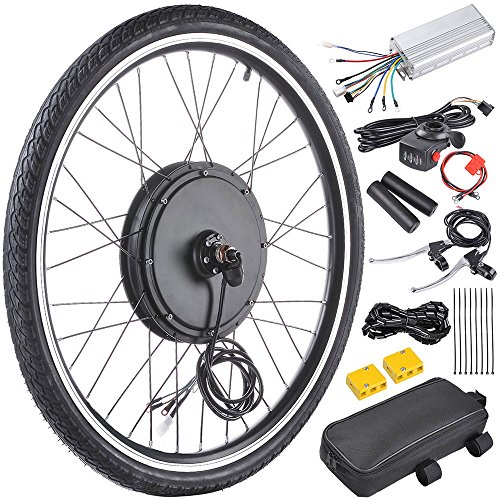
The AW front-wheel electric kit centers the hub motor in a 26″ wheel and uses a 48V 1000W system for strong acceleration and reliable performance on city streets or light trails. The aluminum frame construction supports riders up to about 220 lbs, and the kit is designed to minimize maintenance by removing external chains and gears from the drive system. A thumb throttle with battery indicators helps riders monitor power on the move. It’s compatible with most 26″ frames and supports both disc and V-brake configurations, enabling flexible installation across a broad range of bikes.
Considerations for this kit include curbside service life at high loads, the front-wheel weight distribution, and the need for proper braking compatibility. If you ride in hilly areas or frequently need high-speed bursts, this kit delivers a strong balance of power and simplicity. The installation process is straightforward for those familiar with wheel-based conversions, though it requires careful alignment and the right fork spacing.
- Front hub motor; 26″ wheel compatibility
- Disc and V-brake compatible
- Aluminum frame for durability; supports up to 220 lbs
- 3-indicator throttle with battery status
VEVOR 1000W Electric Bike Conversion Kit

The VEVOR 1000W kit is a robust front-hub motor solution that emphasizes high-speed performance and a reliable LCD display. The 26″ front wheel kit delivers up to 420 rpm with 0°-12° climbing capability, and it provides a high-tidelity display to monitor speed, distance, PAS level, and battery life in real time. The motor uses 100% copper windings for durability in varied climates, and the overall kit is designed for quiet operation with a relatively low noise profile. This setup is well-suited for riders who want straightforward installation and a strong level of top-end speed for commuting or weekend rides.
Potential drawbacks include increased front-end weight and the need to ensure brake compatibility with hydraulic and mechanical setups. As with other hub kits, it’s important to verify frame spacing, dropout width, and wheel compatibility before purchasing. If you prioritize simple installation and a clean front-wheel powertrain, this option offers solid value.
- HD LCD display included to track ride metrics
- 26″ wheel and front hub motor; 420 rpm
- Quiet, copper-core motor construction
- Suitable for commuting and light off-road use
PEXMOR Electric Bike Conversion Kit 48V 1200W

The PEXMOR 1200W front-wheel kit stands out with higher wattage and a versatile controller system. It employs a 48V system and a 26″ wheel, enabling brisk acceleration and strong hill-climbing performance. The controller supports three modes and integrates a PAS, LCD display, and twist throttle for varied riding styles. The sine-wave-style controller emphasizes efficiency and smooth operation, reducing heat build-up on longer rides. It’s compatible with most 26″ frames and uses a 100mm/3.93″ front dropout spacing, making it a flexible choice for many bikes and riders who want more power for demanding terrain.
Considerations include ensuring you have the right cable routing and brake compatibility, as well as confirming the frame’s fork dropouts and wheel size. The kit is well-suited for riders who want higher top-end performance and a more responsive throttle, especially on steep grades or long penalty climbs during weekend adventures.
- Powerful 1200W brushless hub motor
- Three-mode controller with PAS and LCD
- Twist throttle for instant power on demand
- 26″ wheel fit; 100mm front spacing
26 Inch 48V 1000W Rear Wheel Kit

This LTIGOAW rear wheel kit offers a robust 48V 1000W motor and is designed for road use and light off-road riding up to about a 120 kg load. The kit emphasizes durable materials and efficient performance with a rear hub layout. It features a high-torque motor and a wide range of compatibility with different frames and wheel sizes. The rear-wheel configuration provides better traction and natural weight distribution for most riders, especially those looking to preserve front-end handling and maintain steering feel while still enjoying electric assist. The kit’s construction prioritizes durability and smooth operation over extreme trail use.
Important considerations include ensuring frame compatibility and adequate brake clearance on the rear wheel. Mounting a rear hub kit also requires careful alignment of the wheel and careful wheel removal when performing maintenance. This option is a practical choice for riders who want a straightforward, powerful upgrade with strong acceleration and reliable performance on urban routes and light field trails.
- Rear-wheel hub motor; powerful and reliable
- Durable materials and straightforward installation
- Support for street and light trail riding
- Compatible with most 26″ to 29″ bikes depending on dropout spacing
Buying Guide
Mid-Drive vs Hub-Drive Systems
Mid-drive kits, like the BAFANG BBS02B/BBS-HD, leverage the bicycle’s own gears for efficient climbing and consistent torque across a range of speeds. They often deliver superior performance on steep grades and with heavier loads because the motor uses the crankset’s gearing and the bike’s chain. However, mid-drive systems tend to require more complex installation and maintenance, including chain wear and compatibility with bottom brackets and gearing setups.
Hub-drive kits (front or rear) offer simpler installation and generally lower upfront cost. Front hubs add steering weight and some balance considerations, while rear hubs can improve traction and ride feel, especially on loose surfaces. Hub kits usually work well for commuters and casual riders who want quick upgrades without altering drivetrain geometry. For casual to moderate riding, hub drives provide reliable assistance with less mechanical complexity.
Voltage, Power, And Speed
Most kits in this guide run on 48V, with some options offering 52V. Higher voltages can improve efficiency and top-end speed, but must be matched to the motor’s design. Power ratings range from 500W to 1200W; higher wattage translates to stronger torque and faster acceleration, but may impact range and legal usage on public roads depending on local regulations. Top speeds noted by manufacturers vary, often around 25–45 km/h in standard configurations. Always verify your local rules and choose a motor and battery that align with your typical riding speeds and terrain.
Compatibility And Brakes
Before purchasing, confirm frame compatibility: bottom bracket width and diameter for mid-drive kits, dropout spacing for hub kits, and wheel size compatibility. If your bike uses disc brakes, confirm the kit is compatible with 6-bolt or center-lock setups. Some kits require specific pulley or brake-line routing, and some batteries or displays are optional. If you ride bikes with unusual frame geometries, the Bafang option’s multi-compatibility with 68–73mm BBs offers flexibility, while hub kits have to fit your wheel hubs and forks precisely.
Battery Options And Range
Battery options influence range and weight distribution. Several kits include battery options or are designed to pair with external packs. For example, LIVALL PikaBoost 2 presents two battery choices (158Wh and 220Wh), affecting range and weight distribution. Battery life and range depend heavily on terrain, rider weight, assist level, and weather conditions. For those planning longer commutes or weekend adventures, selecting a higher-capacity pack significantly improves usable range, though it adds weight and can increase cost.
Installation And Accessories
Consider how much of the install you can do yourself versus needing a shop. Mid-drive kits require more frame-specific alignment, bottom brackets, and precise torque settings. Hub kits are simpler to install, often requiring wheel removal and straightforward wiring, though wheel sizing and brake compatibility remain essential. Display options, throttle types, PAS modes, and included mounting hardware vary; opt for kits offering the features you’ll actually use on the road or trail. If you value a neat setup with minimal wiring, rear-mounted options like LIVALL PikaBoost 2 may be appealing.
Budget, Value, And Longevity
Balance upfront cost against potential maintenance and longevity. Mid-drive systems typically cost more but deliver higher efficiency and torque for varied terrain, while hub-drive kits offer solid value with simpler maintenance. Look for reputable brands, documented torque and efficiency figures, and clear warranty terms. A kit with flexible display options, reliable sensors, and robust motor windings tends to provide better long-term performance, especially in climates with temperature swings or frequent use in hills.
Summary: How to Choose
For steep climbs, mixed terrain, and riders who enjoy a more natural pedal feel, a mid-drive kit like BAFANG provides strong performance with gear-driven efficiency. For riders prioritizing quick installation, lower upfront costs, and straightforward maintenance, hub-drive kits—front or rear—offer dependable power and simplicity. Battery capacity should align with your typical riding distance, while ensure frame compatibility, brake compatibility, and wheel sizing match your bike. By evaluating torque, weight distribution, and maintenance needs, you can pick the kit that best suits your riding style and budget.