Choosing the right newborn-friendly bike seat requires balancing safety, comfort, and bike compatibility. Front-mounted seats keep you in sight and allow closer interaction with your child, while rear-mounted options offer a lower center of gravity on rough surfaces. This guide highlights five seats suited for young riders—from roughly 8 months to about 5 years—emphasizing padded seating, secure harnesses, adjustable footrests, and straightforward installation. Use the quick reference table below and the buying guide to compare models at a glance.
| Product | Brand | Age Range | Notable Feature |
|---|---|---|---|
| Ercabikker Front Mount Baby Seat | Ercabikker | 1–5 Years | Padded seat and backrest with armrest/footrest for safety |
| MEGHNA Front Mounted Baby Seat | MEGHNA | 8 Months–5 Years | Adjustable height; foldable pedals; thick backrest cushion |
| RibasuBB Front Mount Baby Seat | RibasuBB | 8 Months–6 Years | Position-adjustable seat; U-shaped cushioning guardrail |
| Peg Perego Orion Front Mount Child Seat | Peg Perego | Not Specified | 32mm–52mm frame fitting; One-Click installation; adjustable footrests |
| iBert Front Mounted Child Seat | iBert | Not Specified | Front-mounted design; weather-resistant; patented mounting system |
Note: Age ranges are provided where listed. Always verify compatibility with your bike frame and follow product installation instructions for the best safety outcome.
Ercabikker Front Mount Baby Seat

Safety and comfort are primary with the Ercabikker front-mount seat. The padded seat and backrest support a comfortable riding position for children. An armrest handrail and a footrest add security, helping to keep curious little riders in place during turns or stops. The seat uses a combination of PU leather and sponge for cushioning and easy cleaning, with a stainless steel footrest and a steel armrest for durability. The design emphasizes a secure fit and straightforward maintenance for daily use.
The seat aims to balance rider safety with convenience for caregivers. The wide padding and supportive backrest help a child relax during longer rides, while the restrained design—complete with a fence-like barrier—helps reduce wobble. This model is positioned as a practical option for daily commutes or school runs where consistent safety features matter most.
iBert Front Mounted Child Seat

The iBert front-mounted child seat prioritizes interaction and balance. Its front-mounted design puts the child in a front-row seat, allowing easy communication between parent and child during rides. The seat is constructed from weather-resistant plastic resin, designed to withstand sun and rain while remaining reliable over time. A patented mounting system simplifies installation and makes it compatible with a wide range of bike models, reducing the need for specialized adapters. This setup is especially attractive for families who value a collaborative riding experience with their child.
Durability and safety are emphasized with this model. The seat includes a robust mounting system that stays secure even on longer rides. While the listing does not specify exact age ranges, the design targets toddlers and young children who can sit upright and hold on safely. The seat’s build quality and ease of cleaning contribute to lower maintenance for busy households.
Peg Perego Orion Front Mount Child Seat

Peg Perego’s Orion front-mount seat is designed for straightforward frame attachment. The seat can fit bicycle frames from 32mm to 52mm (1.3” to 2.0”), increasing compatibility across many bikes. The installation system is described as One-Click, simplifying secure attachment and removal. The Orion also features three-position adjustable footrests, allowing the seat to grow with your child and maintain proper leg position as they ride with you.
In terms of fit and growth, Orion focuses on adaptability. The adjustable footrests help ensure comfortable leg support as your child’s height changes, while the described mounting range suggests broad compatibility. The quick-change capability makes it easy to switch seats between bikes or to remove the seat when not in use. This model suits families seeking a balance between quick setup and ongoing adjustability.
MEGHNA Front Mounted Baby Seat
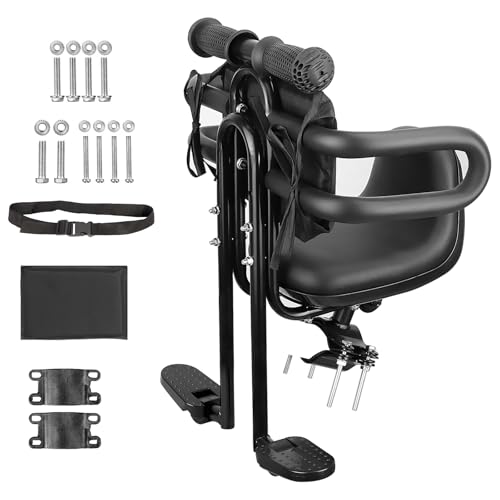
MEGHNA emphasizes adjustability and comfort. The seat offers three height settings to accommodate different ages and heights, which helps ensure the child’s comfortable position as they grow. Features include foldable foot pedals that provide stable support and can be stowed away when not in use, enabling a compact profile. The cushion uses thick sponge and leather-like material for a comfortable feel during longer rides, with a backrest that enhances posture and support for babies and toddlers.
The MEGHNA design highlights ease of use and space efficiency. The foldable pedals reduce footprint when the seat is not in use or when storing the bike. The combination of backrest cushioning and height adjustability makes this seat a practical option for families seeking a customizable fit and easy maintenance for daily riding with young passengers.
RibasuBB Front Mount Baby Seat

RibasuBB offers a front-mounted option with several safety-enhancing features. The seat provides a position-adjustable setup along a rail with a quick buckle, allowing caregivers to adapt the seat’s position as the child grows. A wrap-around guardrail and a matching belt increase security, helping to minimize falls and shifts while riding. The two footrests and ergonomic backrest with padding contribute to a more comfortable ride for longer trips.
RibasuBB emphasizes versatility and safety. The seat is described as suitable for various bike types, including electric and mountain bikes, as well as standard bicycles. It is designed for children from about 8 months up to age 6, with a weight limit that accommodates a broad range of young riders. The inclusive design aims to keep kids secure while providing a balanced ride for parents.
Buying Guide
Key purchase considerations help ensure you select a seat that matches your bike, child, and riding style. Use these perspectives to compare models before choosing.
- Age and weight compatibility: Check the manufacturer’s stated age range and weight limit. Front mounts often support younger riders, while some rear mounts may have higher weight allowances. If you have a newborn or very young infant, prioritize seats with high head and neck support and secure harnesses.
- Mounting style and bike compatibility: Front-mounted seats offer better communication with your child but require a sturdy mounting system and frame clearance. Rear-mounted seats may be easier on uneven terrain and can have a lower center of gravity. Verify frame diameter ranges and compatibility with your bike model.
- Safety features: Look for a secure 3-point or adjustable harness, padded seating, a backrest, armrests, and a footrest or foot cups. Guardrails and belt restraints help prevent leg slips and tumbles during braking or turning.
- Comfort and adjustability: Thick padding, breathable materials, and a backrest support long rides. Adjustable footrests and height options extend the seat’s usable life as your child grows.
- Installation and maintenance: Quick-installation designs (like One-Click) save time, especially when swapping seats between bikes. Weather-resistant materials and easy-to-clean surfaces reduce upkeep for families on the go.
- Ease of transfer and storage: Consider how easy it is to remove the seat for transport or storage. Foldable pedals or compact profiles minimize space when not in use.
- Durability and warranty: Look for solid construction (steel components, reinforced grips) and check return or warranty policies to safeguard your purchase over time.
- Brand and safety certifications: Reputable brands with established safety records offer greater reassurance. When possible, check for independent safety tests or certifications relevant to bike seats.
Front-Mounted vs. Rear-Mmounted: Quick Comparisons
- Front-mounted advantages: Direct interaction with your child, easy supervision, and balanced weight distribution for some riders. Suitable for shorter trips and city cycling.
- Front-mounted drawbacks: Potentially more frame interference and wind exposure; may require more careful mounting on smaller frames.
- Rear-mounted advantages: Lower center of gravity and often more stability on rough terrain; reduces front-right visibility concerns for some riders.
- Rear-mounted drawbacks: Less direct interaction with your child and different weight dynamics for handling.
Care and maintenance notes: Regularly check straps, buckles, and mounting hardware for wear or looseness. Clean cushions with a damp cloth and mild soap; avoid harsh chemicals that may degrade padding. Store seats in a dry place to prevent mold or material degradation.