Transforming a conventional bicycle into a motorized ride can extend commuting options, boost weekend adventures, and provide a hands-on project for enthusiasts. This guide highlights five popular 100cc–110cc gas engine kits that fit most 26″ and 28″ bikes, offering a balance of power, reliability, and value. Each product is evaluated on engine type, fuel efficiency, load capacity, and ease of installation to help American riders compare options with confidence. The table below summarizes key specs to start your comparison.
| Product | Brand | Engine (cc) | Type | Top Speed / Power | Fuel Tank (gal) | Max Load (lbs) |
|---|---|---|---|---|---|---|
| JAYGOVAN 110cc Bicycle Engine Kit | JAYGOVAN | 110 | 2-stroke | 3 kW @ 6000 rpm | — | — |
| JJIESHENG 100cc Bicycle Engine Kit | JJIESHENG | 100 | 2-stroke | Up to 28 mph | 0.53 | 440 |
| GOSHET Bike Gas Engine Kit Set | GOSHET | 100 | 4-stroke | — | 0.52 | 440 |
| ZBXGJKSY Bicycle Gas Engine Kit | ZBXGJKSY | 100 | 2-stroke | Up to 28 mph | 0.53 | 440 |
| CUBELLIN Upgraded 100cc Bicycle Engine Kit | CUBELLIN | 100 | 2-stroke | Up to 30 mph (48 km/h) | 0.52 | 440 |
Below are detailed product sections for five selected gas kit options. Each entry includes a clickable link to the Amazon listing, a visual, and a concise feature summary to help you compare at a glance. All kits are designed for 26″–28″ wheel bikes and emphasize durability, fuel efficiency, and straightforward installation where noted.
JAYGOVAN 110cc Bicycle Engine Kit

The JAYGOVAN 110cc kit delivers a complete two-stroke engine package with a wired digital computer, providing 3 kW of power at 6000 rpm. The engine is designed for durability with a heavy-duty metal body and is suitable for most 26″ and 28″ V-frame bikes, including mountain, road, and commuter models. Noise and vibration are described as modest, supporting use in typical outdoor environments without significant disruption. The kit emphasizes upgrade potential for riders seeking faster acceleration and improved hill-climbing ability without frequent refueling.
- 110cc two-stroke single-cylinder with wired digital computer
- Power: 3 kW @ 6000 rpm for stronger acceleration
- Sturdy metal engine housing, compatible with most 26″ and 28″ V-frame bikes
- Quiet operation with limited noise and vibration
Installation notes suggest compatibility with standard bike frames and typical mounting hardware. Potential riders should be prepared for essential mechanical work and follow safety guidelines during assembly and testing.
JJIESHENG 100cc Bicycle Engine Kit

The JJIESHENG 100cc kit uses a two-stroke design with a maximum noted speed of 28 mph. A notable feature is the 0.53-gallon fuel tank, enabling longer rides between refuels. The kit is built to support riders up to 440 pounds, offering robust load capacity for varied rider weights and gear. Its compact 100cc configuration emphasizes a balance of portability and performance for daily commuting or leisure trips on 26″–28″ bicycles.
- 2-stroke 100cc engine
- Maximum speed up to 28 mph
- Fuel tank capacity up to 0.53 gallon
- Load capacity up to 440 lbs
For installation, potential buyers should verify frame compatibility and consider service access for two-stroke engines, including fuel mix ratios during break-in and regular maintenance to optimize longevity.
GOSHET Bike Gas Engine Kit Set
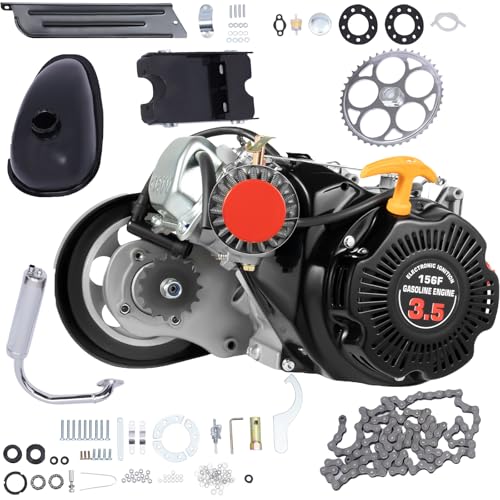
The GOSHET 100cc four-stroke engine kit emphasizes a robust power profile, delivering about 3.5 horsepower with a displacement of 100cc and a maximum speed closely aligned with 3600 RPM. The large fuel tank, at roughly 0.52 gallons, supports longer rides between fills, while a stated maximum load capacity of 440 pounds supports a wide range of rider and cargo configurations. The kit uses a rugged construction with an aluminum housing and a corrosion-resistant fuel system to promote durability in outdoor use.
- 4-stroke, 100cc engine for smoother power delivery
- Maximum power around 2 kW with 3600 RPM
- Tank capacity about 0.52 gallons
- Durable aluminum housing and corrosion-resistant components
Consideration for users includes checking frame compatibility and ensuring appropriate mounting hardware. Noise levels and maintenance routines should be reviewed to sustain performance over time.
ZBXGJKSY Bicycle Gas Engine Kit

The ZBXGJKSY kit features a 100cc two-stroke engine with a maximum speed specification around 28 mph. It includes a 2-liter (approx. 0.53 gallon) fuel tank and supports a load capacity up to 440 pounds, making it suitable for riders who carry additional gear. Fuel guidance indicates a typical mix of gasoline and two-stroke oil, and the kit is designed to provide a reliable boost to daily cycling or short trips without frequent refueling.
- 100cc, single-cylinder, air-cooled 2-stroke engine
- Maximum speed around 28 mph
- Fuel tank capacity about 0.53 gallon
- Load capacity up to 440 lbs
As with other gas kits, installation requires careful alignment with the frame and chainline. Prospective buyers should ensure compatibility with their bicycle’s frame geometry and check for local regulations on motorized bicycles.
CUBELLIN Upgraded 100cc Bicycle Engine Kit

The upgraded CUBELLIN 100cc kit is a 2-stroke motorized bicycle engine that focuses on durability and strength. It features a 36-tooth sprocket, a robust aluminum engine housing, and a high-load capacity, supporting up to 440 pounds. The kit claims strong performance with a top speed around 48 km/h (approximately 30 mph) and fuel efficiency emphasized by a 0.52-gallon tank. Enhanced safety mounts and dual-layer protection are highlighted to improve stability during operation.
- 100cc, 2-stroke engine with 36-tooth sprocket
- Top speed around 30 mph (48 km/h)
- Tank capacity about 0.52 gallons
- Double-strength mounting for improved safety and stability
Users should verify frame compatibility, assess mounting points, and follow recommended break-in and maintenance procedures for optimal longevity and reliability.
Buying Guide
Engine Type and Configuration
Two-stroke engines generally deliver higher power-to-weight and quicker acceleration, but require precise fuel/oil mixing and can produce more exhaust. Four-stroke engines offer smoother power delivery and often lower maintenance needs but may be heavier. When choosing, consider your riding style, maintenance willingness, and local emission regulations.
Displacement and Power
Most common kits here are 100cc to 110cc. Higher displacement provides stronger acceleration and hill climbing, but may require sturdier mounting and frame considerations. Check power output (kW or horsepower) and rpm ranges to align with your performance goals.
Frame Compatibility and Mounting
Suitable for 26″–28″ V-frame bikes, but frame geometry and compatibility with mounting brackets, chainline, and chain tension are critical. Ensure there is adequate clearance for exhaust, carburetor, and fuel lines, and confirm available space for vibration isolation components.
Fuel Tank Size and Efficiency
Tank capacity around 0.52–0.53 gallons supports longer rides between fills. Consider fuel economy, expected range, and fuel-mix requirements for two-stroke options. A larger tank reduces refueling stops but adds weight that can affect balance.
Durability, Materials, and Load Capacity
Durable aluminum housings, robust chains, and corrosion-resistant components extend service life under outdoor conditions. Look for a kit with a stated load rating (commonly around 440 pounds) if you plan to carry cargo or heavier riders.
Installation, Maintenance, and Support
Many kits require basic mechanical skills for mounting, carburetor adjustment, and chain alignment. Verify included hardware, wiring, and ignition components. Availability of spare parts and clear installation instructions help reduce downtime.
Legal and Safety Considerations
Motorized bicycle regulations vary by state. Ensure compliance with local rules for engine displacement, speed limits, and licensing. Always wear appropriate safety gear, install a reliable brake system, and perform regular maintenance checks to ensure safe operation on public roads.