Transform a traditional mountain bike into a capable electric ride with purpose-built motor kits. This guide highlights five top options that balance power, reliability, and installability for mountain biking enthusiasts. From mid-drive systems that maximize hill-climbing torque to hub and wheel kits that streamline setup, these selections cover a range of frames, wheel sizes, and riding styles. Each entry includes core specs, compatibility notes, and installation considerations to help you compare options quickly.
| Product | Brand | Core Specs |
|---|---|---|
| BAFANG Mid Drive Kit BBS02B/BBS-HD | BAFANG | 68-73mm BB, 100/120/160 N.m torque, up to 45 km/h, includes throttle and assist modes; battery optional |
| AW 48V 1000W Front Wheel Kit | AW | 26″ wheel, 48V 1000W, dual-mode controller, front hub, 3 indicator throttle |
| BAFANG 48V 500W Front Hub Kit | BAFANG | Front hub, 65N.m torque, 40 km/h top speed, IPX5, 100mm front dropouts, 4 PAS modes |
| 48V 1000W Rear Wheel Kit 20″ | Ringmaster | 1000W brushless gearless motor, up to 26.72 mph, >82% efficiency, LED display & controller |
| LIVALL PikaBoost 2 E-Bike Kit | LIVALL | Rear-wheel kit, 158Wh or 220Wh battery options, app control, quick install on rear wheel |
BAFANG Mid Drive Kit BBS02B/BBS-HD

The BAFANG BBS02B/BBS-HD mid-drive kit is designed for versatility on mountain bikes and other disc- or V-brake-equipped bikes. It fits bottom brackets from 68 to 73 mm, with some variations for 100 mm or 120 mm spacings, and 33.5–36 mm bearing diameters. The kit supports multiple power levels (500W/750W/1000W) and delivers substantial hill-climbing torque (100–160 N.m). Top speeds can reach around 45 km/h depending on configuration. The package typically includes brake levers, chainwheel, throttle, speed sensor, and mounting hardware, with battery and LCD display available as options. 73 mm screws are not included, so check fitment before mounting.
Designed for mountain bikes and other road-adventure platforms, this mid-drive system uses the crankset for propulsion, which improves climbing efficiency and weight distribution. It requires mechanical installation expertise and careful alignment with the bike’s gearing and braking system. With pedal-assist, throttle, and standard cycling modes, riders can tailor power delivery to terrain, from steep climbs to long descents. Battery choice remains flexible, allowing you to select a pack that matches your riding duration needs.
AW 48V 1000W Front Wheel Kit
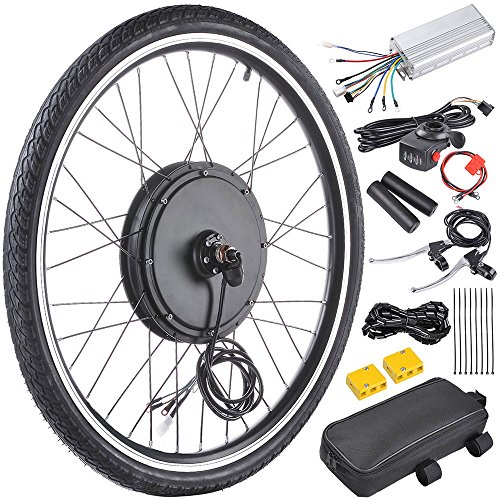
This 48V 1000W front-hub motor kit is built for efficient, quiet operation with a gearless hub. It enables quick conversion of a regular bicycle or mountain bike into an electric ride, with a top speed around 45 km/h. The aluminum frame adds durability, supporting up to about 220 lbs. A thumb throttle with three indicators provides battery status visibility, helping riders avoid unexpected power loss. The kit is designed for 26″ bikes withCompatibility for both disc and V-brakes, and it includes the necessary drive electronics for a straightforward installation, though wheel-specific fitment should be verified.
Front-hub systems shift weight to the front wheel, giving easier installation and maintenance. However, they can alter steering feel and weight distribution, which may influence handling on rough descents. This kit’s integrated controller and throttle simplify operation, making it a practical option for riders seeking a fast, simple upgrade, especially for urban-to-light-trail use. Careful brake compatibility checks are advised to ensure reliable stopping power with the upgraded weight.
BAFANG 48V 500W Front Hub Motor Kit

The BAFANG 500W Front Hub Kit is a compact option for upgrading a mountain bike with a front-wheel motor. It delivers up to about 65 N.m of torque and a top speed around 40 km/h, making it suitable for city trips and light off-road use. The kit supports 100 mm front dropouts and is compatible with both V-brakes and disc brakes. Four pedal-assist modes provide varying levels of assistance, and IPX5 protection helps withstand rain and splashes. Installation is typically straightforward, with cables, controller, and display included in the package.
Because power is concentrated in the front wheel, riders should be mindful of steering dynamics and front-end weight distribution, especially on technical trails. This kit offers a balance of ease and performance for riders who want a quicker, less complex upgrade without a mid-drive system. It’s a solid option for riders prioritizing simple installation and reliable daily use over peak torque and hill-climbing capability.
48V 1000W Rear Wheel Kit 20″

This 20-inch rear-wheel kit pairs a robust 1000W brushless motor with a gearless design for smooth acceleration and long-term durability. With top speeds up to about 26.72 mph, it emphasizes efficiency and stable performance across varied terrains. An integrated LED display and controller provide real-time feedback on speed and battery status, helping riders manage power on longer rides. The kit construction emphasizes durable aluminum and steel components for consistent performance, even under the stresses of mountain or beach trails.
Rear-hub setups place the motor directly where traction is strongest on most bikes, but they shift weight to the back and can affect climbing feel if the bike’s geometry isn’t optimized for added rear weight. This kit is well-suited for riders who want a powerful, all-weather upgrade with solid display readouts and straightforward installation, especially on smaller wheel platforms such as 20″ bikes or fat-tire platforms used for mixed-terrain riding.
LIVALL PikaBoost 2 E-Bike Kit

The LIVALL PikaBoost 2 is a compact e-bike conversion solution that emphasizes quick installation on the rear wheel with minimal wiring. It supports two battery options: 220Wh and 158Wh, offering ranges up to roughly 70 km (for the larger pack) or 50 km (for the smaller pack) under typical conditions. The battery pack is designed with a multi-layered BMS for safety, and the kit supports app-based control for additional features. Note that the system uses a round seatpost design in the specified range (25–35 mm) and requires a suitable back-wheel mounting area.
The PikaBoost 2 focuses on a clean, integrated look and simple servicing, making it appealing for riders who want a lightweight upgrade with flexible battery options. Its rear-wheel integration preserves forward weight distribution while providing consistent pedal-assist and throttle options through an app-controlled interface, ideal for urban riders and trail enthusiasts seeking a streamlined kit.
Buying Guide
Choosing the right mountain bike motor kit involves balancing performance, compatibility, and installation effort. Consider motor type: mid-drive kits deliver superior hill-climbing torque and efficient power usage by driving through the crank, but require more precise fitting and chain/derailleur alignment. Front or rear hub kits offer easier installs and are generally cheaper, yet they alter weight distribution and may affect handling on rugged terrain.
- Bike compatibility: Check bottom-bracket width (for mid-drive), hub width and dropouts (front/rear hub), and brake compatibility (disc vs V-brake).
- Power and torque: Higher wattage often means better torque for steep climbs, but may demand a larger battery and careful rider handling.
- Battery options: Battery capacity (Wh) affects range; confirm the pack is compatible with your frame and does not exceed weight limits.
- Installation complexity: Mid-drive kits usually require more mechanical work; hub kits can be quicker but may require wheel conversion.
- Display and control: Ensure the kit includes or supports a suitable display, throttle, pedal-assist modes, and a reliable controller.
- Maintenance and warranty: Check support from the brand and the availability of spare parts and service in your area.
- Legal and safety considerations: Be aware of local e-bike speed regulations and ensure the system complies with legal limits for non-registered e-bikes in your region.
When comparing options, map your typical riding conditions to motor placement and wheel size. Mid-drive systems excel on varied terrain and steeper climbs, while hub motors provide simpler upgrades for urban or light-trail riding. Battery capacity, weight, and the bike’s geometry should inform your final choice to ensure a balanced, enjoyable riding experience across your preferred routes.