Kids love color, motion, and a little magic on wheels. The following five toddler scooters pair bright LED wheels with stable, kid-friendly designs to help beginners build balance and confidence. Each model features lean-to-steer, growth-friendly handlebar heights, and non-slip decks for secure footing. Use the buying guide below to compare height ranges, weight limits, braking options, and portability so you can choose the best match for your child.
| Product | Brand | Key Feature | Height Range | Weight Capacity |
|---|---|---|---|---|
| Campior Pink Mini 3 Wheel Scooter | Campior | LED Wheels, Lean-To-Steer | 21.65″ – 27.56″ | Up to 110 lbs |
| BELEEV 3-Wheel Light-Up Scooter | BELEEV | Five-height adjustable handlebars, battery-free LED wheels | 67.5 cm – 88 cm | Up to 110 lbs |
| TONBUX Light-Up 3-Wheel Scooter | TONBUX | 4-height adjustment, light-up wheels | Multiple heights (4 levels) | Not specified in feature list |
| ZIFFY 3-Wheel LED Scooter | ZIFFY | LED wheels, lean-to-steer, quick disassembly | 5 height settings | Up to 110 lbs |
| TONBUX 3-Wheel Light-Up Scooter for Ages 3-8 | TONBUX | Light-up deck and wheels, four-height adjustability | 4 height levels | Not specified in feature list |
Campior Pink 3-Wheel Light-Up Scooter

The Campior Pink 3-Wheel scooter features motion-activated LED wheels that flash with every turn, adding a magical visual cue while improving visibility during dusk or dawn play. Lean-to-steer design makes turning intuitive, helping young riders build balance and coordination without complex maneuvers. The T-bar handlebar adjusts to four heights, supporting kids from about 2 years old up to roughly 110 pounds as they grow. A wide anti-slip deck and a rear foot brake contribute to stability and safety on varied surfaces, from sidewalks to driveways.
Riders benefit from a straightforward, forgiving ride that emphasizes confidence over speed. The combination of bright lights and stable three-wheel geometry minimizes tipping risk for beginners. Assembly is typically quick, and the compact frame stores easily when not in use. This model suits parents seeking a durable entry scooter that scales with a child’s growth while delivering engaging, light-up fun.
BELEEV 3-Wheel Light-Up Scooter
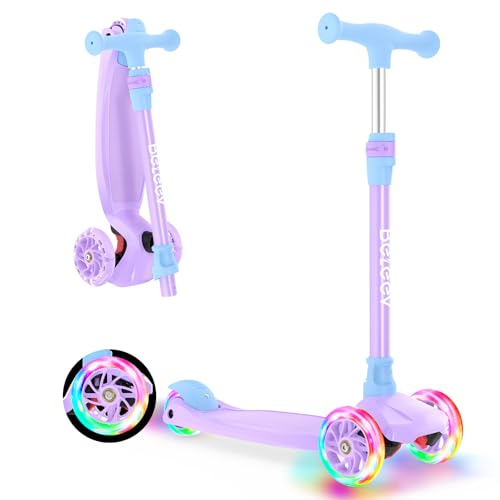
BELEEV’s three-wheel scooter for ages 3 to 12 features motion-activated, battery-free LED lights that energize as the child rides, with no battery maintenance required. The handlebars offer five height settings, enabling a smooth fit as your child grows—from early elementary to taller, school-age kids. A reliable rear brake supports quick stops, and the tilt-steering design helps children steer using their body’s center of gravity. With a strong deck and a solid weight tolerance, this scooter emphasizes safe progression from beginner to more confident rider.
Carry-friendly and built for growth, this model emphasizes safety without sacrificing excitement. The light-up wheels provide a clear visibility cue in low light, while the adjustable height ensures posture remains comfortable and balanced. It’s a strong option for families looking for a long-lasting, kid-friendly scooter that evolves with changing riding needs across several years.
TONBUX Light-Up 3-Wheel Scooter

TONBUX’s 3-wheel model for kids focuses on lean-to-steer control, helping young riders develop balance by tilting their body rather than turning a wheel. The scooter supports gradual progression with four height settings, ensuring a comfortable ride as children grow taller. Notable is the incorporation of motion-activated light-up wheels, which heighten visibility and fun, particularly in after-school adventures. The front wheel is relatively wide (50mm) to improve stability on uneven surfaces, while a built-in shock-absorption design cushions small bumps along the way.
Kids can enjoy a growing range of riding scenarios—from sidewalks to park paths—without needing a new scooter every year. Since the deck lighting requires battery power, caregivers should replace batteries as needed, but the overall setup remains straightforward for parents seeking a reliable, light-up ride with solid stability and a simple learning curve.
ZIFFY 3-Wheel LED Scooter

ZIFFY’s 3-wheel scooter emphasizes lightweight portability and simple setup. LED light-up wheels illuminate automatically when the scooter is in motion, creating a visual cue that’s both exciting and safer for low-light outdoor play. Lean-to-steer design gives children a natural turning method by tilting the handlebars, enhancing balance and coordination. A rear brake provides a straightforward stopping option, and the scooter’s light weight of just a few pounds makes it easy to carry or store between sessions. Quick push-button disassembly adds to its travel-friendly appeal.
With a robust weight tolerance of up to 110 pounds and multiple height settings, ZIFFY offers a practical entry point for younger riders who want lights and mobility without complexity. The combination of stability, lighted feedback, and easy transport makes this model a versatile option for daily use at home, at the park, or during family outings.
TONBUX 3-Wheel Light-Up Scooter for Ages 3-8

This TONBUX model targets growing readers and riders, offering four adjustable height levels to accommodate children from approximately age 3 to 8. Its three-wheel, lean-to-steer design helps new riders learn balance by body movement rather than precise steering, which supports a gentler learning curve. The deck and wheels are equipped with bright LED lighting to enhance visibility and add a touch of magic to every ride. While the feature list highlights light-up components, it also emphasizes stability and growth-friendly sizing, making it a durable long-term choice for active tweens.
As with similar models, battery-powered deck lights would require occasional maintenance, but the overall design prioritizes safety and ease of use. This scooter suits families seeking a mid-range, duration-friendly option that remains engaging for several years of growth and different outdoor activities.
Buying Guide
Age, Growth, and Skill Level
Start with the child’s current age and riding experience. Three-wheel designs with lean-to-steer are typically easier for beginners, helping kids develop balance before advancing to more complex steering. Look for scooters that offer height-adjustable handlebars to accommodate growth over several years, preventing the need to replace the scooter too soon.
Height Adjustment and Handlebar Ergonomics
Choose models with multiple height settings and comfortable grips. A taller, adjustable handlebar helps maintain proper riding posture, reducing strain on the back and shoulders. If your child will ride on uneven surfaces, consider a slightly higher deck clearance and a wide footprint to improve stability.
Deck Size, Wheelbase, and Stability
A wide, non-slip deck and a low center of gravity contribute to confidence for new riders. Three-wheel designs generally offer greater stability than two-wheel scooters for toddlers. Ensure the front wheel is adequately wide and the rear wheel provides reliable braking for safe stopping on gentle slopes and flat surfaces.
Lighting, Safety, and Visibility
LED light-up wheels enhance visibility in low light and add a fun element that motivates kids to ride. Note whether lights are battery-powered or motion-activated and consider how easy it is to replace batteries if needed. Bright wheels should complement, not replace, proper supervision and basic protective gear like a helmet and knee pads.
Durability, Weight Capacity, and Longevity
Inspect the scooter’s frame for sturdy materials and reliable locking mechanisms on the height-adjustment points. A common target is a weight capacity around 110 pounds, which covers most preschoolers through early elementary ages. Heavier riders may outgrow a scooter quickly, so consider models that responsibly balance weight limits with growth potential.
Portability, Storage, and Maintenance
Lightweight designs with foldable or easily disassembled components simplify transport to parks or friends’ yards. Quick-release pins or push-button disassembly are helpful features for families on the go. Regular maintenance typically involves checking the wheels, brakes, and handlebars for looseness and cleaning the deck to maintain grip.
Price and Value
More feature-rich, longer-lasting scooters may cost more upfront but can offer better long-term value as a single model serves several years. Consider the total cost of ownership, including potential spare parts or battery replacements for lights, and compare against the anticipated lifespan and usage frequency in your household.