Choosing the right mini micro scooter for a young rider involves balancing stability, weight, and Growth. This guide highlights top Micro-brand scooters suited for ages 2–5, with emphasis on lean-to-steer designs that help toddlers build balance while staying secure. A helmet is essential, and compatible accessaries can enhance safety and fun. The following sections spotlight five kid-friendly Micro scooters and provide a practical buying guide to help caregivers compare features, durability, and suitability for growing children.
| Product | Brand | Brief Note | Link |
|---|---|---|---|
| Micro Mini Deluxe 3-Wheeled Blue | Micro | Lean-To-Steer, grows with age | https://www.amazon.com/dp/B01BE0JGE0?tag=scooterguideh-20 |
| Mini Deluxe 3-Wheeled Lavender | Micro | Stable, lightweight, adjustable T-bar | https://www.amazon.com/dp/B0722L5KT2?tag=scooterguideh-20 |
| Micro Kickboard Mini Deluxe 3-Wheeled | Micro | Lean-To-Steer, durable for kids | https://www.amazon.com/dp/B01BE0J9O2?tag=scooterguideh-20 |
| Micro Mini LED Scooter | Micro | LED wheels, tilt-and-turn learning system | https://www.amazon.com/dp/B07R2JXCJP?tag=scooterguideh-20 |
| Micro Mini LED Navy Foldable | Micro | Foldable, lighted wheels for fun | https://www.amazon.com/dp/B0C8JHXC83?tag=scooterguideh-20 |
Micro Mini Deluxe 3-Wheeled Blue

The Micro Mini Deluxe 3-Wheeled scooter uses a Lean-To-Steer design to help toddlers gain balance and coordination. It is reportedly strong, supporting up to 110 lbs, while remaining lightweight for young riders. The T-bar is adjustable, allowing the scooter to grow with a child from about age 2 to 5. Micro’s reputation for smooth-gliding scooters complements its pediatrician-informed design approach, focusing on safe, stable rides for early riders.
Mini Deluxe 3-Wheeled Lavender
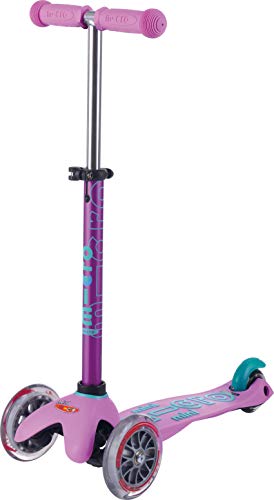
Lavender Mini Deluxe shares the same Lean-To-Steer framework as the blue version, delivering a stable, balanced feel as children learn to maneuver. It is designed to be lightweight and strong, with an adjustable T-bar that grows with the child. This model emphasizes ease of use and a comfortable riding position, suitable for early riders mastering steering and balance in a safe, controlled manner.
Micro Kickboard Mini Deluxe 3-Wheeled

This Micro Kickboard model maintains the three-wheel stability and lean-to-steer design that helps toddlers develop balance. It features a sturdy framework with an adjustable handlebar and a high weight limit suitable for growing children. The scooter’s design aligns with Micro’s emphasis on long-lasting, kid-friendly performance and straightforward operation for new riders.
Micro Mini LED Scooter

The Mini LED Scooter introduces front LED light-up wheels and a tilt-and-turn learning system for a more engaging riding experience. It remains lightweight, with an adjustable T-bar to suit a growing child. A non-slip platform helps absorb minor bumps, contributing to a safer, more confident learning ride for children aged 2–5.
Micro Mini LED Navy Foldable

The Navy Foldable LED Mini follows Micro’s lean-to-steer approach with a foldable frame for travel. It adds LED illumination on the wheels for visibility and appeal. The scooter is designed to be robust yet easy to fold, with an adjustable handlebar that further supports growth from ages 2 through 5 while maintaining a lightweight build for caregivers to manage.
Buying Guide: Key Purchase Considerations
- Age and Growth: Look for an adjustable T-bar or handlebar height to accommodate a child’s growth from around 2 to 5 years old. A foldable design can aid travel and storage for families on the go.
- Stability and Steering: Lean-to-steer three-wheeled designs typically offer more stability for beginners, helping children learn balance with a lower risk of falling.
- Weight Capacity: Ensure the scooter’s maximum weight aligns with your child’s current and projected weight range. Models listed here commonly support up to 110 lbs or more, which is suitable for most 2–5-year-olds as they grow.
- Durability and Materials: Lightweight yet strong plastics, reinforced decks, and quality bearings (e.g., ABEC-rated) contribute to smoother rides and longer life.
- Safety Features: A non-slip deck, rounded edges, and low center of gravity enhance safety. While helmets are essential, consider additional gear like knee and elbow pads for new riders.
- Wheels and Lighting: LED wheels add visibility and fun, especially for early learners. Front wheel lighting can be a motivating feature for kids but confirm that it does not add unnecessary weight.
- Portability: Foldability and compact storage are practical for families with limited space or travel needs.
- Maintenance: Check for replaceable parts (wheels, bearings, T-bar clamps) to extend the scooter’s lifespan as kids outgrow early designs.
- Compatibility with Helmets: Choose scooters with standard deck dimensions that fit common kid helmets and ensure helmet usage is prioritized in daily routines.
These considerations help families compare options objectively, focusing on safety, durability, and ease of use. When pairing a Micro scooter with a helmet, select a size-appropriate helmet that fits securely and comfortably, and introduce helmet-wearing as a routine part of every ride.