For parents seeking versatile toys that grow with their child, a balance bike 2 in 1 offers a practical path from early balance practice to pedal-powered riding. These models combine a low-friction balance bike with the option to add pedals, training wheels, or a seat to turn into a traditional bike as kids gain confidence. Below, five selected options blend safety, durability, and adaptability to suit toddlers and young children across ages 1 to 7. Each entry highlights material quality, convertibility, braking options, and maintenance considerations to help families pick a lasting ride-on that fits active lifestyles.
| Product | Brand | Key Feature |
|---|---|---|
| SEREED Baby Balance Bike (Green) | SEREED | 4 wheels, dual learning focus, indoor/outdoor usability |
| OHIIK Balance Bike 2 in 1 (Blue, 12 inch) | OHIIK | Fast conversion between modes, durable high-carbon steel |
| KRIDDO 2-in-1 Tricycle and Balance Bike (White) | KRIDDO | Built-in pedal mount, detachable pedals, stowable training wheels |
| VTZII Balance Bike 2 in 1 (Green, 16 inch) | VTZII | Pneumatic tires, integrated wheel hub, brake and training wheels |
| OHIIK Balance Bike 2 in 1 (Pink, 14 inch) | OHIIK | Two-in-one design with easy adjustability and safety features |
Note: Each product is described based on listed features and typical use cases for 1- to 7-year-olds. Availability and configurations may vary by seller; refer to the product page for the latest details and compatible age ranges.
SEREED Baby Balance Bike (Green)
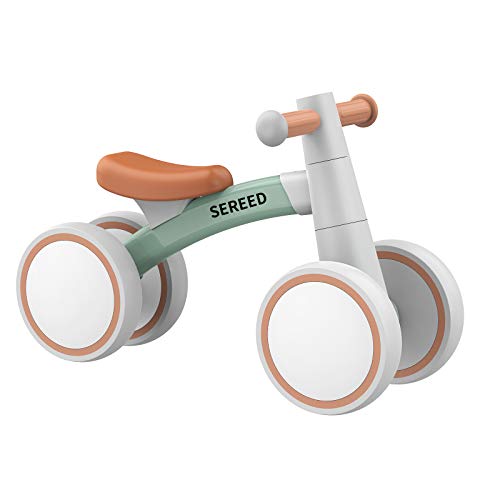
The SEREED 4-wheel balance bike is designed for toddlers in the earliest stages of movement. With an emphasis on safety and stability, this model targets ages around 12 to 24 months as a first riding experience. The absence of pedals helps prevent foot clamping and promotes natural balance and steering: children learn to shift weight and control direction while their feet stay on the ground. A widened closed wheel design reduces the risk of toe injuries, and a 135-degree turning limit with gravity steering minimizes tipping during initial turns. The frame uses a sturdy aluminum alloy, paired with non-slip TPU handles and a soft, supportive seat for comfort during play. Suitable for both indoor and outdoor use, it supports growing confidence and motor skills as infants transition toward walking and independent riding.
Key considerations for this model include its low-step design and weight-bearing capacity, which is appropriate for very young riders. While the lack of pedals limits longer rides, it creates a low-pressure entry point for balance development. Maintenance is straightforward, with a focus on keeping the non-slip wheels clean and ensuring the seat remains securely mounted. Parents should supervise early sessions and keep sessions brief to match the child’s attention span and physical readiness. This option is particularly appealing for households prioritizing safety-first learning in a compact space.
OHIIK Balance Bike 2 in 1 (Blue, 12 inch)

OHIIK’s 2-in-1 model for 12-inch wheels offers a rapid and tool-free conversion between balance bike and pedal bike. Designed to grow with children roughly 2 to 6 years old, this bike supports early balance training and later transition to pedaling with a simple switch. Construction emphasizes safety and durability, featuring a high carbon steel frame that remains lightweight for young riders. A reliable hand brake supports controlled descent, while broad pneumatic tires provide grip and cushioning on varied surfaces. The adjustable seat and handlebar ensure a comfortable riding position as children gain height, with quick adjustments that don’t require tools. The design is compact, making it suitable for smaller play areas or urban environments.
From a safety perspective, the bike’s steel frame and brake system help prevent abrupt stops that could injure a beginner rider. The tire choice contributes to a calmer ride on household floors and sidewalks alike, though some parents may prefer outdoor-ready tires for rougher terrain. The dual-mode setup minimizes the need for a separate bicycle, offering value and simplicity in one package. For families evaluating long-term usability, this OHIIK model scores well on adaptability and ease of use.
KRIDDO 2-in-1 Tricycle and Balance Bike (White)

KRIDDO’s 2-in-1 design blends a tricycle and a balance bike in one frame, focusing on early motor skills and a staged learning curve. The bike features a built-in pedal mount that stores or detaches pedals, enabling a smooth shift from balance-only riding to pedaled cycling. The detachable pedals help prevent loss and simplify storage, while the stowable training wheels provide a stable option as confidence builds. This flexibility is beneficial for households who want a single bike to accompany a child from toddlerhood into early elementary years. Weight distribution, frame integrity, and overall ride feel are optimized to minimize wobble at slower speeds, helping new riders feel secure even when their legs are still growing into the movement needed for independent cycling.
Pros of this arrangement include the ability to tailor the ride to a child’s skill level and the reduction in clutter by using one bike for multiple stages. Potential considerations involve ensuring proper assembly and regular inspection of the training wheels and pedal mount to prevent looseness. As a 2-in-1 unit, it may require occasional adjustments as children outgrow certain configurations, but overall it provides a adaptive path from balance to pedal riding with a single purchase.
VTZII Balance Bike 2 in 1 (Green, 16 inch)

VTZII presents a 2-in-1 balance-to-pedal bike with a focus on safety features and longevity. The design centers on an integrated wheel hub and wide pneumatic tires, delivering a smoother, more secure ride across different surfaces. A sensitive hand brake supports safe stopping for younger riders who are first learning to control speed. The model includes training wheels that can be removed as the child progresses, allowing a fully balanced ride before committing to pedals. The balance mode helps kids practice steering and balance in a controlled setting, while the pedal mode introduces the mechanics of pedaling and gear coordination. A sturdy frame and quality components aim to withstand frequent use in both inner-city and suburban environments.
Parents considering this option should note the importance of properly adjusting the brake levers and ensuring tires maintain appropriate air pressure for ride quality. The balance-to-pedal transition is a valuable feature for building confidence without requiring multiple separate bikes. This VTZII model blends practical safety with growth potential, making it a strong candidate for households seeking a mid-to-long-term riding companion.
OHIIK Balance Bike 2 in 1 (Pink, 14 inch)

OHIIK’s pink 14-inch 2-in-1 model is designed for a growing child audience, combining quick conversions between balance and pedal modes with adjustable seating and handlebars. The design highlights ease of use, with a claimed 60-second switch between configurations, making it feasible for kids to adapt as they grow. The bicycle frame uses high-quality steel to balance strength and light weight, while a rear braking system helps kids learn safe stopping without relying on shoes for friction. The adjustable seat and handlebar are built to accommodate a broad range of heights, enabling extended use as children age. This option is particularly appealing for families who value rapid adaptability and clear progression from balance to pedaling skills in a single, compact bicycle.
Potential considerations include ensuring the bike is correctly assembled and that brake setup aligns with the child’s reach. The 2-in-1 design is an efficiency choice for homes with limited storage space, delivering a versatile ride that can be adjusted to match a child’s development trajectory while maintaining safety and control.
Buying Guide: Key Purchase Considerations
- Age and growth: Choose models with adjustable seat and handlebar ranges to accommodate rapid growth in toddlers and young children.
- Mode transition: Prioritize bikes labeled 2-in-1 with simple, quick conversion between balance and pedal modes, ideally without tools.
- Safety features: Look for hand brakes, wide tires for stability, non-slip grips, and protective wheel designs that reduce risk of foot injuries in early stages.
- Durability and materials: Aluminum frames offer light weight and strength; steel frames can provide resilience but may add weight.
- Maintenance: Favor models with readily accessible parts, easy brake adjustments, and clear instructions for wheel and pedal maintenance.
- Weight and portability: Lighter bikes are easier for caregivers to handle and store; consider models with detachable parts for travel.
- Storage and space: If space is limited, prefer compact designs with foldable or stowable components like training wheels or removable seats.
- Surface compatibility: Pneumatic tires improve ride comfort on varied surfaces but require regular inflation and maintenance; solid tires require less upkeep.
- Learning progression: A balanced step-up approach—starting with balance-focused riding and gradually adding pedals—helps children gain confidence and reduce frustration.
- Warranty and support: Check manufacturer warranties and customer support options to address potential wear or part replacement needs.
When evaluating these options, compare how each model aligns with your child’s current abilities, the intended riding environment (indoor vs. outdoor), and how easily it can adapt as skills improve. A well-chosen 2-in-1 balance bike can become a single investment that accompanies a child from toddlerhood through early riding milestones, reducing the need for multiple purchases while promoting safe, active development.