For mobility scooter users, keeping batteries topped up is essential for reliable daily operation. A dedicated charger with proper voltage, current, and connector compatibility helps extend battery life while minimizing downtime. This guide highlights five practical charging solutions, including 24V models and a solar-powered option, to suit different scooter brands and battery types. Each entry covers compatibility, charging speed, safety features, and compatibility notes to help you choose confidently.
| Product | Brand | Key Benefit |
|---|---|---|
| 1) 24V 2A Electric Scooter Charger | nvmw | Compact 24V 2A with 3-pin XLR, suitable for common scooters |
| 2) 24V 5A 3-Pin Male XLR Charger | Fancy Buying | Higher current for faster charging with wide compatibility |
| 3) 24V 2A 3-Pin XLP Electric Scooter Charger | nvmw | Balanced speed and broad scooter compatibility |
| 4) 24V 29.4V 2A Charger | YAREMYEYE | Extended voltage option for lithium-based packs, broad model compatibility |
| 5) Voltset 12V Solar Battery Charger | Voltset | Solar-powered protection with MPPT, suitable for 12V battery systems |
1) 24V 2A Electric Scooter Charger

Model overview: This charger delivers DC 24V at 2A, with input AC 100-240V and a 3-pin male XLR connector. It includes a 4.9-foot US power cord, supporting faster charging than lower-current alternatives. Its protection features cover short circuits and overcurrent conditions, helping to safeguard mobility scooter batteries during charging. Compatibility spans popular models such as eZip Mountain Trailz, Jazzy, Pride Mobility, and related Go Go Elite lines, though compatibility should be verified for specific batteries.
2) 24V 5A 3-Pin Male XLR Charger

Key specs: AC input 100-240V, DC output 24V 5A (120W max). This charger prioritizes faster charging times compared with 1A–3A options and uses a male 3-pin XLR connector. It is marketed as compatible with Jazzy Power Chairs, Pride Mobility, Drive Medical, Golden Technologies, and multiple Pride-associated scooters, with OEM-compatible claims. Ensure your battery type is lead-acid before use, as specified in product notes.
3) 24V 2A 3-Pin XLP Electric Scooter Charger

Overview: This charger outputs DC 24V at 2A and uses a 3-pin XLR tip with a 4.9-foot cord. It is designed for broad compatibility with Go-Go Elite Traveller, Pride Mobility, Jazzy Power Chairs, Drive Medical, and various eZip and Bladez models. The indicator lets you verify charging status, and the device includes protection against common electrical faults. Confirm your scooter’s model and battery type before purchasing to ensure optimal fit.
4) 24V(Max 29.4V) 2A Charger
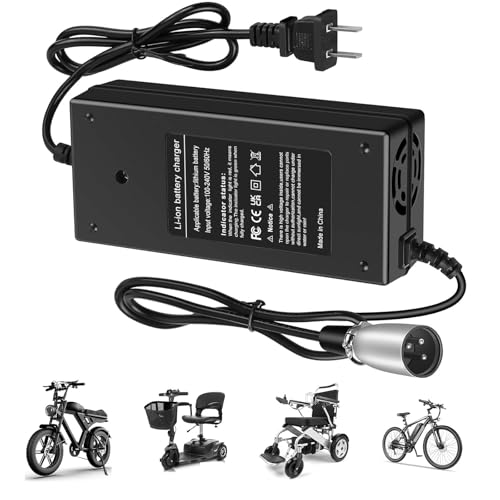
Notes: This charger supports up to 29.4V for lithium-based batteries and uses a 3-pin XLR connector. Compatible with a wide array of scooter brands including Go-Go Elite Traveller, Jazzy Power Chairs, Shoprider, Drive Medical, Bladez, and IZIP lines, among others. It promises faster charging relative to standard 24V options and emphasizes broad model coverage—please verify exact battery chemistry (lead-acid vs. lithium) prior to use.
5) 24V 5A Fast Battery Charger (3-Pin XLR)

Specification highlights: 24V output at 5A with a 3-pin XLR connector and an 8-foot cord. Marketed for 24V lead-acid batteries and stated as a faster charging option. Compatible with a broad family of devices, including Go-Go Elite Traveller, Jazzy Power Chairs, Pride mobility devices, Shoprider, iZip, eZip, Drive Medical, Bladez, and Elite Traveller variants. As with others, verify the battery type and model to ensure proper fit and charging behavior.
Buying Guide: Key Purchase Considerations And Comparisons
When selecting a charger for mobility scooters, several factors influence performance and safety. This guide compares essential considerations to help you choose confidently.
- Battery chemistry: Most 24V scooter chargers are designed for lead-acid or lithium-based packs. Confirm your battery type (lead-acid, LiFePO4, or Li-Ion) before purchasing to avoid charging incompatibility or damage.
- Voltage and current: Higher current (5A) chargers reduce charging time but may not be suitable for smaller or older batteries. Ensure the charger’s output matches your battery’s capacity and recommended charging rate.
- Connector compatibility: The 3-pin XLR connector is common, but verify connector type and pin configuration for your model. A mismatched connector can prevent charging or cause safety issues.
- Safety features: Look for protection against short circuits, overcurrent, overvoltage, and reverse polarity. Thermal protection and automatic shutoff when fully charged are valuable.
- Brand and compatibility: A charger labeled as widely compatible may still not fit every model. Check your scooter’s model and battery label, and consult the manufacturer’s guidelines or the charger’s compatibility list.
- Portability and cord length: For daily use, consider the length of the power cord and the overall weight. A longer cord reduces restricted placement options, while portability matters for travel.
- Maintenance and indicators: A visible charging indicator (red when charging, green when charged) helps avoid overcharging. Some models include auto shutoff or trickle modes for battery longevity.
For most users, matching the voltage, current, battery chemistry, and connector type will yield the safest charging experience. If you rely on solar charging in outdoor or remote settings, a dedicated solar charger with MPPT and proper load management can complement a standard charger by maintaining battery health during non-use periods. Always store chargers in a dry, ventilated area away from heat sources to extend their lifespan.