Finding a scooter that supports balance, coordination, and sensory-friendly features can help children with autism enjoy outdoor activity with confidence. This guide highlights five kid-friendly scooters designed to be stable, easy to use, and engaging through lights and adjustable heights. Each option emphasized here focuses on safety, durability, and growth adaptability to accommodate a child from early preschool years through pre-teen ages.
| Product | Key Benefit | Age Range | Notable Feature |
|---|---|---|---|
| Allek Kick Scooter B02 | Wide wheels and LED glow for visibility | 3-12 yrs | 4 adjustable heights; LED-lit wheels |
| Gotrax KS1 Kids Kick Scooter | Lean-to-Steer for balance development | 2-8 yrs | 3 height settings; lighted wheels |
| TONBUX Kids Scooter | Three-wheel stability with light-up wheels | 3-12 yrs | 4 height settings; 3-wheel design |
| Dribbl 3-Wheel Kids Scooter (Blue) | Sturdy yet lightweight with adjustable height | 3+ yrs | 4 height levels; wide anti-slip deck |
| Lifemaster Kids Scooter | Lean-to-Steer with LED wheels for visibility | 2+ yrs | 5-level handlebar; 3-wheel design |
Below are five carefully chosen models, each with features suited to autistic children, including adjustable heights, three-wheel stability, and engaging lighting. Links lead to Amazon product pages for convenience. Images accompany each section to help you assess design and usability at a glance.
Allek Kick Scooter B02 — Lean ‘N Glide
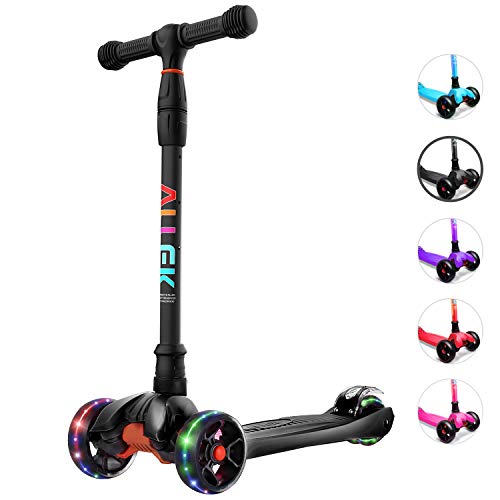
The Allek B02 is built for durability and comfort with a fiberglass-reinforced deck and wear-resistant PU wheels that absorb shocks on uneven surfaces. Four adjustable heights on the rustproof aluminum T-bar accommodate a growing child from about 3 to 12 years old, enabling a longer riding lifespan. Its PU luminous wheels illuminate as the scooter rolls, providing a visual cue that can help with sensory engagement and spatial awareness during both day and night use. The secure stem lock improves safety versus older clamp designs, supporting steady riding as a child develops balance and confidence.
Key considerations include the height adjustment range, which is essential for gradual growth. The LED wheels offer a low-light visibility aid without requiring batteries, since the lights are powered by rolling speed. The device also aims to protect indoor flooring with elastic PU wheels. For families seeking a robust, growth-friendly option with engaging wheel lights, the Allek B02 stands out among entry to mid-level scooters.
Gotrax KS1 Kids Kick Scooter

The KS1 is designed as a first scooter with safety and growth in mind. It features three illuminated wheels that glow when in motion, helping with nighttime visibility and creating a captivating ride for young riders. Lean-to-Steer technology encourages children to lean to steer, supporting balance development and coordination as they learn. The KS1 offers three height settings (33.7″, 31.9″, 29.9″), so a child can ride comfortably as they grow. Its light weight (about 5.1 pounds) makes it easy for kids to carry or store at home, in a car, or at school.
Disassembly for transport is straightforward: press a red button on the stem to remove the handlebar or reattach it for riding. The KS1’s balance-oriented design and tall-to-short height options can be a good match for autistic children who benefit from predictable sensory feedback and simple motion cues during riding sessions.
TONBUX Kids Scooter

TONBUX offers a 3-wheeled, lean-to-steer design with four height levels to accommodate riders aged 3 to 12, roughly from 25″ to 32″ tall. The wide front wheel and rear wheel provide added stability on uneven surfaces, contributing to a smoother ride for beginners. A built-in light-up feature on the wheels adds visual feedback that can be engaging for autistic children who enjoy colorful, motion-activated stimuli. The scooter emphasizes shock absorption through its wheel design, helping to minimize jarring motions during use.
With a height-adjustable stem and a forgiving steering system, TONBUX supports gradual skill-building, balancing, and coordination. The brand emphasizes safety through sturdy construction and a focus on predictable handling, which can be reassuring for caregivers when supporting a child’s outdoor activity routine.
Dribbl 3-Wheel Kids Scooter — Blue

Dribbl’s three-wheel scooter combines lean-to-steer technology with a wide, anti-slip deck for stable, confidence-building rides. The T-bar handlebar is adjustable across four heights (26.77″ to 33.86″), making it suitable for children aged three and up as they grow. The scooter balances durability with light weight (about 7.32 pounds), facilitating easy transport in a car trunk or closet. With durable ABEC-7 bearings and PU wheels, riders experience smooth gliding and reliable stopping, while the multi-flashing lights add an engaging sensory element that can help sustain interest during outdoor play.
The blue variant can appeal to kids who respond to color cues during learning activities. The safe design, combined with a sturdy, adjustable frame and wide deck, supports steady practice of balance and coordination without overwhelming sensory input. This makes it a strong option for children who benefit from predictable, gentle progressions in a familiar riding routine.
Lifemaster Kids Scooter — LED Edition

Lifemaster combines eye-catching LED wheel lights with Lean-To-Steer for balance development. The three-wheel design helps with stability, making it suitable for younger riders or beginners who benefit from a more forgiving ride. The handlebar offers five adjustable levels (though marketed as 4 to 5 levels in some listings), enabling a long service life as a child grows. The vibrant lighting increases visibility and can provide a sensory cue that supports attention and excitement during outdoor sessions, potentially helping children stay engaged longer.
Overall, Lifemaster emphasizes clear, controllable rides with soft grips and a stable platform. Its approach—LED lighting, lean steering, and height-adjustable handlebars—aligns well with the needs of autistic children who benefit from predictable motion, sensory feedback, and a strong sense of control during play.
Buying Guide: Key Considerations For Choosing A Scooter For An Autistic Child
- Stability and balance: Three-wheel designs generally offer greater stability for beginners and younger riders, reducing wobbles and helping build confidence.
- Adjustable height: Children grow quickly; choose a model with multiple height settings to ensure proper ergonomic alignment of the wrists, elbows, and shoulders.
- Sensory features: LED wheels, glowing accents, and bright colors can provide engaging sensory cues that support motivation and focus during outdoor activity.
- Weight and portability: Lighter scooters are easier for caregivers to lift and store. Consider models that are easy to fold or disassemble for transport.
- Durability and materials: Look for durable decks, reinforced frames, and high-quality bearings. A reliable brake system is essential for safety, especially for new riders.
- Grip and deck texture: Wide, non-slip decks help children feel secure, reducing anxiety related to slipping or losing balance.
- Indoor vs. outdoor use: Some models are gentler on indoor floors, while others emphasize rugged outdoor performance. Consider where your child will ride most often.
- Supervision and transition: For autistic children, gradual introduction and consistent routines help. Start with short, supervised sessions and slowly increase duration as comfort improves.
- Maintenance: Check for wear on wheels and bearings, and verify that adjustable clamps and locks remain secure after multiple rides.
- Learning aids: Lean-to-Steer and guided balance training features can support early skill development and reduce overwhelm during initial practice.