Whether you’re restoring a Coleman BT200X, Baja Motovox, or another small-bore mini bike, a reliable centrifugal clutch is essential for safe, smooth operation. This guide compares five top mini bike clutch assemblies, evaluating bore size, tooth count, chain compatibility, and engine compatibility to help you pick the best fit for your ride. Each option is chosen for durability, ease of installation, and compatibility across common models.
| Product | Brand | Bore / Shaft | Teeth / Chain | Compatibility |
|---|---|---|---|---|
| AlveyTech Centrifugal Clutch Assembly with 5/8″ Shaft and 10 Tooth 420 Chain Sprocket | AlveyTech | 5/8″ Shaft | 10T, 420 Chain | Coleman BT200X, CT200U Trail/EX/EXR, Predator 196cc 6.5 HP |
| Motovecor Centrifugal Clutch 3/4 Bore, 10T | Motovecor | 3/4″ Bore | 10T, 40/41/420 Chain | 2-6.5HP cloned engines; Baja/Mini bikes and go-karts |
| Sutmorly Heavy Duty Clutch Assembly with 1″ Bore & 14 Tooth | Sutmorly | 1″ Bore | 14T, 40-41-420 | Go-karts and mini bikes including Hon da Prokart, Cadet |
| KRGUOD Centrifugal Clutch 3/4 Bore 10T | KRGUOD | 3/4″ Bore | 10T, 40/41/420 | Mini bikes, go-karts, predator 212 engines, Honda/Tecumseh clones |
| FDJ Predator 212 Clutch 12 Tooth Mini Bike Clutch | FDJ | 3/4″ Bore | 12T, 35 Chain | Predator 212 and similar 3/4 bore engines |
AlveyTech 5/8 Inch Clutch Assembly

The AlveyTech clutch uses a 5/8″ shaft and a 10-tooth 420 chain sprocket to maximize torque while promoting rapid heat dissipation. This design helps reduce clutch slip during extended use and improves immediate take-off response. It is specifically noted to be a complete solution for slipping clutches on select Coleman models and Predator engines, reducing downtime and maintenance needs.
- 5/8″ shaft for secure mounting
- 10-tooth 420 chain sprocket
- Optimized torque with heat dissipation
- Broad compatibility with Coleman BT200X and Predator-powered mini bikes
Motovecor 3/4 Bore Clutch 10T
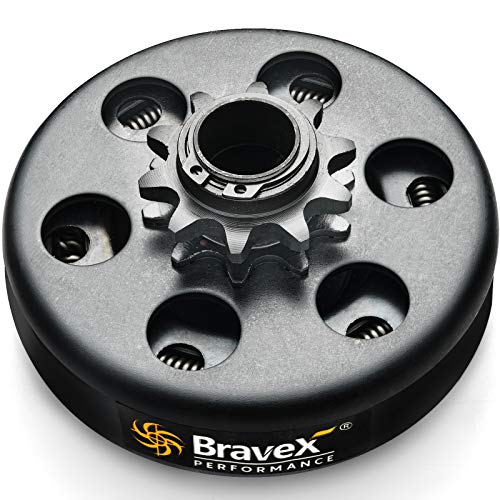
Motovecor’s clutch is built around a 3/4″ bore and a 10-tooth front sprocket compatible with 40/41/420 chains. It targets engines in the 3.5–7 HP range and is commonly used on go-karts and mini bikes like the Baja MB165/MB200 series. The kit is designed for reliable engagement at around 2300 RPM, balancing smooth engagement with steady acceleration.
- 3/4″ bore for sturdy mounting
- 10T sprocket for reliable engagement
- Compatible with 40/41/420 chains
- Suitable for 2-6.5 HP clones and Predator variants
Sutmorly 1 Inch Bore Clutch

Sutmorly offers a heavy-duty centrifugal clutch with a 1″ bore and a 14-tooth sprocket for 40-41-420 chains. Designed for engines larger than 6.5 HP, it’s a popular choice for more powerful mini bikes and go-karts, including those used in the Hon da Prokart and similar competition platforms. The kit emphasizes durability and stable engagement under load.
- 1″ bore for robust mounting
- 14T sprocket for higher torque transfer
- Works with 40-41-420 chains
- Suitable for engines up to about 13 HP
KRGUOD 3/4 Bore Clutch 10T

KRGUOD’s clutch is a versatile 3/4″ bore unit with a 10-tooth front sprocket designed for 2-6.5 HP Honda clones and Tecumseh engines. It supports #40/41/420 chains and is compatible with popular mini bikes and go-karts, including predator-powered setups. The design emphasizes easy installation and reliable engagement at typical idle to mid-range RPMs.
- 3/4″ bore for sturdy integration
- 10T sprocket with 40/41/420 chain compatibility
- Broad engine compatibility list
- Good option for clone engines and Predator builds
FDJ Predator 212 Clutch 12T
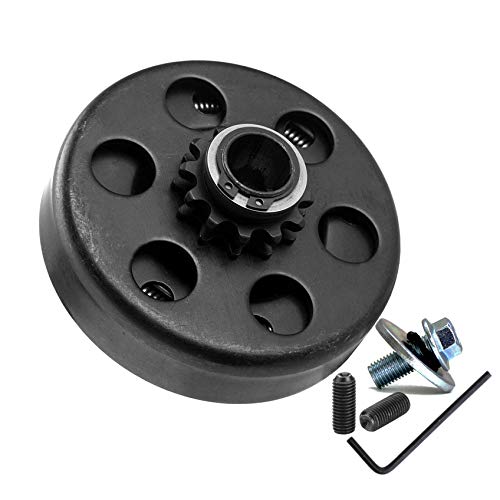
FDJ’s Predator 212 clutch uses a 3/4″ bore and a 12-tooth sprocket designed for 35 chain setups, with included screws, an Allen wrench, bolts, and nuts. This kit targets Predator 212 engines and similar 3/4″ shaft configurations. It’s framed as a comprehensive replacement option suitable for enthusiasts assembling or restoring mid-range power go-karts and mini bikes.
- 3/4″ bore for Predator and clone engines
- 12T sprocket supports robust torque transfer
- Includes mounting hardware for convenient installation
- Compatible with 35 chain systems
Buying Guide
Choosing the right mini bike clutch assembly hinges on several key factors. First, match the bore or shaft size to your engine’s crankshaft and mounting hardware. Common sizes include 5/8″, 3/4″, and 1″ bores, and incorrect fitment can cause misalignment or slippage. Second, consider the tooth count and chain compatibility. A 10T or 12T sprocket with 40/41/420 chains delivers different torque and speed characteristics, affecting take-off response and top speed. Third, verify engine compatibility. Many clutches cater to 2-6.5 HP clone engines, Predator variants, or Tecumseh/Honda clones; selecting the wrong option can lead to poor performance or premature wear.
Bore Size And Shaft Compatibility
The bore size determines whether the clutch will fit the engine’s crankshaft or mounting hub. A 5/8″ shaft is common on smaller mini bikes, while 3/4″ and 1″ bores suit higher-torque builds. When in doubt, measure the shaft diameter and check the kit’s stated bore. A precise fit minimizes vibration and wear, enhances efficiency, and helps maintain consistent acceleration.
Tooth Count And Chain Type
Tooth count defines the gear ratio between the engine and rear wheel. A higher tooth count reduces torque loss but can lower peak RPM, while a lower count increases torque transfer but may raise gear noise and wear. Confirm chain compatibility: 35, 40/41, and 420 chains are common in mini bikes. Matching the chain type ensures smooth engagement, reliable power transfer, and longer service life.
Engine And Vehicle Compatibility
Assess the engine power range and model compatibility. Some clutches are tailored for Coleman BT200X, Predator 212, or Honda clone engines, while others accommodate go-karts and various mini bikes. Ensure the clutch supports your engine’s horsepower, RPM range, and mounting configuration. If your bike uses a specialized controller or throttle setup, verify that the clutch kit includes or accommodates the necessary mounting hardware.
Durability, Heat Management, And Maintenance
Durability matters for repeated engagement and high-temperature operation. Look for materials designed to dissipate heat quickly and resist wear under load. Some kits include hardware for easy installation, while others rely on your existing hardware. Regular inspection of sprockets and chains, lubrication, and timely replacement of worn components extend clutch life and protect the drive train.
Installation Practicalities And Cost Considerations
Ease of installation influences the overall value. Kits that come with screws, nuts, and Allen wrenches save time and reduce the risk of misalignment. Compare prices across brands, but weigh the total value, including included hardware, warranty, and compatibility with multiple models. A higher upfront cost can pay off with longer life and fewer replacements over time.