Choosing the right wheelchair or scooter lift can improve independence, simplify travel, and ease daily routines. This guide reviews five popular options that balance portability, capacity, and ease of use. Each pick is designed to help load a wheelchair or scooter into a vehicle without heavy lifting, whether you drive a sedan or SUV. Consider your vehicle type, weight limits, and storage space when selecting a lift. Below you’ll find concise product highlights, a quick summary table, and practical buying tips to help you decide.
| Product | Brand | Key Benefit |
|---|---|---|
| Culver Portable Lift For Electric Wheelchairs | CULVER LED PROFESSIONAL LED LIGHTING SOLUTIONS | Lightweight, foldable lift; 110 lb capacity; 25 lb weight |
| Silver Spring Folding Carrier With Ramp | Silver Spring | Heavy-duty 48″ x 27.75″ carrier with ramp; folds for storage |
| CQmuniu Wheelchair Lift Portable Electric Lift | CQmuniu | Ultra-lightweight, foldable; universal fit; up to 220 lb capacity |
| Silver Spring Universal Lift And Carrier | Silver Spring | Universal power chair and scooter lift; adjustable cradle |
| Rockland Foldable Wheelchair Carrier | Rockland | 350 lb capacity; retractors; 2″ hitch; LED warning light |
Culver Portable Lift For Electric Wheelchairs
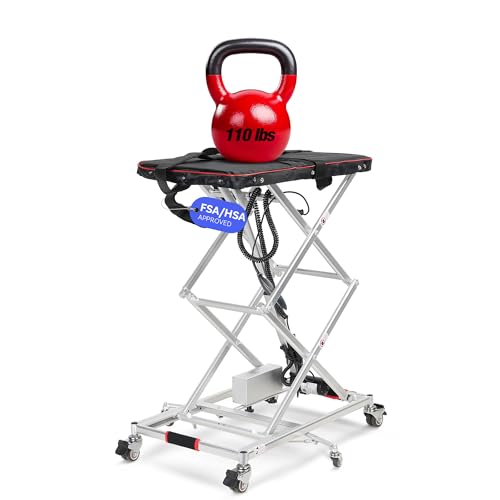
The Culver portable lift is designed for mobility aids that require easy loading into a car. It weighs about 25 lb, making it highly portable and simple to store in a trunk or back seat when not in use. The lift delivers up to 110 lb of capacity with a robust 4000N motor, which helps raise a wheelchair or power chair into a vehicle. Its foldable design supports efficient storage and travel, while the safety belt and simple controls enhance stability during operation. The unit is described as compatible with a wide range of wheelchairs and scooters, making it a versatile option for many users.
- Weight: 25 lb; Lift Capacity: 110 lb; Motor: 4000N
- Foldable, portable, and car-trunk friendly
- Includes safety belt and straightforward up/down controls
- Designed to be a practical alternative to hoists or ramps
Silver Spring Folding Carrier With Ramp

The Silver Spring folding carrier is a robust, space-saving solution for transporting scooters or wheelchairs behind a vehicle. It measures 48″ by 27.75″ and is compatible with Class III or IV 2″ hitch receivers. A key feature is its ability to fold upright against the vehicle when not in use, freeing garage space. The carrier includes an anti-rattle device, a 5/8″ hitch pin, an ergonomic pull pin, and ten tie-down points to secure the device during transit. This setup is ideal for frequent travelers who want a dependable loading platform without permanent installation.
- Weight and height are optimized for easy storage
- Folds upright when not in use; prevents garage clutter
- Anti-rattle device, 10 tie-down points, and securement hardware
- Requires Class III or IV 2″ hitch receiver
CQmuniu Wheelchair Lift Portable Electric Lift

The CQmuniu lift emphasizes ultra-lightweight design and universal compatibility. Weighing around 22 lb, it folds to a compact footprint (about 30″ x 12″ x 6″), making storage in trunks or closets straightforward. The aluminum frame is corrosion-resistant and built for durability, while adjustable straps and a customizable platform help secure most wheelchairs up to 220 lb. Non-slip grips and safety locks contribute to safer operation, and the device is positioned as a practical, space-saving solution for loading wheelchairs and scooters into vehicles.
- Ultra-lightweight: about 22 lb; Folded size ~30″ x 12″ x 6″
- Universal compatibility; fits most wheelchairs and scooters up to 220 lb
- Corrosion-resistant aluminum frame; non-slip grips; safety locks
- Compact storage; easy loading and unloading
Silver Spring Universal Power Chair Lift
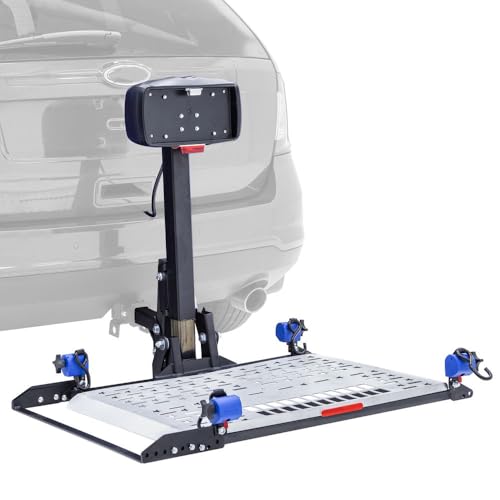
This Silver Spring model is designed for universal use, supporting power chairs and scooters across different setups. The platform measures 39″ L x 27″ W, with an adjustable cradle that extends to 46″ to accommodate longer wheelbases. Constructed from high-strength, lightweight aluminum, it is suitable for Class III or IV 2″ hitch receivers and includes an adapter for Class II 1-1/4″ receivers. The combination of a wide platform, extendable cradle, and light yet sturdy materials positions it as a flexible option for varied mobility devices and vehicles.
- High-strength aluminum; lightweight yet durable
- Platform 39″ x 27″; cradle extends to 46″
- Compatible with Class III/IV 2″ hitch; includes Class II adapter
- Designed for chairs and scooters; adjustable cradle for diverse sizes
Rockland Foldable Electric Wheelchair Carrier

The Rockland carrier is built to facilitate safer transport of wheelchairs and scooters with a 350 lb capacity. It features an extendable platform up to 46″ to fit longer devices, four self-tensioning retractors to secure the load, and LED warning lights for visibility. A manual backup crank provides a non-electrical option in case of battery issues, and a plate holder can help manage accessories during transport. It fits a 2″ hitch, making it compatible with a wide range of vehicles. This option balances robust capacity with practical portability for frequent travelers.
- 350 lb capacity; expandable platform up to 46″
- Four self-tensioning retractors; easy securement
- LED warning light; manual backup crank; plate holder
- 2″ hitch compatibility; rugged construction
Buying Guide
Key purchase considerations
Buyers should assess weight capacity, portability, and vehicle compatibility. A portable lift prioritizes ease of use and trunk storage, while a hitch-mounted carrier emphasizes capacity and long-term travel readiness. Consider how often you travel, the size and weight of your mobility device, and whether you need a single-lolution solution or a modular system that can accommodate different devices over time.
Portability vs. permanent installation
Portable lifts are typically lighter and easier to store, ideal for daily drivers and limited garage space. Hitch-mounted carriers offer stronger load support and can handle larger devices but require a compatible hitch and may limit trunk access when in use. Evaluate storage space in your vehicle and how you plan to use the lift on road trips or daily commutes.
Capacity and device compatibility
Always verify the lift’s maximum weight capacity and ensure it matches or exceeds the weight of your wheelchair or scooter plus any accessories. Some models are optimized for standard wheelchairs, while others support larger scooters. Universal lifts and adjustable cradles provide flexibility, but confirm compatibility with your specific model.
Vehicle compatibility and installation
Check your vehicle’s hitch type (2″ vs 1-1/4″), hitch class (II, III, or IV), and whether your trunk or hatch clearance accommodates the lift when folded or deployed. Some lifts include adapters for different hitch sizes, while others require installation by a professional. Consider the vehicle’s spare tire, exhaust, and rear bumper design when choosing a mounting method.
Safety features and ease of use
Relevant safety features include non-slip grips, safety belts, auto-locking cradles, anti-rattle mechanisms, and clear securing points. User-friendly controls and reliable braking or locking systems reduce risk during loading and transport. If safety is a priority, favor models with multiple securing options and clear operation instructions.
Durability, maintenance, and warranty
Material quality, corrosion resistance, and ease of maintenance affect long-term reliability. Aluminum frames are common for light yet sturdy construction, while reinforced steel offers extra durability. Review warranty terms and customer support options to understand coverage for parts, motor components, and wear items.
Storage, transport, and travel considerations
Consider the lift’s folded dimensions, weight, and whether it fits in your vehicle’s storage area. For frequent travelers, a compact, foldable design reduces space needs. Some models include protective coverings or weather-resistant features to prolong life when stored in garages or outdoor spaces.
Cost and value
Prices vary by capacity, materials, and features. When evaluating cost, weigh the purchase against benefits such as ease of loading, repeat use, and lifetime warranty. A higher upfront cost can be justified by improved safety and convenience during daily routines and travel.