Finding the best pro electric dirt bike means balancing power, range, and durability. The five models below showcase high-performance motors, long-lasting batteries, and advanced suspensions built for tough off-road trails. Each bike blends speed with terrain handling, from rocky mountain singletracks to desert dunes. This guide compares motor wattage, top speeds, battery configurations, and ride comfort to help adult riders choose confidently. A concise product table appears below, followed by in-depth sections for each model and a Buying Guide covering key purchase considerations.
| Product | Brand | Motor Power | Top Speed | Live Range | Battery |
|---|---|---|---|---|---|
| Riding’times GT73 Pro Electric Dirt Bike | Riding’times | 3000W | 50 mph | 85 miles throttle-only; 155 miles with pedal assist | 36Ah dual batteries |
| HAPPYRUN G300 Pro Electric Dirt Bike | HAPPYRUN | 6500W peak | 50 mph | 76 miles (PAS/Throttle mix) | 2160Wh removable |
| KOOZ 72v Pro 5000w Electric Dirt Bike | KOOZ | 5000W | 50 mph | 40 miles | 72V 30Ah |
| MotoTec 60v Pro Electric Dirt Bike | MotoTec | 2000W | 40 mph | N/A | 60V 15.6Ah |
| Ridstar Q20 Pro Electric Dirt Bike | Ridstar | 2000W (dual motors) | 37 mph | 180 miles pedal-assisted | 52V 40Ah |
Notes: Real-world performance varies with rider weight, terrain, weather, and tire choice. The above ranges assume typical riding conditions and do not guarantee every ride result. Charger availability and battery life can affect total daily riding time.
Riding’times GT73 Pro Electric Dirt Bike

The GT73 Pro from Riding’times centers on extreme off-road capability with a 3000W brushless hub motor and dual 36Ah batteries, delivering up to 50 mph on demand. Its dual-battery setup enables throttle-only ranges around 85 miles, and pedal-assisted journeys can extend to roughly 155 miles, helping riders tackle long backcountry days without frequent recharges. The bike uses 25″ all-terrain motorcycle tires for confident grip in mud, snow, or sand, and a rugged framing system designed to withstand backcountry drops.
Suspension and comfort are also priorities. An aluminum adjustable-damping hydraulic front fork pairs with a substantial 1200 lbs rear hydraulic shock to smooth rough terrain and maintain rider control. The ignition key start adds a layer of security for trailheads or when you leave the bike unattended. Riders should anticipate real-world results being influenced by weight, incline, and surface, but the GT73 Pro’s chassis and powertrain are built to push hard on demanding trails.
HAPPYRUN G300 Pro Electric Dirt Bike

The HAPPYRUN G300 Pro stands out with a claimed 6500W peak power and a top speed around 50 mph, delivering rapid acceleration for aggressive riders. Its 2160Wh removable battery enables quick swaps to extend riding sessions, with real-world testing indicating about 76 miles of mixed PAS and throttle range. Charging is efficient—about 80% in two hours—so riders can recover and return to the trail quickly. Hydraulic brakes and a full suspension setup help manage rough terrain and reduce rider fatigue during long, demanding rides.
The bike’s suspension system includes substantial forks and rear shocks that dampen big hits, helping riders stay in control from sand washes to rocky sections. Weight capacity and rider comfort are addressed with a sturdy frame and ergonomic ergonomics, making it suitable for longer sessions. Riders who value rapid acceleration paired with practical range will find the G300 Pro a compelling option among high-performance electric dirt bikes.
KOOZ 72v Pro 5000w Electric Dirt Bike

The KOOZ 72v Pro leverages a robust 5000W motor and a 72V 30Ah battery to deliver strong off-road performance, reaching up to 50 mph on various terrains. A three-speed mode selection (25/37/50 mph) via a handlebar switch lets riders tailor power and throttle response to experience level and trail conditions. A Bluetooth adapter option (sold separately) allows tweaking performance, helping riders fine-tune acceleration and feel for different courses.
Safety and durability are emphasized through hydraulic disc brakes on both ends and a capable suspension system featuring two front hydraulic shocks and a rear damping shock. An IP65 water resistance rating adds weather resilience for muddy trails, sand, and splashes. The frame is designed for rugged use, with all-terrain tires that grip mixed surfaces, ensuring reliable handling across diverse backcountry routes.
MotoTec 60v Pro Electric Dirt Bike
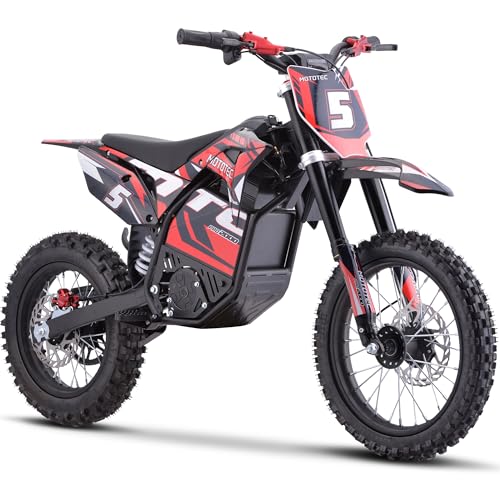
The MotoTec 60v Pro pairs a 2000W brushless motor with a 60V 15.6Ah removable battery, delivering a practical blend of power and convenience. Top speed is around 40 mph, making it competitive for trail crossings and quick getaways on varied terrain. The quick-removal battery design supports easy swapping for longer rides or multi-day trips. While specifications emphasize power and portability, riders should consider the bike’s weight, charging options, and ride style when planning weekend adventures on rocky or sandy trails.
Ridstar Q20 Pro Electric Dirt Bike

The Ridstar Q20 Pro targets long-range endurance with dual 52V 40Ah batteries paired to two 1000/1000W motors for a combined 2000W output. Riders can reach up to 37 mph with three riding modes and a remarkable pedal-assisted range of up to 180 miles, enabling extended trail adventures. The 20″ fat tires provide stability and traction on loose surfaces, while a front fork and rear suspension manage bumps and washboard sections. Hydraulic brakes add confident stopping power in varied weather and terrain conditions.
Additional features include a bright LED headlight, a horn, a tail light, and a clear LCD display to monitor speed, battery level, and distance. The Ridstar’s fat-tire setup and dual-motor configuration emphasize versatility for off-road exploration, snow, sand, and rough dirt paths, making it a strong choice for riders seeking substantial range without sacrificing performance.
Buying Guide
Choosing the right pro electric dirt bike requires aligning your riding goals with engineering details. Here are key purchase considerations and practical comparisons to help you decide.
- Power and performance: Look at motor type and wattage. Hub motors generally deliver strong linear power, while mid-drive systems can offer better weight distribution and hill-climbing performance. For aggressive riders, models with 3000–5000W and up to 50 mph top speeds provide thrilling capability on challenging terrain.
- Battery capacity and range: Dual-battery setups extend range but add weight and charging complexity. Consider real-world range estimates in mixed terrain and whether you need throttle-only range or pedal-assisted distance. Removable batteries offer quick swaps for longer rides or multi-day trips.
- Suspension and tires: Fat tires (around 25″ or 20″ with 4.0″ width) improve stability on sand, mud, and rocks. A robust front fork and rear hydraulic shocks greatly affect comfort and control on rough trails.
- Braking systems: Hydraulic disc brakes provide stronger, more consistent stopping power in wet or muddy conditions. Mechanical brakes are cheaper but can fade under heavy use on long descents.
- Frame durability and build: A bomb-proof frame with a proven off-road pedigree matters for longevity. Look for IP65/IP68 ratings for weather resistance and reinforced mounting points for accessories.
- Charging and maintenance: Dual chargers cut downtime. Check the availability of replacement parts and service networks. Quick-removal batteries simplify field maintenance and swap-outs during extended trips.
- Rider weight and use case: Heavier riders will see more noticeable range and suspension demands. Match the bike’s load rating with your weight and typical gear to avoid performance shortfalls on climbs.
- Safety features: Lighting, reflectivity, and a secure ignition or anti-theft mechanism help during nighttime rides and storage. A clear instrument cluster improves situational awareness on rugged terrain.
How to choose based on use case
- Extreme speed and endurance: Prioritize high-wattage motors (3000–5000W), dual batteries, and strong suspension for rough trails and long climbs.
- All-terrain exploration: Favor bikes with reliable hydraulic brakes, robust frames, and versatile riding modes. A balance of power and range reduces frequent stops for charging.
- Trail-duty and beginners: Start with moderate power (1500–2500W), reliable braking, and forgiving suspension. Three riding modes help adapt to skill development and varying terrain.