Choosing a four-bike rack for an RV involves balancing mounting options, bike security, and rear access. The five racks below cover bumper mounts, hitch-mounted platforms, and hanging designs tailored for RV travel. Each product emphasizes sturdy construction, load capacity, and simple installation, helping you compare how bikes stay secure on the road. Review the quick specs and the listed features to determine which setup fits your RV bumper size, hitch style, and riding plans. The table below highlights core details for fast comparisons.
| Product | Brand | Mount Type | Capacity | Per-Bike Weight | Notes |
|---|---|---|---|---|---|
| Swagman RV Approved 4-Bike Bumper Rack | Swagman | Bumper mount | 4 bikes | 30 lb | Fits 4″–4.5″ square bumpers |
| Thule Range hanging bike rack | Thule | Hanging hitch rack | Up to 4 bikes | Not specified | Anti-sway cradles; integrated locks |
| MaxxHaul 70210 Hitch Mount Bike Rack 4-Bike Rack | MAXXHAUL | Hitch mount | Up to 4 bikes | Not specified | Total capacity 150 lbs; swing-down feature |
| Hollywood Racks Destination 4 Hitch Bike Rack | Hollywood Racks | Hitch platform | Up to 4 bikes | 35 lb | Locking hitch pin included |
| Soarify 4-Bike Hitch Rack for RV | Soarify | 2″ hitch mount | 1-4 bikes | 35 lb | Max total 143 lbs; foldable with tilt release |
Swagman RV 4-Bike Bumper Rack
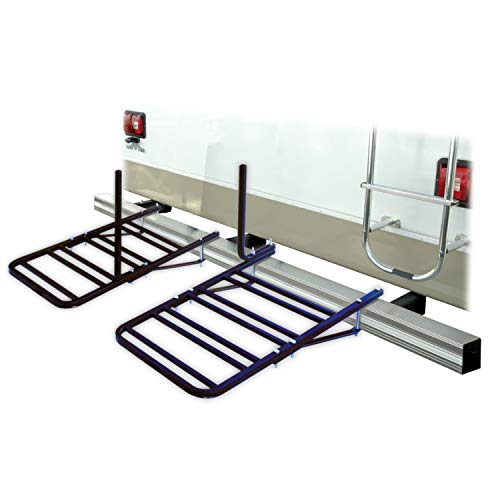
This bumper-mounted rack transports up to four bicycles on an RV bumper, with a maximum of 30 lb per bike. It is designed for 4″ to 4.5″ square bumpers and installs using 6.5″ and 8″ bolts around the bumper. Built from heavy-duty steel and powder-coated to resist corrosion, it offers solid support for RV adventures.
- 4-bike capacity; 30 lb per bike
- Fits 4″–4.5″ square bumpers
- Heavy-duty steel with corrosion-resistant finish
- Bolt sizes: 6.5″ and 8″
Thule Range RV Four-Bike Rack

This RV travel-capable hanging rack holds up to four bikes on a hitch. It emphasizes bike stability with anti-sway cradles and includes integrated locks for additional security. The arms fold when not in use, allowing easier access to the rear of the RV without removing the rack.
- Hanging hitch rack for up to 4 bikes
- Anti-sway cradles for stability
- Integrated locks for security
- Arms fold when not in use
MaxxHaul 4-Bike Hitch Rack
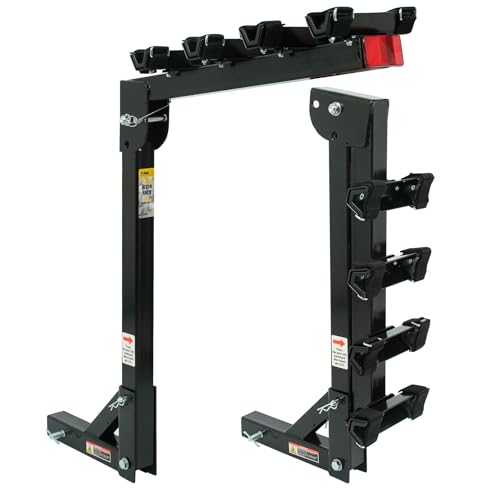
This hitch-mounted rack accommodates up to four bikes with a total capacity of 150 lbs. It includes a hitch pin for secure attachment and a reflector for added visibility. The swing-down feature provides easy access to the rear of the vehicle, while adjustable arms and hold-down straps keep bikes firmly in place during travel.
- Up to 4 bikes; total 150 lbs
- Swing-down rear access
- Includes hitch pin and reflector
- Adjustable hold-down straps
Hollywood Racks Destination 4 Hitch Bike Rack

Platform-style hitch carrier that securely transports up to four bikes, with a typical per-bike limit of 35 lbs. The design prioritizes stability on the road and includes a locking threaded hitch pin for added security. Its lighter weight profile can ease installation and removal for frequent RV trips.
- Platform-style hitch carrier
- Up to 4 bikes; 35 lbs per bike
- Locking hitch pin included
Soarify 4-Bike Hitch Rack For RV

Soarify offers a four-bike capacity with a maximum total load of 143 lbs, supporting up to 35 lbs per bike. Constructed from heavy-duty steel, it folds for storage and features a tilt-release mechanism for trunk access. It fits a 2″ hitch and is designed for RV use, cars, and SUVs alike.
- Maximum 143 lbs total; up to 35 lbs per bike
- Heavy-duty steel construction
- Foldable with tilt-release for trunk access
- Fits 2″ hitch
Buying Guide
Choosing the right four-bike RV rack involves evaluating mounting options, weight limits, and how you access your cargo area with bikes loaded. The following considerations help contrast the main types and features:
- Mount type compatibility: bumper mounts work well for bumper rails on some RVs but constrain frame and bike size, while hitch-mounted racks typically accept larger systems and are easier to remove. Verify hitch receiver size (commonly 2″) and bumper dimensions before purchase.
- Bike capacity and weight: confirm total load capacity and per-bike weight limits. Some racks prohibit heavy downhill bikes, while others support lighter road bikes with higher per-bike limits. Always account for total weight on the vehicle’s hitch or bumper.
- Security features: integrated locks, locking hitch pins, and anti-theft hardware reduce risk on the road. Hang-style racks may offer fewer locking options than platform or bumper systems; weigh security needs against convenience.
- Bike stability and mounting: anti-sway features, ratcheting straps, and padded hooks protect frames and improve stability. Platform racks tend to reduce sway better than hanging designs, but may be heavier to install.
- Rear access and storage: tilt-down or swing-away mechanisms improve access to trunks and tailgates. Consider how often you’ll need rear clearance and whether you want easy removal of bikes for quick access.
- Durability and finish: powder-coated steel and corrosion-resistant finishes extend life in exposure to road salt and weather. If you travel in varied climates, prioritize rugged construction.
- Vehicle compatibility: ensure the rack supports your RV’s hitch class and bumper style. Some bumper racks require specific bumper dimensions and bolt patterns, while hitch mounts rely on standard receiver sizes.
- Ease of installation and maintenance: look for simple mounting hardware, clear instructions, and tools that come with the rack. A design that’s easy to install and remove saves time on trips.
Across these options, you’ll find approaches that prioritize quick loading, maximum bike protection, or straightforward removal for frequent travelers. The right choice depends on your RV’s hitch or bumper compatibility, how many bikes you transport, and how often you access the rear cargo area. By weighing capacity, security, and ease of use, you can select a four-bike rack that aligns with your road plans and storage space.