Riding dirt trails demands readiness for injuries and trail-side emergencies. A compact, bike-mounted first aid kit keeps essential care within reach, enabling quick help without slowing you down. The picks below prioritize cycling-focused design, weatherproofing, and organized storage to fit under a seat, on a frame, or inside a saddle bag. Each kit is evaluated for portability, contents, and durability to support riders on dirt, gravel, and single-track adventures.
| Product | Brand | Key Benefit | Notes |
|---|---|---|---|
| CureIT Bike First Aid Kit | CureIT | Bike-frame attachment; 50 supplies; weatherproof | Compact, frame-mounted |
| Flash-Aid Cycling First Aid Kit | Flash-Aid | Bike-frame mount; fast-access wound care | Cyclist-focused design |
| RHINO RESCUE 114pc First Aid Kit | RHINO RESCUE | 114 essentials; ultralight and compact | Includes whistle & multitool |
| Vriexsd Mini First Aid Kit 150Pcs | Vriexsd | 150 pieces; waterproof hard shell | Compact and organized |
| EVERLIT 250-Piece Survival Kit | EVERLIT | 250 pieces; MOLLE pouch; rugged | Outdoor-ready versatility |
CureIT Bike First Aid Kit

Compact and secure, the CureIT Bike First Aid Kit is designed to ride with you, not slow you down. It attaches directly to a bicycle frame for instant access during crashes, muddy trails, or sudden scrapes. The weatherproof casing keeps the 50 essential supplies dry and ready in rain, dust, or mud, so riders can administer basic wound care without fumbling through a backpack. Built for cyclists who demand portability, this kit balances coverage and weight, making it suitable for dirt bikes, trail bikes, and mountain biking adventures. It’s a practical choice for on-trail emergencies where every second counts.
With weatherproof materials and straightforward organization, the CureIT kit supports quick triage, cleaning, and dressing of minor wounds. The included supplies are meant to cover common trail injuries, enabling riders to protect themselves until professional care is available. Its low profile reduces interference with riding position, so you can stay focused on navigating rough terrain while your kit rides securely in place. In field conditions, this kit provides dependable basics without adding bulk to your ride.
RHINO RESCUE 114pc First Aid Kit

RHINO RESCUE’s 114-piece kit is built for lightweight, rugged cycling use. The weather-ready waterproof fabric keeps contents secure in rain, mud, and splashes, while a compact bag holds an array of essentials for minor wounds, scrapes, burns, and blister prevention. At about 180×100×30mm and 0.45 lb fully stocked, it rides easily in a bike pack, saddle bag, or jersey pocket. The set includes a whistle and multitool for emergencies, expanding its usefulness on long dirt-bike rides or remote trails. For riders who want solid trauma coverage without bulk, this kit balances coverage with carry weight.
For riders who want solid trauma coverage without bulk, this kit concentrates on practicality and accessibility. The 114 components are designed to address common trail injuries, while the ultralight construction minimizes weight on climbs and big-swing rides. With a durable shell and a compact footprint, it travels well in various bags or packs, ensuring you’re prepared whether you’re chasing single-track sunrises or rough backcountry days.
Mini First Aid Kit 150Pcs

Vriexsd’s Mini First Aid Kit packs 150 pieces into a compact, waterproof hard-shell case. With a 6.2″ by 4.4″ by 2.1″ footprint and about 0.53 pounds, this kit fits easily into a saddle bag, glove box, or backpack for quick access on the road or trail. The premium EVA shell is waterproof and tough, and the zippers plus a carabiner add portability for on-the-go use. The case’s smart compartments keep bandages, gauze, tweezers, and antiseptics organized for fast, one-handed use, making it ideal for bikes, ATVs, boats, and camping trips.
It features smart compartments that keep bandages, gauze, tweezers, and antiseptics organized for fast use with one hand, making it practical for on-bike changes or roadside stops. The case’s compact design helps it slide into tight spaces on dirt bikes or ATVs, and the included carabiner lets you attach it where you ride. Overall, this kit offers robust coverage without sacrificing maneuverability or space in your riding loadout.
EVERLIT 250 Pieces Survival Kit
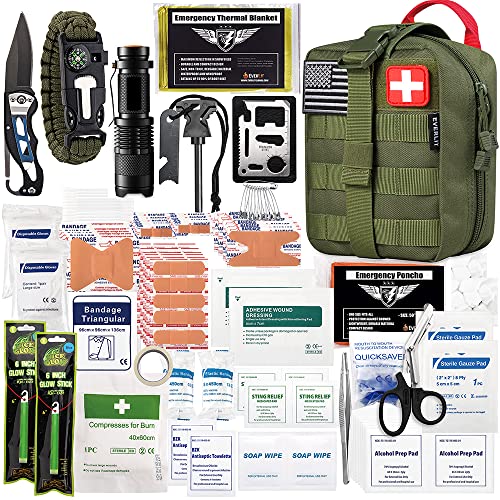
EVERLIT’s 250-piece survival first aid kit combines essential medical supplies with survival tools in a rugged MOLLE pouch. Designed for extended trips, it weighs about 2 pounds and uses durable 1000D nylon that resists moisture and abrasion. Three large compartments and multiple straps help organize trauma supplies, while the MOLLE system enables easy attachment to backpacks, vehicles, or motorcycle frames. This kit targets dirt-bike adventures where riders might need more comprehensive coverage, spill avoidance, and quick access during long rides or remote excursions.
Constructed for rugged use, the kit provides trauma essentials beyond basic care, including tools and space for weatherproofing and adaptation to challenging trails. Its durable design helps riders keep critical items within reach while navigating rock sections and steep climbs. In demanding environments, the EVERLIT kit aims to enhance safety by offering a ready, organized package that balances capacity with ease of transport on dirt bikes and adventure rides.
Buying Guide
Key purchase considerations for a dirt bike first aid kit start with how you ride. If you frequently shuttle over rugged single-track, a compact bike-mounted kit with frame attachment and weatherproofing is preferable. For longer trips or remote rides, a larger, more comprehensive kit—potentially with a MOLLE pouch or durable carry case—can provide greater coverage. Assess how you store your kit when you’re off the bike: under the seat, in a saddlebag, or in your backpack. Balance accessibility, protection from the elements, and weight to minimize rider fatigue.
Contents matter nearly as much as casing. For dirt riding, aim for wound care basics (antiseptics, gauze, dressings), cleaning supplies, tape or bandages, blister care, gloves, and a sturdy knife or shears if allowed. Some riders include a small emergency blanket, compression wraps, and a whistle. Evaluate whether the kit’s contents align with OSHA or EN standards and whether replacements are readily available. If you ride with a team, consider sharing a kit or purchasing one that can be expanded with add-ons.
Durability and weather resistance influence long-term usefulness. Look for sealed zippers, rugged shells, and water resistance ratings appropriate to your climate. A kit should withstand mud, rain, and bumps without losing contents. Some kits use a compact shell with a soft inner pouch; others opt for a molle-compatible system or frame-mounted strap. If you anticipate heat or sweat exposure, confirm that materials resist corrosion and odors. Lastly, compare value: higher-priced sets may justify investment when they offer more robust contents and reliable organization.
Shopping channels also matter. Buy from reputable brands with clear return policies and transparent refill options. Look for warranties on zippers, cases, and packaging, and verify that the contents meet your local medical guidelines. If you ride with a crew, coordinate kit contents to avoid duplicate items. Finally, consider keep-similar items in a separate, clearly labeled pouch for faster access during emergencies. A well-chosen kit becomes part of your riding routine, helping you manage minor injuries efficiently and return to the trail quickly.
Refill And Replacement
Medical supplies in first aid kits have expiration dates and can degrade with time. Regularly audit your kit’s contents, replace items nearing expiration, and refresh bandages, antiseptics, and gloves as needed. Maintain a simple log or date stickers to track when items were added. If you ride with others, rotate supplies to ensure everyone has access to fresh materials. Keeping a steady supply of basic items ensures your kit remains ready for the next ride, long after the initial purchase has been made.
Safety And Best Practices
Use only items you know how to apply. If you lack basic first aid training, consider a short practical course to learn wound cleaning, dressing, and bleeding control. Store your kit in an accessible location, avoid overpacking, and secure all zippers and closures to prevent loss in rough terrain. When riding with a group, designate a kit manager to ensure quick access and proper use during emergencies. Maintaining your kit as part of your standard riding routine enhances safety and reduces downtime after minor injuries.