If you’re looking for a reliable mountain bike with gears, you want options that balance durability, shifting feel, and suitability for the rider’s age and height. This guide highlights five solid choices that cover kids to adults, and beginner to intermediate terrains. Each bike is evaluated for who it’s best for, why it was selected, and practical considerations. Use the quick comparison table below to focus on the right fit for your needs.
| Product | Best For | Why It Stands Out |
|---|---|---|
| Glerc 20 Inch Kids Bike | Young riders ages 6-10 | 21 speeds, front suspension, disc brakes for confident stopping |
| WEIZE Hardtail 29 Inch Mountain Bike | Adult riders seeking all-terrain performance | Lightweight aluminum frame, 21-speed Shimano, efficient braking |
| Huffy Stone Mountain Mens Mountain Bike | Versatile all-terrain rider | 21-speed Shimano, front suspension for smoother rides |
| WEIZE 20 Inch Kid Mountain Bike Pink | Girls or smaller riders | Front suspension, adjustable saddle, reliable dual braking |
| WEIZE Mountain Bike 26-27.5 Inch | Older kids or teens and smaller adults | Dual suspension, 18-speed/adjustable comfort |
Glerc 20 Inch Kids Bike

The Glerc Kids Bike is designed for young riders ages 6-10 who want real gear options. It features a sturdy high-carbon steel frame, a 21-speed drivetrain, front suspension, and disc brakes. These elements collectively support off-road adventures and confident braking in varied conditions. Best for parents seeking a durable starter mountain bike that grows with the child’s riding skills, including hills and mixed terrain. A potential limitation is the weight that comes with a sturdy steel frame, which may be heavier for very young riders to lift.
Why it’s selected: The 21-speed gearing provides a broad range for tackling moderate inclines and varied surfaces, while front suspension cushions bumps. The hydraulic-like feel of the disc brakes adds precise stopping power, crucial for new riders learning control. Ideal buyer: a parent shopping for a robust first mountain bike that offers room to develop skills without upgrading soon.
WEIZE Hardtail Mountain Bike 29 Inch
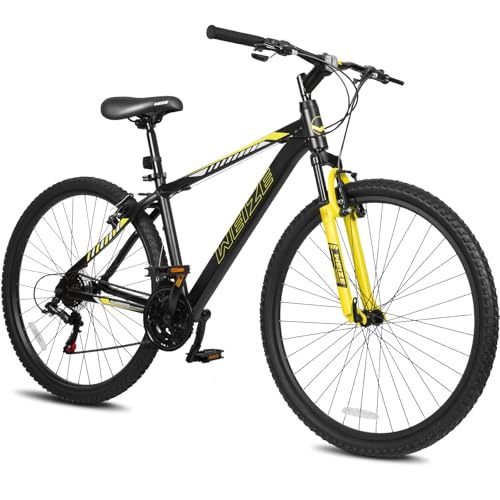
The WEIZE Hardtail Mountain Bike targets adult riders who want a capable cross-terrain machine. Its aluminum hardtail frame keeps weight manageable, while 29-inch wheels roll smoothly over obstacles. A 21-speed Shimano drivetrain ensures solid gear options for climbs and flats, and the front suspension fork helps absorb rough trails. Best for riders seeking a balanced, all-around bike for day rides, moderate singletrack, and commuting. Limitation: only a front suspension design may feel less plush on very rough, technical trails compared to full-suspension models.
Huffy Stone Mountain Mens Mountain Bike

The Huffy Stone Mountain is a versatile mountain bike with a matte black frame and 21-speed Shimano twist-shifting. It features a front suspension system to smooth out bumps on uneven surfaces and adjusts well to a range of terrains. Best for riders who want a stylish bike with reliable shifting and a clean, everyday-ready look. A potential limitation is the absence of full suspension, which can affect comfort on very rough trails compared with dual-suspension designs.
WEIZE Kids Mountain Bike 20 Inch Pink

The WEIZE 20 Inch Kid Mountain Bike is designed for younger riders aged roughly 6-12 or height ranges around 4′-4’7″ depending on size. It includes a dual braking system for reliable stopping and a front suspension fork to soften trail imperfections. Best for kids who need a smaller bike with confident control and adjustable fit as they grow. Limitation: heavier steel frames can feel less nimble for smaller riders compared with lighter aluminum options.
Buying Guide
What to Consider When Choosing a Mountain Bike With Gears
Rider size and age: Match wheel size and frame reach to the rider’s height. Kids need smaller wheels and adjustable saddles, while adults require frames with longer reach and appropriate standover height.
Gearing and speed range: More speeds help tackle hills and varied terrain. Consider how easy shifting feels and whether the bike uses reliable derailleurs and a quality drivetrain (e.g., Shimano options).
Suspension type: Front suspension (hardtail) absorbs bumps on rough trails. Dual suspension offers more comfort on rough or technical terrain but adds weight and cost.
Braking system: Disc brakes provide strong, reliable stopping power in wet or muddy conditions. V-brakes or caliper brakes can be lighter but may not perform as consistently in adverse weather.
Frame material: Aluminum frames are common for a good balance of strength and weight. Steel frames are very sturdy but heavier; carbon fiber is premium and lighter but costly.
Intended use and environment: Consider whether the bike will be used mostly on smooth paths, light trails, or rugged singletrack. This guides the need for suspension, wheel size, and gearing.
Comparison by Rider Type
- For kids just starting out: Look for 20″ to 24″ wheels, 6-21 speeds, and reliable braking. Front suspension helps with comfort on uneven ground.
- For beginners to moderate trails: A 27.5″ or 29″ wheel with 18-21 speeds and a front suspension is a versatile choice.
- For adults on mixed terrain: A hardtail with 21 speeds and a robust aluminum frame balances performance and value; consider full suspension if you ride rough trails frequently.
Maintenance Tips
- Regularly inspect the chain, derailleur, and cables for wear and lubrication needs.
- Check tire pressure before rides; correct pressures improve grip and rolling efficiency.
- Test brake pads and ensure proper alignment with each use to maintain stopping power.
Frequently Asked Questions
- What size mountain bike should a child ride? Choose wheel size based on height; common ranges are 20″ for younger kids and 24″ to 26″ for older children.
- Is full suspension necessary for beginners? Not always; front suspension (hardtail) is typically sufficient for mild trails and learning control.
- Do gear counts matter more than the brand? Quality components and smooth shifting matter more than the exact number of gears for most riders.
- What maintenance should I plan for? Regular chain lubrication, brake checks, and gear indexing adjustments help maintain performance.
- What should I avoid when buying a kid’s bike? Avoid oversized frames that force awkward mounting or hinder safe stops.