This guide helps buyers choose a lightweight full‑face MTB helmet that blends strong protection with comfort. The top picks here are ideal for riders who descend hard, ride park laps, or push limits in BMX and downhill conditions. The best fits vary byFit preference, vent needs, and budget. Below is a quick comparison and the reasons each helmet stands out for different riders.
| Product | Best For | Why It Stands Out |
|---|---|---|
| Fly Racing Rayce (Matte Grey, Large) | Intermediate to advanced downhill | Certified full-face with TFV ventilation; lightweight, balanced feel |
| Fly Racing Rayce (Matte Grey, X-Large) | XL riders and long sessions | Same durable design; extended size option for comfort |
| Demon United Podium X MIPS (Matte Grey Sea Foam, Small/Medium) | Riders needing MIPS protection | MIPS tech with strong ventilation and light weight |
| Demon United Podium X MIPS (Sea Foam, Large/XLarge) | Smaller to larger heads with MIPS | Same benefits, larger range |
| Demon United Podium X MIPS (Midnight Stealth Black, Large/XLarge) | Dark-colored, high-visibility fit | Consistent airflow with light design |
| BATFOX Full Face (Adults) | Budget-conscious riders needing solid protection | Certified standards with integrated comfort features |
Fly Racing Rayce Full-Face Helmet — Matte Grey
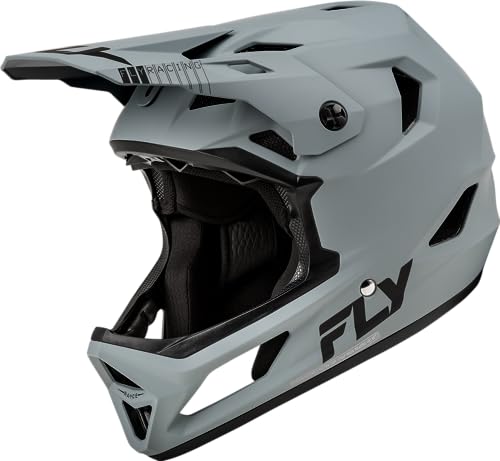
Best for: Downhill runs and bike-park laps where a low-head profile and strong ventilation matter. This model uses a poly-alloy shell with EPS liner tested to ASTM F1952-15, CPSC 1203, and CE EN1078 standards. The approximate 930 g weight (size M) supports longer sessions without excessive neck fatigue. TFV airflow provides multiple intake and exhaust ports for heat management in warm conditions.
Why selected: It combines certified full-face protection with a lightweight, balanced feel, making it a strong all-around choice for riders who want reliable safety without overheating on extended rides.
Caution: Weight varies by size; ensure the correct size to optimize ventilation and fit. Surface texture and color may influence heat absorption in bright sun.
Fly Racing Rayce Full-Face Helmet — Matte Grey (XL)
Best for: Riders needing a larger shell without compromising the slim profile. The XL version maintains the same standard protection and TFV ventilation as the regular size while accommodating bigger heads.
Why selected: Keeps the same protection-to-weight ratio in a larger size, helping avoid a loose fit that can compromise safety during aggressive riding.
Caution: Fit may still feel snug if you’re between sizes; verify measurement before purchase.
Demon United Podium X MIPS — Matte Grey Sea Foam

Best for: Riders who want MIPS protection with strong venting. The Podium X MIPS features 20+ vents for airflow and a lightweight design at about 710 g, reducing neck strain over long sessions.
Why selected: MIPS provides rotational motion protection, and the helmet’s airflow supports heat management during intense rides. It’s downhill-rated and comes with removable fit pads for a custom feel.
Caution: Some users may prefer even lighter setups; for extreme heat, verify vent placement aligns with riding posture.
Demon United Podium X MIPS — Sea Foam Large/XLarge
Best for: Riders seeking a broader size range with MIPS protection and robust venting. This model shares the Podium X platform with a larger shell to accommodate bigger heads.
Why selected: Combines high-level safety tech with a comfortable, breathable fit. It’s a versatile option for mixed terrains and ride lengths.
Caution: The larger shell may feel less compact in tight trail sections; ensure helmet path clearance during quick maneuvers.
BATFOX Full Face Mountain Bike Helmet

Best for: Budget-minded riders who still want certified protection for downhill, BMX, and dirt bike use. The BATFOX helmet meets ASTM F1952, CPSC 16 CFR Part 1203, and EN1078 standards.
Why selected: It offers solid protection at a more accessible price point while including comfort features such as a plush chin bar pad and a secure fit across standard sizes.
Caution: Entry-level materials may not perform identically under all extreme conditions; fit and comfort vary with head shape.
Buying Guide
What kind of rider needs a light full-face helmet?
Riders who descend aggressively, ride bike parks, or engage in downhill tracks benefit from lighter shells that reduce neck strain while delivering full-face protection.
How important is MIPS in a full-face helmet?
MIPS reduces rotational forces during oblique impacts. It adds protection for riders who experience angled crashes or wipeouts on technical trails.
What about ventilation and comfort?
Look for helmets with multiple intake and exhaust ports or TFV-style airflow systems. Ventilation improves comfort during warm or long sessions and helps maintain focus on the ride.
How should sizing influence choice?
Correct sizing ensures a secure fit and effective energy management during impacts. Helmets with removable pads or multiple shell sizes accommodate a wider range of head shapes.
What safety certifications matter?
FAA-style performance is not typical here. For MTB use, prioritize ASTM F1952-15, CPSC 1203, and CE EN1078 certifications. These indicate protective performance for cycling and gravity activities.
Choosing between limes and larger shells
Smaller riders may prefer a compact, lighter shell for reduced drag and better balance, while larger riders need a larger interior volume for proper coverage. Consider head circumference and shape when selecting a size.
Materials and durability
Common shells include poly-alloy or polycarbonate with EPS liners. EPS liners absorb impact energy, while the outer shell helps distribute forces during a crash.
FAQ
- Is a full-face helmet worth it for cross-country rides?
For most XC scenarios, a full-face helmet is generally more protective for descents and risky sections, but it can be heavier and hotter than an open-face option. - Do all models come with removable pads?
Many DO include removable fit pads, especially higher-end models; verify pad options before purchase. - Can you use a full-face helmet for BMX racing?
Yes, most full-face MTB helmets are suitable for BMX racing due to protection standards and robust venting. - How should you measure head size?
Measure around the largest part of your head with a soft measuring tape to pick the correct size. - Are lighter helmets always safer?
Not necessarily; safety depends on protective design, materials, and proper fit. Lighter helmets reduce fatigue but must still meet safety standards. - What is a good balance of price and protection?
Look for helmets that meet recognized safety standards and offer features like MIPS and removable pads within your budget.