Answering safety questions for very young riders just got clearer. A full-face helmet can offer superior protection for toddlers and early-grade children who ride bikes, scooters, or skateboards. The top options here are best for parents seeking secure head and face protection with adjustable sizing, easy on/off, and kid-friendly designs. The list includes helmets with full-face capability and quick-conversion features, ideal for children around 3–12 years old, while a few models are suitable for younger riders when appropriate. Use the buying guide to compare fit, materials, and safety certifications before purchasing.
Summary table of chosen products:
| Product | Best For | Key Feature | Potential Limitation |
|---|---|---|---|
| Natuway Full Face Kids Helmet – 3–12 Years | Active kids needing full-face protection | Detachable inner padding; adjustable size | Sizing starts at larger toddler range |
| Natuway Full Face Kids Helmet – 3–12 Years (Upgrade) | Kids who benefit from quick conversion | One-click full-to-half helmet switch | May add complexity for very young toddlers |
| Natuway Full Face Kids Helmet – 3–12 Years (Third Variant) | Same protection with alternative styling | Full-face and neck protection features | Same sizing range |
| ROCKBROS Kids Lockable Full Face Helmet | Budget-conscious families seeking versatility | One-piece shell; ventilated design; full/half mode | Fit depends on head shape |
| ROCKBROS Counterpart Full Face Variant | Families needing easy adjustment | Switching between modes, good airflow | Limited brand variants |
Natuway Full Face Kids Helmet – 3–12 Years

- Durable hard PC shell with high-density EPS foam for impact absorption.
- Removable soft inner padding for easy cleaning; multiple protection layers.
- CE and CPSC 16CFR&1203 physical testing standards; CPSIA chemical standards met.
- Head circumference adjustment from approximately 20.25 to 22.05 inches (about 3–12 years).
Best for families seeking a standard full-face helmet with reliable protection and straightforward sizing. Choose this if you want a solid entry option that covers full-face protection without complicating features. Caution: may be on the larger side for very young toddlers; verify fit before purchase.
Natuway Full Face Kids Helmet – Quick-Convert Version

- Full-face helmet with one-click switch to half-helmet mode; chin guard remains attached for easy use.
- Includes 2 face pads and an extra liner for sweat management.
- Adjustable size compatible with 20.25–22.05 inch heads; vertically and horizontally adjustable straps.
- Meets CE and CPSC 16CFR&1203 standards; CPSIA-compliant materials.
Best for kids who need flexibility between full-face protection and more breathable half-helmet modes. Choose this if you value quick adaptation during activities or weather changes. Caution: the conversion mechanism adds potential mechanical complexity for very young users.
Natuway Full Face Kids Helmet – Alternative Style

- Same safety framework with optional mode switching and neck protection.
- Removable liner and face pads to manage sweat and fit variability.
- Head circumference range as described for 3–12 years; adjustable straps and back buckle.
- Materials designed to be harmless and CPSIA-compliant.
Best for families who want consistent Natuway protection across multiple helmet variants. Choose this if you prefer continuity in fit and features across product lines. Caution: distinct styling may appeal differently to children—fit consistency matters more than color preference.
ROCKBROS Kids Bike Helmet – Full/Half Mode
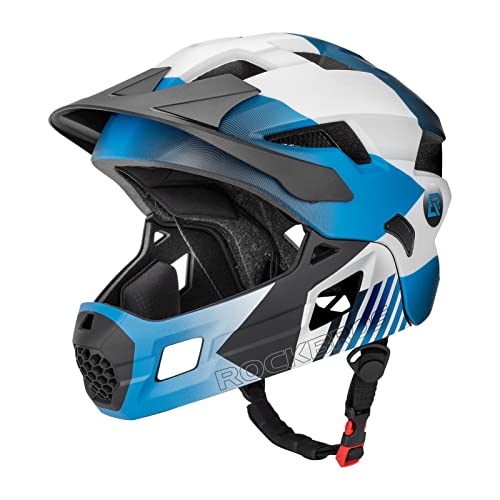
- One-piece PC shell with high-density EPS cushioning for impact protection.
- Multiple vents for airflow to keep the head cooler during activity.
- Full-face mode provides comprehensive protection; half-helmet mode offers lighter wear.
- Adjustable fit with a secure chin strap and back buckle.
Best for budget-minded buyers seeking a versatile helmet with clear mode switching. Choose this if you want practical airflow and a straightforward fit. Caution: sizing may vary by head shape, so confirm measurement before purchasing.
ROCKBROS Counterpart Full Face Variant
- Detachable full-face helmet with dependable airflow and protection.
- Easy mode-switching and comfortable inner lining for longer wear.
- Built to fit a range of head sizes with adjustable straps.
- Includes practical features for kids who participate in multiple sports.
Best for families who want a robust, adjustable option within a single brand family. Choose this if you value consistent design language and ease of use across activities. Caution: ensure the helmet size matches your child’s head circumference to avoid looseness.
Buying Guide: How To Choose The Right Full Face Helmet For Your Child
Safety certifications matter most. Look for CE and CPSC marks and CPSIA-compliant materials to ensure the helmet is tested for child use. Fit is essential: measure the head circumference and compare to the manufacturer’s sizing chart. Adjustable chin straps and back buckles should secure firmly without pinching.
Protection level and coverage: full-face helmets protect the jaw, cheeks, and face in addition to the skull. If a child participates in fast-paced or high-risk activities, prioritize full-face designs with sturdy shells and ample padding.
Ventilation and comfort: multiple vents reduce heat buildup during play. Removable liners simplify cleaning and odor control, which matters for active kids who sweat.
Conversion features: some helmets offer quick-conversion from full-face to half-helmet. This can be convenient for growing kids who want less coverage on warm days, but assess whether the mechanism is intuitive for a child to operate independently.
Durability and materials: look for a tough PC shell and high-density EPS foam. Ensure the padding and liners resist wear and are easy to wash.
Practical considerations: weight, ease of use, color and style preferences, and whether the helmet supports future growth as a child’s head grows. Always replace a helmet after a significant impact or if there are visible cracks or damaged straps.
Frequently Asked Questions
- What age is appropriate for a full-face helmet? Answer: Full-face helmets are commonly used for children aged 3–12 who participate in activities with higher impact risk. Always follow the manufacturer’s sizing guidelines for your child’s head circumference.
- How do I measure my child’s head for helmet sizing? Answer: Use a soft measuring tape around the widest part of the head above the eyebrows and ears; compare to the helmet’s sizing chart.
- What certifications should I look for? Answer: CE and CPSC safety standards; CPSIA-compliant materials for children’s products, including padding and fasteners.
- Is it better to choose a helmet with more padding or less? Answer: More padding improves comfort and impact absorption, but must not compromise fit or visibility. Removable padding helps with cleaning and fit adjustments.
- Can a kid switch between full-face and half-helmet modes? Answer: Some models offer this feature. Ensure the child can operate the mechanism safely and that the change does not reduce protection during use.
- How often should I replace a child’s helmet? Answer: Replace after a significant impact or if the shell shows cracks, deformities, or compromised padding. Regular inspection is important.