Flat-proof bike tires are ideal for riders who want fewer flats, less maintenance, and longer rides between fixes. This guide highlights five top options designed to reduce punctures and improve reliability. The best pick depends on your bike type, terrain, and maintenance preferences. Below are concise, comparison-friendly profiles to help you decide which solution fits your riding style.
Summary table of chosen products:
| Product | Type | Best For | Why It Stands Out | Limitations |
|---|---|---|---|---|
| 20×1.75 Solid Bike Tire | Solid tire | Road, BMX, and kids’ bikes | No inflation or inner tube; easy protection against punctures | Size appears smaller than pneumatic rims; installation requires prep |
| Fat Bike Tire Liner TPU | Tire liner | Fat bikes and e-bikes | Self-adhesive liner protects inner tube from sharp objects | Only liner; comfort and fit depend on tire width |
| SZLYYDS 20/26×4.0 Fat Tire Set | Fat tires with tubes | All-terrain riders | Wide profile for grip and durability | Includes tubes; not a tubeless solution |
| Slime Extra Strong Self-Sealing Tube | Self-sealing inner tube | General bikes needing puncture protection | Seals punctures up to 1/8″ quickly | Contains sealant; may add weight |
| Stop-A-Flat Puncture Proof Tube | Dual-use inner tube | Versatile repairs and flats prevention | Economical and reusable across many wheels | May not fit every rim size exact spec |
20×1.75 Solid Bike Tire — BAIBIKING

Solid tire design eliminates inflation and inner tubes, offering puncture resistance for daily riding. Best for riders who want maintenance-free tires on road, BMX, or kids’ bikes. The tire is clamped to the rim, which can make the size feel smaller than conventional pneumatic tires. Installation benefits from warm-water softening or sun exposure, plus pre-stretching and two metal tire levers. This option suits riders who prioritize reliability over the feel of air pressure and are comfortable with a longer installation process.
Who it’s best for: riders seeking minimal upkeep and maximum puncture resistance, such as commuters or school-age riders. Why chosen: it directly removes the risk of pinch flats and pinch punctures associated with inner tubes.
Caution: expect a different ride feel due to the solid tire’s stiffness; ensure rim compatibility and read installation tips to avoid damage during fitting.
Fat Bike Tire Liner TPU Material — VOYISA

This self-adhesive tire liner provides an extra layer of protection against punctures by shielding the tube from sharp objects. It’s designed for fat bikes and a range of wheel sizes, including 20×4.0 to 26×4.0, and can be trimmed for smaller wheels. Best for riders who want a straightforward, installer-friendly solution without changing their tire tread. The liner’s adhesive aids alignment but needs proper wheel cleaning for best adhesion.
Who it’s best for: riders using wide fat tires on mixed surfaces who want extra protection without changing tire shape. Why chosen: it fills the gap between tire and tube, cutting flat risk from embedded debris.
Caution: adhesive strength is moderate; perform careful placement before inflating to avoid misalignment.
SZLYYDS 20/26×4.0 Fat Tire and Tube Set
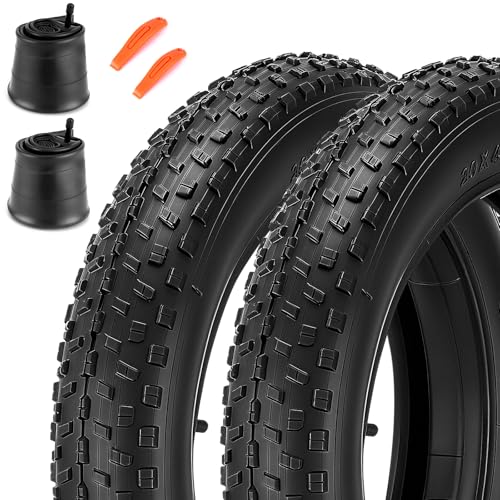
This package offers wide 4.0-inch fat tires with inner tubes, designed for rugged terrain and all-season performance. The wide profile boosts traction and stability, while reinforced sidewalls resist wear. The 20-inch diameter maintains agility for smaller bikes. Best for riders who want a comprehensive fat-tire upgrade with tubes included for immediate use. Why chosen: combines durability and traction for challenging surfaces in a single purchase.
Who it’s best for: riders who ride on mixed terrains and want reliable grip plus a familiar inner tube setup. Caution: as these are large, ensure compatibility with your frame and fork clearance.
Slime Extra Strong Self-Sealing Tube 26″ — Schrader

This inner tube includes Slime sealant to autonomously seal punctures up to 1/8 inch. It helps prevent flats during commutes or casual rides by sealing leaks as they occur. Best for riders who want a straightforward tube-based solution with built-in sealing. Why chosen: reduces downtime by sealing common punctures without removing the tire. Limitation: sealant may add slight weight and can dry out over time.
Who it’s best for: riders who prefer familiar tube replacements with added puncture protection. Caution: sealant performance depends on puncture size and wheel cleanliness; watch for tire compatibility with Schrader valves.
JULAI Bike Tire Liner — Inner Tube Protector

Designed as an inner liner across multiple wheel sizes, this option guards against flats by protecting the inner tube from sharp objects. It comes in a single pack suitable for two tires, with dimensions that fit many common bikes. Best for riders seeking a low-cost, versatile barrier against punctures. Why chosen: easy upgrade that works across a range of wheel sizes. Limitation: install requires careful alignment within the tire bead to ensure effective protection.
Who it’s best for: riders who want a simple, universal liner that adds puncture resistance without changing tire type. Caution: verify fit with your specific tire width before purchase.
Stop-A-Flat Puncture Proof Tube — 20 x 2.125

A versatile inner tube option designed to reduce flats across a range of wheeled devices. This tube is sized for 20 x 2.125 and offers practical puncture resistance for everyday riding. Best for riders who want a cost-effective tube solution that can be used across different wheels. Why chosen: emphasizes durability and broad applicability. Limitation: performance depends on correct sizing and rim compatibility; not a tire-only solution.
Buying Guide: Key Considerations for Flat-Proof Bike Tires
What kind of riding do you do? Road, city commuting, mountain trails, or occasional dirt paths each demand different levels of puncture protection and ride feel. Consider whether you prefer tubes, liners, solid tires, or a combination to minimize flats while maintaining desired handling.
Do you want a tubeless-free setup? If you want fewer flats without a tubeless system, solid tires or tire liners can help. If you’re comfortable with tubeless, you might gain better ride quality and lower rolling resistance with compatible setups.
What is your comfort with installation and weight? Solid tires and liners have distinct installation steps. Tubes with sealants add weight but can simplify installation for many riders. Choose options that fit your mechanical skill and willingness to perform maintenance.
Rim and tire compatibility matters. Width, diameter, and rim width influence how well a puncture-protection product fits and performs. Always verify size matching with the product’s specifications and your wheel’s dimensions.
Durability and climate considerations. Some materials excel in dry conditions, while others tolerate moisture or extreme temperatures. If you ride in varied weather, select a solution designed for all-season performance and material resilience.
Frequently Asked Questions
- What is the simplest flat-protection option for beginners? A tire liner or self-sealing tube can be easiest to install and maintain for riders new to puncture protection.
- Do solid tires work well on all bike types? Solid tires are highly puncture-resistant but can feel stiffer and heavier, making them better suited for commuting or practice bikes rather than high-performance racing.
- Will tire liners fit my wide fat tires? Many liners are designed to accommodate wide tires, but always check width compatibility and trim guidelines to ensure a proper fit.
- Do self-sealing tubes guarantee no flats? They significantly reduce flats but cannot guarantee zero punctures, especially for larger sharp objects or severe damage.
- Is tubeless better for flat protection? Tubeless setups with sealant provide excellent puncture protection and ride quality, but they require compatible rims and tires and maintenance.
- How do I choose between tubes with sealant and tire liners? Tubes with sealant address punctures after they occur, while liners prevent many punctures from sharp objects; choose based on rider comfort, terrain, and maintenance willingness.