When race day demands efficient gear storage, these cycling bags keep essentials organized, quickly accessible, and ready for transition. Best for multi-day riders, sprint racers, triathletes, and daily training—each option is chosen to balance capacity, durability, and quick-access design. The top picks below emphasize clear compartments, weather resistance, and comfortable carrying. Use the comparison table to identify which bag fits your race-day routine and distance.
| Product | Best For | Capacity | Key Benefit |
|---|---|---|---|
| Thule RoundTrip 55L | Road and mountain bike racers | ~55L | Extensive organization with cell pockets |
| SILO Crew Drop One 26L | Athletes on the move | 26L | All-in-one organization with water-resistant section |
| Zoot Ultra Tri Bag | Triathletes and gym travelers | Compact to mid | Wet storage compartment for wetsuits or damp gear |
| KEMIMOTO 60L Bike Gear Duffel | Riders with lots of gear | 60L | Removable dividers and multi-pocket zones |
| EVOC Gear Bag 55L | Travel and multi-day events | 55L | Water-repellent and separate compartments |
Thule RoundTrip Bike Duffel 55L

Best for: Racers and long-distance riders who need to transport a full set of gear from start to finish. The 55L capacity accommodates 3-5 days of cycling apparel and equipment, including seasonal accessories. Organized in-cell pockets keep jackets and accessories within easy reach.
Why selected: It emphasizes gear separation and accessibility—ideal for race-start areas or travel between venues. The bag maintains form with multiple compartments for a smooth packing experience.
Caution: Large capacity can be bulky for day trips; consider whether you need full-week packing or a lighter option for shorter events.
SILO Crew Drop One 26L Ultramarathon Bag
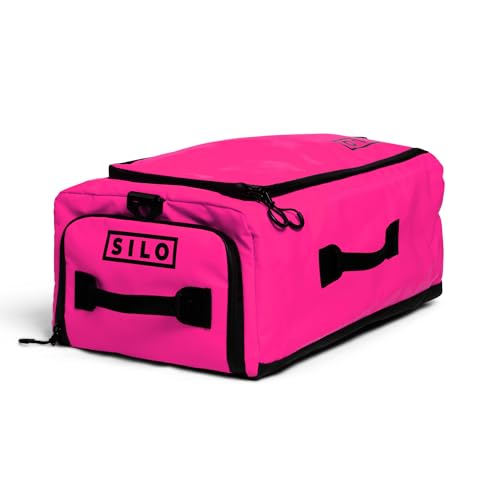
Best for: Athletes who need strong organization with quick access to items during training and races. The bag includes a dedicated water-resistant gear section and multiple pockets for efficient packing.
Why selected: The nine elastic mesh pockets and dual zippered lid pockets support fast retrieval during transitions. The rugged, water-resistant fabric helps protect gear in wet conditions.
Caution: The 26L size may be limiting for riders carrying extensive spare parts or larger items on longer trips.
SCICON Race Day Essential Cycling Rain Bag

Best for: Riders who need a compact bag that still keeps essentials accessible during race day rain or sun. This option prioritizes a lightweight, straightforward design suitable for sprint or precision-focused events.
Why selected: Its simple, unisex design makes it a reliable carry for essential items without bulk. It’s a good choice when you want a dedicated race-day bag that won’t overwhelm your setup.
Caution: Limited capacity means you may need a separate container for extra layers or hydration on longer rides.
Thule RoundTrip Bike Duffel 55L (Second Listing)

Best for: Racers who want consistent performance across different listings and keep gear organized with reliable cell-pocket storage.
Why selected: The dual listing reinforces the same capacity and organization features that suit long race days and travel between venues. It’s a dependable choice for athletes who value modular packing.
Caution: Verify which listing offers the exact features you expect, as product presentation can vary slightly between listings.
KEMIMOTO 60L Bike Gear Duffel Bag

Best for: Riders with extensive gear and space needs, including spare layers and tools. The bag’s 60L capacity accommodates multiple days of cycling equipment.
Why selected: Removable dividers allow customizable storage, keeping small items separated from bulky gear. The multi-pocket design reduces digging and speeds setup at race venues.
Caution: The interior system is customizable but may require initial setup to optimize space for your items.
EVOC Gear Bag 55L

Best for: Multi-day travel, training camps, and race events where weather resistance and organized separation matter. The bag offers durable materials and dedicated compartments for shoes and clothes.
Why selected: The water-repellent outer and separate compartments help keep dirt and moisture away from clean gear, with stow-away straps for easy storage in transit.
Caution: Heavier loads may feel cumbersome if transported by hand for extended periods; consider wheel-based transport options if you travel long distances between venues.
Buying Guide: What to Consider for Race Day Bags
Capacity vs. portability: Choose capacity that matches your typical gear load. A larger bag is helpful for multi-day events, while smaller bags excel for sprint races and quick transitions.
Organization: Look for multiple pockets, dividers, and separate compartments for shoes, clothes, and wet items. Clear labeling helps you find items quickly at transition zones.
Durability and weather resistance: Racing often involves travel and exposure to rain or sweat. Water-repellent fabrics and sturdy zippers extend bag life.
Comfort and carry options: Padded straps, breathable back panels, and convertible carry modes reduce fatigue during long events or frequent transfers between venues.
Modularity: Removable dividers or expandable space let you tailor the bag to your exact packing list and gear set.
Traveler-friendly features: Some bags offer wet storage, integrated shoe compartments, or hydration-ready layouts, which can be advantageous for endurance events.
Price vs. value: Balance features with your budget. A bag with more compartments may justify a higher cost if it saves time and protects gear during transit.
Usage scenarios: Consider whether you race primarily on road, mountain, triathlon, or general training. Different bags emphasize different strengths (space, access speed, or water resistance).
FAQ
- What size bag is best for a single race day? A bag in the 26–55L range is usually sufficient for a single day, depending on how much gear you carry.
- Do these bags protect gear from rain? Several options include water-resistant materials and weather-resistant compartments, which help keep items dry.
- Is overhead bin or backpack carry better for travel? Backpacks with stow-away straps are versatile for travel; duffels are simpler for rolling transport at venues.
- Should I choose separate shoe compartments? Yes, dedicated shoe or gear sections prevent dirt and moisture from contacting clothing and equipment.
- Can I customize interior space? Bags with removable dividers offer flexible layouts to fit diverse gear lists.
- Which bag is best for triathlons? A bag with separate wet storage and compact size, like the Zoot Ultra Tri Bag, suits triathlon transitions well.