Answering the question: 26 inch MTB forks come in a range of travel, steering tube standards, and damping styles. This guide highlights five solid options and explains which rider each suits best. Whether you’re chasing light weight for cross-country, or robust travel for rough descents, these forks help you find the right balance of control and comfort. The buyer profile for top picks includes cross-country enthusiasts, all-mountain riders, and budget-conscious builders aiming for upgrade-friendly compatibility.
Summary table of selected products:
| Product | Travel | Steerer | Best For |
|---|---|---|---|
| Exceedhub 26 Inch MTB Suspension Fork | 120 mm | 28.6 mm threadless | Balanced XC with lockout |
| BUCKLOS 26/27.5/29 MTB Suspension Fork | 100 mm | 28.6 mm threadless | Budget-friendly XC to light AM |
| ZTZ 26/27.5/29 MTB Air Suspension Fork | 180 mm | 1-1/8 in | Aggressive descents, high stability |
| ZTZ Dual Air 120mm Front Fork | 120 mm | 1-1/8 in | Customizable air feel, light |
| BestParts Full Carbon MTB Front Fork | Rigid carbon option | 1-1/8 in | Ultra-light, vibration damping |
The following sections detail each option, including who it’s best for, observed strengths, and practical caveats to consider before buying.
Exceedhub 26 Inch MTB Suspension Fork
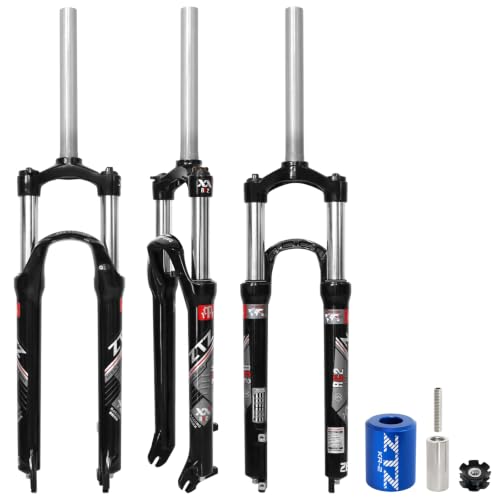
Best for riders seeking reliable front-end suspension with lockout capabilities for climbing and efficient pedaling. This fork offers 120 mm travel, 100 mm hub spacing, and a 28.6 mm threadless straight steerer, combined with a lightweight aluminum-magnesium alloy construction for durability. It supports 26, 27.5, or 29 inch wheels, making it versatile for mixed-wheel upgrades. The manual lockout and crown design contribute to stable handling on varied terrain. It’s a strong pick for entry-to-mid level riders who want improved control without adding excessive weight.
Who it’s for: XC riders, daily trail riders, and riders upgrading from rigid forks who want adjustable travel. Why selected: solid travel without overcomplication, good balance of weight and stiffness. Caution: check compatibility with your frame’s crown spacing and steering diameter to avoid fit issues.
BUCKLOS 26/27.5/29 MTB Suspension Fork

Best for riders on a budget who want a versatile front fork with adjustable lockout and 100 mm travel. The BUCKLOS model features 28.6 mm threadless straight steerer, 9 mm QR compatibility, and 36 mm offset with a sturdy 32 mm tube diameter. A manual ABS adjustment lets you tune softness or stiffness for varying terrains. It’s well-suited for cross-country and light all-mountain use. Limitation: heavier compared with high-end options, and the included sticker design is a cosmetic detail rather than performance benefit.
Who it’s for: budget-conscious XC riders and riders upgrading from rigid forks. Why selected: good feature set for the price, easy setup. Caution: weight is higher than some competition, which can affect climb efficiency.
ZTZ 26/27.5/29 MTB Air Suspension Fork

Best for riders who want high travel at a manageable weight with air-spring tuning. This 180 mm travel fork uses a 1-1/8 inch straight steerer and 9 mm QR, with a crown lockout for efficient climbing. The forged 7000-series aluminum gives solid stiffness while keeping weight reasonable for its travel. Its dual arch design improves balance and stability on steep trails. Caution: higher air-spring tuning complexity; ensure your wheel clearance accommodates 180 mm travel in your bike frame.
Who it’s for: aggressive riders and enduro enthusiasts who need lots of travel without sacrificing steering precision. Why selected: robust travel and stiffness for descents. Caution: setup may require careful weight and pressure adjustments for optimal performance.
ZTZ Dual Air 120mm Front Fork
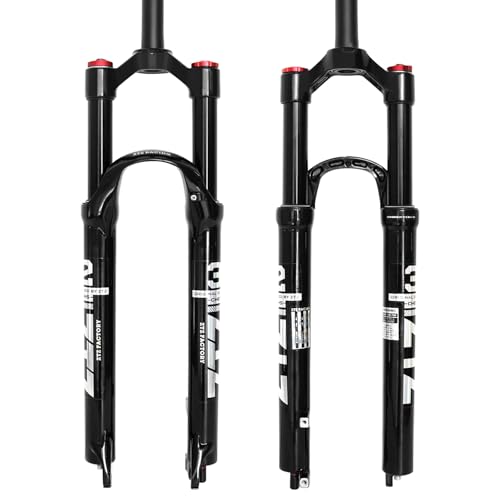
Best for riders who want precise air-spring adjustment and fully adjustable damping. Dual air chambers let you tune positive and negative air pressure independently, with 120 mm travel and a 9 mm × 100 mm QR. The lightweight aluminum-magnesium construction helps manage weight while delivering solid stiffness. Crown lockout enhances efficiency on climbs. Caution: maintain air pressures to avoid bottoming out on large drops.
Who it’s for: riders who value customization and responsive damping on XC/AM trails. Why selected: flexible air tuning and stable handling. Caution: potential need for air system maintenance over time.
BestParts Full Carbon MTB Front Fork

This rigid carbon fork uses 3K T800 full carbon fiber to maximize lightness while absorbing road vibration better than metal forks. It’s ideal for riders who prioritize weight savings and ride feel over suspension travel. The fork is compatible with 26, 27.5, and 29 inch wheels and provides a very stiff front end for precise steering on smooth or moderately rough trails. Caution: lacks suspension travel, so not suitable for rough or drop-heavy trails.
Who it’s for: weight-focused riders and those seeking a responsive, vibration-damping front end on smooth to moderately rough terrain. Why selected: extreme weight savings and superior ride feel on flat or mildly contoured singletrack. Caution: not a suspension option for riders who regularly tackle big drops or rocky descents.
Buying Guide: Key Considerations For 26 Inch MTB Forks
What travel do you actually need?
Travel ranges from 100 mm to 180 mm. Light cross-country use typically benefits from 100–120 mm, while aggressive trails or enduro riding may require 150–180 mm. Consider your typical terrain when choosing travel to avoid over- or under-fortification of front-end suspension.
Steerer type and compatibility
Most 26 inch forks use 1-1/8 inch steerer tubes and QR axles. Threadless steerers are common for modern frames, while threaded models exist for older builds. Verify your frame’s head tube diameter, crown spacing, and wheel hub compatibility (QR vs. thru-axle) before purchasing.
Weight vs. stiffness
Carbon and alloy forks balance weight and stiffness differently. Carbon blades reduce weight and absorb minor vibration, but rigid forks provide increased power transfer. Weighing options against the type of riding you do helps determine if you prioritize weight reduction or front-end stiffness.
Lockout and damping features
Lockout helps climbing efficiency on smooth grades, while external rebound damping allows easy tuning. Fully adjustable air-spring forks provide a customizable feel for rider weight and terrain. Consider whether you need lockout, air assist, or a fixed damping setup for your preferred riding style.
Maintenance and replacement parts
Availability of parts (bushings, seals, crown race, star nut, air springs) affects long-term serviceability. Look for widely supported models with readily available parts and common spare components to reduce downtime during maintenance.
Frequently Asked Questions
- Which 26 inch fork travel is best for XC? Typically 100–120 mm travel offers a good balance of control, weight, and efficiency for XC riding.
- Can I run a 26 inch fork on a 27.5 inch wheel bike? Many forks support multiple wheel sizes, but verify wheel clearance and hub spacing for safe fitment.
- Is a carbon fork worth the extra cost? For weight-sensitive riders, carbon can reduce weight and improve ride feel; for rough terrain, the lack of suspension travel may be a drawback.
- What maintenance is required for air-sprung forks? Regularly check air pressure, seals, and rebound settings; inspect for leaks and ensure proper lubrication of moving parts.
- Should I choose manual lockout or adjustable damping? Manual lockout is useful for climbs, while adjustable damping helps tailor performance across varied terrain.